
Or you've parted ways with a friend in a mad dash to the airport without final words?
Or you haven't been able to find that favorite teacher or buddy in the midst of the large crowds at a graduation ceremony to say "thanks?"
I think we all have.
And, I hate situations like this.
I like saying goodbye. Closure is a great comfort. Words like, "Thank you" or "I love you" Or, "I look forward to our paths crossing again" are a part of what good endings are all about.
In the church, as many pastoral leaders can tell you, we suffer from a lot of cliff hanger types of relationships with our parishioners. Lots of folks leave without telling us that they are leaving and most certainly not saying goodbye.
Someone has a spiritual or family crisis and goes from present every Sunday serving in multiple ministries to the status of "Where in the world did they go? Anybody heard from them?" in a flash second.
And in response, when contacts of concerns are made by the pastor or other caring church family folks such as: "We miss you. . . . We hope you are alright. . . . We hope you're still alive . . . " and there's no response. It is a great grief is suffered when it feels like the cold shoulder is given. Leaving without saying goodbye can feel like a slap in a face to what the relationship has meant in the months and years prior.
I understand that relationships and the dramas of life are messy, though. I understand that the best possible scenario of closure just is not always possible. But, it doesn't mean that we shouldn't do a better job of holding ourselves accountable to end as well as we began.
So, as you all know, I will be leaving my post as pastor of Washington Plaza Baptist Church on December 24th. It's a little less than a month away. And, in these next several weeks, I want to make good use of the time. I want to continue to engage in the life of the church as much as a possibly can so to make this time of transition a healthy and smooth one for everyone. And, I don't want to leave without saying goodbye.
My pastorate at WPBC has been about more than just the members or regular worship attenders. Many of you online have been a part of our church and many of you have popped in and out of our ministry as your life situations have allowed. I want to include you too. Let me not leave without getting to see you too. Consider coming back to one of our Advent worship services that begin THIS Sunday at 11 am and continue throughout the month.
I have shared with the congregation this week that I am available to meet with folks for lunch or dinner or coffee over the next several weeks. Don't hesitate to contact me to find a time to get together.
I want to say goodbye, celebrate the good work we've done together and anticipate the great future that is ahead for both of us!
I haven't left yet.
It is easy in many religious circles to push people away based on what they believe or profess.
We can't be friends anymore because you believe in evolution. I believe in creationism.
We can't be friends anymore because you believe in gay marriage. I believe marriage is between a man and a woman.
We can't be friends anymore because you believe the Bible is without errors. I believe it is full of them.
We can't be friends anymore because you believe all religious paths lead to God. I believe you must pray only one prayer to be assured of heaven at the end of it all.
Now while the exact phrase "we can't be friends" may or may not come up, the sentiment is still there. We cling to those who are like us. We tarry from those who are not. Journey into the Christian community a little bit at all and you'll find such to be true.
We love to spent our time saying who is in and who is out.
Recently while at a Barnes and Noble, I found two books in close prolixity to each other that struck me as odd. One was entitled Why the Christian Right Is Wrong and the other said Reclaiming America's Conservative Future from the Wacky Liberals. Oh how fun it is to believe we've got the correct market on God and try to make money writing about it.
But what happens when God comes close to you in someone you don't expect? What if you see the presence of God in a neighbor that your church teaches you to shun? What if you find the Spirit in a place your colleagues or family likes to label as evil?
It is when love changes things. For it is hard to cast a person or their faith aside when you begin to love them, when you begin seeing the tenderness in their soul, the deep pains of their life and the shared fears that go into making us a part of the human family.
Recently I made a new friend. We are an unlikely match. He is a fan of the seven day creation theory and likes to talk about it, a lot. I don't care one way or the other very much. He likes to go on mission trips for the sake of evangelism. I am not sure such is the best use of his resources. He is 30 years older than me too and from a part of the country that I am not particularly fond of. But we've become friends and out of this friendship I've seen his heart. I know he means well and just wants the best life can be like I do. I know he authentically wants others to experience more of God's love in his life just as he is doing. I respect him. And in my own way I wish my generosity of spirit was as deep as his.
Love changed my hardened heart about folks of "his kind" and I am making baby steps in a new direction. It's new and scary to make friends like this but wonderful too.
I can't help but think we all need to keep challenging ourselves in this way. In this week ahead of a presidential election may we all think twice before we tweet a hateful remark about "the other side." Or stop ourselves short of defriending a relative on Facebook who posts ideas we don't agree with. Or stop ourselves short of trash talking over dinner another's church with the loud worship band and projector screens when we prefer the quiet. It is the little things, we know...
May we all open room in our heart for the possibility of love changing things, finding friends on unexpected paths.

 1. Best piece of advice I ever got about becoming an adult was- "Make good friends and keep them."
I ran across this quote last week from Anne Lamott and posted it on Facebook. Seems to be appropriate to share here too: “It's funny: I always imagined when I was a kid that adults had some kind of inner toolbox full of shiny tools: the saw of discernment, the hammer of wisdom, the sandpaper of patience. But then when I grew up I found that life handed you these rusty bent old tools - friendships, prayer, conscience, honesty - and said 'do the best you can with these, they will have to do'. And mostly, against all odds, they do.”
2. In the same way, I recently heard Oprah say recently something to this effect "Some people don't have the oxygen to make up life's mountains with you." Some friends are just for a season. They don't have the oxygen to climb with you, and to make them feel bad about this is not fair to either of you. Keep climbing beside those who do. You might have to make new friends. You might need to rediscover friends from long ago, but it is all good. The climbing partners are there. Keep your eyes open.
3. There's always time for relationship surprises. Henri Nouwen wrote of a now-famous conversation which helped him think about this concept: “While visiting the University of Notre Dame, where I had been a teacher for a few years, I met an older experienced professor who had spent most of his life there. And while we strolled over the beautiful campus, he said with a certain melancholy in his voice, "You know . . . my whole life I have been complaining that my work was constantly interrupted, until I discovered that my interruptions were my work." Maybe that phone call or email or visit that you didn't expect today could be in fact your greatest gift to give the world today . . . something for all of us to think about.
4. Friends can be the family we most need. I give thanks this week for one of my dearest friends, Kristina whom spent a lot of time this week visiting DC with her husband and daughter. Somethings never change like the fact that folks either think we're related or they mistake us for one another from a distance. It was fun to be called, "Kristina" this week again when a church member couldn't tell us a part. And to finish each other's sentences!
5. To love someone, though is not to cling to them. Can I say how much I have loved the book, Awareness by Anthony de Mello. It's a text that I know is not new to the world (was published in 1990) but it has been the gift that has kept on giving to my life in the past month. Every morning de Mello and I have a date and it's wonderful! And he writes this: “Perfect love casts out fear. Where there is love there are no demands, no expectations, no dependency. I do not demand that you make me happy; my happiness does not lie in you. If you were to leave me, I will not feel sorry for myself; I enjoy your company immensely, but I do not cling.”
6. To love someone, is also to hold them close in committment. One of my favorite quotes about this, I blogged about this over a year ago, here.
7. "You can only be as close to the heart of God as you allow your heart to be to others." A spiritual director imparted this wisdom to me years ago. It was a season of my life when I was wrestling with how much time I spent studying for school and how much time I allowed my daily patterns to be spent with a group of people I was growing very close to. Her words encouraged me that friendship is as much of a spiritual discipline as is prayer, quiet, service, etc.
8. Can pastors be friends with parishioners? Such is a question that is frequent discussed in my clergy circles. Most of my colleagues seem to have a different opinion about it usually based on their personality, family situation and church size. I've come to believe that while maintaining healthy boundaries is appropriate, it's a decision that everyone has to make for themselves. Sometimes it works and sometimes it doesn't.
9. Friends are those who walk beside us and love giving the good gift of silence. Sometimes there are no words for the grossness of life that we are asked to walk through with each other.
And because one can't get enough of Henri Nouwen on this topic, here's another quote of his that I adore: "“When we honestly ask ourselves which person in our lives mean the most to us, we often find that it is those who, instead of giving advice, solutions, or cures, have chosen rather to share our pain and touch our wounds with a warm and tender hand. The friend who can be silent with us in a moment of despair or confusion, who can stay with us in an hour of grief and bereavement, who can tolerate not knowing, not curing, not healing and face with us the reality of our powerlessness, that is a friend who cares.” from The Road to Daybreak: A Spiritual Journey
10. True friends are those whom you tell the same story to at least 10 times knowing that when you need to tell the same story over for the 11th re-telling they'll be around to hear it then too. Who says stories only need to be heard once? Thank goodness there are those who can hear us into understanding!
Here's to hoping your life is filled with some moments to share today with those whom you call friends!
 When is the last time you encountered a person of faith, in particular a Christian who was engaging in particular activities one might call "crazy?"
I know I've met my share of over the top loving kind of Christians through the years being in church as long as I have.
I've met Christians who follow Jesus to the degree in which they decide to sell their home and pack up their things and move across the world-- to third world nations sometimes even-- to share hope in medical supplies, food and friendship with some of the world's most discouraged and broken people. They do so saying, "God has called me to show Christ's love."
I've met Christians who follow Jesus to the degree in which they open up rooms in their home to internationals, struggling single mothers, or exhausted college students -- even when the person has no means to financially repay their kindness and nurture them back on their feet again. They do so citing, "God has called me to show Christ's love."
I've met Christians who follow Jesus to the degree that they'll spend hours of their free time making hospital visits to the terminally ill without family attending -- bringing a compassionate touch of support to those who would not otherwise have any. They do so citing, "God has called me to show Christ's love."
I've met Christians who follow Jesus to the degree that they ask their own young children to go without that desired toy at Christmas so that instead the money can be used to buy toys, clothes and other household items for families in their neighborhood who have recently lost everything in a destructive fire. They do so citing, "God has called me to me show Christ's love."
I've also met Christians who follow Jesus to the degree that they stop everything they are doing when they learn a member of their church has experienced a death in the family. Soon piles and piles of mac and cheese, broccoli chicken casserole, and hearty soups are delivered to the home of the grieving just in case they get hungry. They do so citing, "God has called me to show Christ' s love."
Christians can be crazy people can't that? Doing the behind the scenes work of compassionate deeds, sacrificial giving and life-giving hospitality that others in the world might find to be foolish, a waste of resources or for some, just plain dumb. But, truly Christian act-- or seek to act in love because of the life and witness of Jesus Christ.
I John 3 lays it out clearly for us here:
16 This is how we know what love is: Jesus Christ laid down his life for us. And we ought to lay down our lives for our brothers and sisters. 17 If anyone has material possessions and sees a brother or sister in need but has no pity on them, how can the love of God be in that person? 18 Dear children, let us not love with words or speech but with actions and in truth.
As followers of Christ, our hearts are full of compassion for others in the same way that we know God has been compassionate toward us.
So, while sure, Christians don't have a market on this whole "loving deeds" business (a tenant of people of all world religions), we certainly are people who can't avoid it. We can't say that loving each other is some humanistic talk without spiritual value to Jesus. We can't boil our faith down to a commitment we made years ago with no evidence of it in our daily life. Just as Christ loved us and taught us how to love, we are to love one another.
I'm proud to be a member and a pastor of a church that is about the "crazy" business of loving each other and any who would come in our doors. Just a couple of weeks ago a group of homeless teens came to worship and I was so proud of how everyone responded to them feel at home. Just yesterday, we all piled our resources together and hosted a lunch for a family who recently lost their loved ones. And countless other examples could be given. Loving other always our calling-- even when we don't agree theologically, even we don't always understand one another, even when we get on each other's nerves. We can still love. We can always love. And if they call us crazy for doing so, then this makes Jesus crazy too and we'd be in good company!
Lenten Series-- Promises in the Night: A New Relationship
Jeremiah 31:32-34 with Mark 14: 66-72
Lent is a self-reflective time when we are asked to slow down and reconsider parts of our lives that we might just rush through at other times of the year.
So, in the spirit of the season, I'd like to ask you this morning to reflect upon a few things with me just a minute. Consider a time in your life that you wish you could forget. This could be a time when you said something hurtful to a loved one, a time that you acted out in public in an embarrassing way, or even a long stretch of time when you rebelled and turned your back on all the good things in your life. If you were standing before God at the pearly gates right now, what are the moments of your life you wish that God would forget?
PAUSE
When I think about my life, I wish God would forg et that day I ruined my father's car by running over a cinder block (and wasn't honest about it) just one week after getting my driver's license.
I wish God would forget that day early in my marriage to Kevin that I was so angry I threw a shoe at him.
I wish God would forget the countless times I failed to love the Lord with all my heart, all my soul, and all my strength and to love my neighbor as myself.
I, like you, have many times that I wish just didn't happen-- that God would just forget.
When we meet the apostle Peter, in the latest installment of Jesus' dark night of the soul this day, we encounter him during a few moments in his life that I bet would be on his "I wish God would forget this" list too. Peter, does the unthinkable as Ken illustrated for us this morning as our worship began: he turns his back to his best friend.
And this is the scene: Jesus has just been arrested. He has been seized by the Pharisees and the chief priests and taken in for questioning. Peter follows Jesus to the courtyard of the house where the high priest held him. And though it appears that this will become his shining moment-- being the only among the named 12 disciples who even follows Jesus after his arrest-- such is not the case. No not at all.
When one of the maids, a young girl who served the high priest noticed Peter's presence and remembered his face as one of the traveling companions of Jesus, she asks in verse 66: "You were with Jesus the Nazarene" weren't you?
And though Peter should have said and could have said a simple "Yes. Yes, I was with him. Yes, I knew him." , fear paralyzes Peter. He denies any connection to this man who had inevitably changed his life saying: "I neither know nor understand what you mean."
What Peter? Are you serious Peter? Yes, he was. He denied any knowledge of knowing Jesus. It was going to cost him too much. Maybe they'd soon be arresting him as well. He couldn't bear the thought of that.
So, as the young girl with a good memory-- she just knows she recognizes Peter as having been a friend of Jesus-- asks the same question and again, again and again we get the same answer. He even goes as far to swear. "I do not know this man of whom you speak."
And at that very moment, the cock crows for the second time to fulfill the prediction that Jesus had made of this "I wish I could forget it" moment of Peter's life. Peter remembers that the Lord had told him: "before the cock crows two times, you will deny me three times."
It might have seemed at this juncture that all was lost for Peter and his relationship with Jesus. It might have seemed that Peter royally screwed up so bad that from that moment all would be lost. It might have seemed that Jesus would never speak to him again. It might have seen that all of those years Peter prepared for this moment where all eyes were on him to make a confession were a complete waste.
In the same way, when we read the prophetic book of Jeremiah, we could easily be completely depressed too. Jeremiah affectionately known in modern times as the prophet who should have been on Prozac but wasn't. Scholars often called Jeremiah, the "weeping prophet".
But, why? Commentator, Wil Gafney writes of the context of Jeremiah saying, "Jeremiah lived through the demise of his civilization when the Babylonians invaded Judah, assaulted Jerusalem, and reduced the temple to rubble, exiling, or killing the royal family, priests, prophets, and majority of the population."[i] The nation of Israel turned their back on God's plans for their nation. And thus, God allowed his beloved to experience the consequences of their own actions. The nation was in exile. The temple was in ruins. Family members had died during the siege. There was certainly a lot to be sad and cry about. It was a dark, dark night in the chapter of Israel's history. It was a chapter, too, that I bet they'd wish that God would forget.
In particular when we read earlier in the book of Jeremiah, such as in chapter 5, we hear how bad things had gotten. Jeremiah was asked by God to tell the Israelites: "Announce this to the house of Jacob and proclaim it in Judah; Hear this you senseless people... [you] have stubborn and rebellious hearts..." Not exactly the warm fuzzies anyone would want to hear.
The nation of Israel, like Peter, rightfully shared guilt. They'd messed up. They could have assumed that the relationship and the shared history was over.
But, the tune of verse 31 of Jeremiah chapter 31 tells a different story. "The days are coming, declares the Lord, when I will make a new covenant with the people of Israel and the people of Judah."
I don't know if you are like me, but when I mess up (and I know it!) there's nothing more I want to do than bury my head in the couch for a while. Most certainly, I don't want to hear of some new hopeful plan. Licking our wounds feels good for a while, doesn't it? But, the Lord would have none of it.
Sure, Israel had messed up. Sure, they'd fallen short. Sure, they'd broken all of the covenants they made with God up Mount Sinai. They'd worshipped other gods. They'd had affairs. They'd not kept the Sabbath. They'd not welcomed the foreigner or blessed the stranger. It was grounds for divorce.
And so, because Israel had broken the covenant, God had EVERY reason to set them aside. Israel had certainly checked all the boxes that were grounds for divorce. God kept God's end of the deal, but Israel had not. God could walk away knowing God did all that could be done. Certainly, God could try again with this "my chosen people" business with another group.
But, instead, a re-marriage ceremony is offered. God says to Israel verse 33:"This is the covenant I will make with the people of Israel after that time . . I will put my law in their minds and write it on their hearts."
Stacy Simpson writes of this God we encounter in Jeremiah saying, " In the evangelical tradition in which I grew up, we spoke of "letting Jesus into our hearts." He stood there patiently and knocked, waiting as long as it took, and when we were ready, we swung the door open and invited him in. But, the God of Jeremiah will have none of that. This God has grown weary of people’s inability to keep his law. No more will the covenant be written in stone, a covenant which was external and could be broken. Instead . .. God says "I will write it on their heart." The heart of the entire people will bear the covenant."[ii]
God takes an active role in restoring the broken relationship. Which is another way of God going to marriage counseling with Israel saying, "Let's start over. Because I want to make a new relationship with you."
But, how could God do this? Doesn't God remember all the pain of heartache, rejection and loss? Doesn't God know that if he works toward reconciliation that it all might go sour again?
Such is why the final verse of promise is important. Look with me at verse 34 as the Lord says, "For I will forgive their wickedness and will remember their sins no more."
This new relationship was based on 100% forgiveness. To move forward and to have a chance of the coming of the new-- the past needed to be forgotten. And, God makes this move.
How many times in relation to the topic of "forgiveness" have you heard the phrase, "forgive and forget?" And I think as equally number of times that this phrase is spoken aloud, thoughts of those who hear it also think, "I cannot forget. Maybe I can forgive, but forget is something I can't do."
For there's something about the human brain, isn't it that just wants to hold on to things, especially the unfavorable stuff.
In a recent conversation with a friend, we sat around a coffee table and recounted all of the negative things family members, classmates or even perfect strangers said to us at one point in our lives. And it was easy to make the list long. And if you were to make a list too, I'm sure you could without difficulty make one.
There was that time in the 4th grade that one of the well-liked, well-dressed girls told you that you were fat and your teeth were crooked. You've never felt the same about your body since.
There was that time in college when you rushed for a fraternity only to not make the cut because you family name didn't have enough money associated with it. You've been trying to make as much money as you can with your chosen career ever since.
There was that Christmas holiday when who you thought was your favorite aunt came over and found fault with all your home's decor. You've been afraid to host a family gathering since.
And there was that time you expressed interest in painting and began creating beautiful pallets of color and texture and a friend walked into your studio said, "Well maybe in 10 years you'll find some talent." You've put down the brush ever since.
No matter what your "there was this time" story is, I think it is safe to say that we all have them. We all have times in our lives that something has been said to us or about us that we'd wish we could forget.
So what good news this is to all of our ears-- what a promise in the night God's gift of a new relationship can be!
For just as we mess up, as the nation of Israel did time and time again, and just as Peter denied Jesus on a night when it mattered the most, we worship a God who promises us a new start.
But not just any old new start. A new start where those chapters in our lives that we most want to forget are forgott en, but also the painful wounds imposed on us by others can also be forgiven. We are not God of course, so we probably are never going to be able to forget the ill that has been done and said against us, especially those deeply traumatic memories. But, we take heart and remember that God can do what we can't. God can forget so we can live. And, as beloved children of the heavenly parent, we too have words of this covenant are written on our hearts-- so no matter what, we'll never be left alone. We have a sign of God's relationship always with us. There is nothing we could ever do that would not keep God's love from us. Nothing.
So in light of this, and in response to this sermon today, I want you to find a comfortable seated position where you are right now for a moment of meditation. Clear everything off your lap and place both feet on the bottom of the floor. And, close your eyes and take your hands and place them at the center of your lap with your palms facing open. And right now, I want you to call to mind the two things that we talked about in the sermon for this morning.
1. Something you'd done in your life that you'd wish God would forget.
2. Something someone has done to you that you wish you could forget.
And in the quietness of this moment, I want you to imagine that you are holding both of these somethings in your hands. Holding them tight by balling up your fists with them in it. One in one hand and one in another.
Now, as I re-read the passage for this morning-- Jeremiah's promise in the night, I invite you to listening closely. And, as you listen imagine these somethings being released. Of letting them go, as you are able, why? because in grace, God has already forgotten.[iii]
31The days are surely coming, says the Lord, when I will make a new covenant with the house of Israel and the house of Judah.32It will not be like the covenant that I made with their ancestors when I took them by the hand to bring them out of the land of Egypt—a covenant that they broke, though I was their husband, says the Lord.33But this is the covenant that I will make with the house of Israel after those days, says the Lord: I will put my law within them, and I will write it on their hearts; and I will be their God, and they shall be my people.34No longer shall they teach one another, or say to each other, “Know the Lord,” for they shall all know me, from the least of them to the greatest, says the Lord; for I will forgive their iniquity, and remember their sin no more.
Thanks be to God who makes all things new!
AMEN
[i] "Lectionary for October 17, 2010: Jeremiah 31:27-34" Working Preacher. http://www.workingpreacher.org/preaching.aspx?lect_date=10/17/2010
[ii] "Branded by God" The Christian Century http://www.religion-online.org/showarticle.asp?title=2032
[iii] Thanks to David Lose of Working Preaching.Com for this idea.
"Will you please make my life better NOW?"
 Being a pastor, as many of us know, is a "one size fits all" kind of job filled with lots of expectations placed on our shoulders from many. People certainly want happier lives all the time. And because of this human condition, it is not unusual that we are asked to do so much more than attend to the spiritual lives of our members.
If my colleagues' weeks are anything like mine, folks regularly want to chat with me about everything from martial relationships, how much money is in their bank accounts, their health, and/ or how they feel our church is or is not meeting their social/ emotional needs. Practically, on a given week, I could be found driving someone to a doctor's appointment who could not find a ride otherwise, talking with a struggling single mom about where to get assistance to pay some of her past-due bill, or even taking calls from the social workers of some of our mentally challenged church members about her developmental progress. This is all outside that sermon that always must be prepped and ready by Sunday at 11 am (you know, what folks think is our main job). Though we know that being "all things to all people" is an impossible task and equipping the people of God for the work of ministry is our ultimate goal (i.e. pastors do not do all the work themselves or alone), this does not change the expectations others seem to pile on us week in and week out. Fair or not, it is just the way it is. Sometimes folks, I find, just need someone to blame for their unhappiness in their life and the church and its leadership is an easy scapegoat.
Sometimes we are told as pastors:
If you would just preach a clearer 3-point sermon, then I'd know God's will for my life.
If the church would just start a new ministry for people in my life situation, then I wouldn't be as lonely anymore.
If the pastor had just visited my mother-in-law at the hospital one more time, then she wouldn't have been so discouraged.
"Will you please make my life improve and improve now?" Such pastoral shoes are heavy ones to put on sometimes. Sometimes pastors and the churches they serve feel as helpless to improve the quality of life of its congregants simply because of ALL of the responsibilities before us. It certainly can be overwhelming without lots of prayer.
 With all of this being true, I found myself listening to the White House staff I met with this week differently. As part of a 60+ member delegation to converse with White House staff via an invitation from Associate Director of the Office of Public Engagement, Paul Monteiro, I sat before some of the most hard-working and most severely criticized public servants in the country. On topics of concern including the environment, human trafficking, housing, credit and immigration, our pastoral delegation listened and dialogue back with the staff about concerns stemming from our "front line" experiences of ministry. A civil and respect-filled encounter existed between us, I am proud to report. However on countless occasions, questions from the pastors to the staffers came in the form of "I wish that the Obama administration could do more on this . . ." This line of questioning felt like a broken record that went on for the duration of the three-hour meeting. We all wanted our government to do MORE. We hoped our government would fix more of our deepest brokeness as a nation. We wanted change soon, and as soon as possible. And as I listened, I couldn't help but whisper to my colleague, Rev. Abby Thornton sitting beside me, "I want to say to these White House staffers, I know how you feel."
Of course, my work in my congregation is on a much, much smaller scale, but the expectations and the constant "fix me" is something I do understand. And, I am sorry that my those who we elect to serve or are appointed to serve us in government have to feel this way too. I can't imagine what it is like to meet with citizens day in and day out receiving little praise for the good work you are doing instead being surrounded by voices that must sound like that of needy preschoolers who constantly ask their teachers for "Help me now! More, more!"
For, while we all have power to lead change, especially in positions of leadership, none of us are saviors, none of us are miracle workers. I know no matter who we elect to the executive office, he or she can not ever address every problem we face as a nation and as global citizens either. I also know that no matter how prepared, studied up or experienced in a multitude of situations as a pastor, I can not save my congregation from their deep woes either. Only God can.
 While it is easy to want to expect the impossible from our government leaders, I hope I will think with more compassion the next time I'm in a conversation that begins with "I wish this administration would do . . ." There's more work, great work to do, of course, but we also must remember the people behind the scenes are just people after all. Like pastors, they can only do so much.
As a citizen as of this democracy, if I want to complain, I need to be willing to do something about the change.
And, I know the same is true of churches across our land. If you don't like what you see, do something about it: be a part of the solution, not just the complaint. Like Gandhi once said, "Be the change you want to see." And, so let's get to work, all of us.
Promises in the Night Lent Sermon Series
I Will Remember You: Genesis 9: 8-17 with Mark 14:10-21
Can you remember the last time you got forgotten, left out of something you should have been included in or felt altogether betrayed by someone you trusted?Anyone experience such this week? There can be no more lonely feeling when someone acts without concern for your feelings, especially in a public forum.
And, if we were to take time this morning and share such stories, all of our tales would be different. But, there would be one thing in common and that is, we all have "I was not remembered" stories. Somehow being mistreated by those who love us most happens to be part of what it means to be human-- a world where all is not as it should be.
And, certainly Jesus-- as we examine his life as it was lived here on earth-- 100% identifies with us in his shared humanity. Though he was called, "Emmanuel, God with us," Jesus was not a man immune from some of life's deepest pains of betrayal. He certainly knew what it was like to feel left out.
In the gospel lesson we heard read at the beginning of the service this morning, taken from Mark 14, we read of one such moment in Jesus' life when he experienced a great loss. And it is in the moment of our text that we begin to see Jesus' dark night of the soul unfold.
For three years of learning, of traveling and of serving alongside of him, Jesus particularly chose each companion for the journey. No choice was random. No choice was made without care. No choice came from Jesus simply picking just anybody he saw when he woke up one morning. No, there was a greater plan. Each disciple came to the super 12 dream team with just the right gifts for the tasks at hand. And most of all, when Jesus called each, he loved each one. He loved them so much that he desired to take the time to invest in their lives in a deep way. In particular, with the disciple, Judas, Jesus trusted him enough to make him the chair of the finance committee-- a great responsibility.
And it would be Judas, a leader among the group,who went to the chief priests and promised to help plot Jesus' death. (And we all know that dreadful things can happen when money and power begin to mix). No loyalty. No remorse. No gratitude for all that Jesus had done for him. Simply, Judas, a close friend would betray him. Therefore, Jesus' last supper with his followers, a meal that we remember and celebrate to this day, would become tainted by Jesus' words of, "I tell you the truth, one of you will betray me-- one who is eating with me."
Hear this: Jesus did not even get his last supper in peace-- even death row prisoners get better than this! Judas-- not a naysayer in the crowd, not a haughty religious teacher, not even a Roman solider, but one of Jesus' beloved sitting around his supper table turned against him. Betrayal ran deep. It was a dark night. It was a very dark night indeed for Jesus.
Over the course of the next couple Sundays throughout the season of Lent, we're going to sit with Jesus in some of these very dark moments. We'll do this to see what we all can uncover about the "nights" in our lives too.
We began this conversation, if you were able to make it, almost two weeks ago at our Ash Wednesday service. We began by sitting in the darkness. Realizing that as we turned out the lights and sat in the pitch dark, past sun down, that even in a sanctuary with little natural light-- there was still light. Even if light was faint or seemingly small-- light was still with us.
With this metaphor as a guide for us today and for the next couple of weeks, let's ask ourselves, as we sit with Jesus in this moment of betrayal, is there any hope for us in such similar experiences? Or are there times in our lives when we are simply screwed and without hope at all?
Using our Old Testament lesson as our "promise text" for today, let's uncover how in the most desperate of life-destroying places, we serve a God who says to us always, "I will remember you."
What we get as we dive into the lection taken from Genesis 9, is the happy ending of a story which I believe most of us know. When I say, Noah you say, "ark?" Right? If we spend any time in church as children, the Noah story is one that we most certainly learn if not from popular culture or even the recent movie, Evan Almighty.
 In the "kids version" of this Bible tale, we learn that God loved Noah and though he was going to send a flood to destroy the whole world, Noah and family would receive protection. Not only was Noah's family saved, but 2 by 2 of every living creature. For their salvation, they all piled into the ark the length of several football fields that Noah and his sons had built for this grand adventure of faith. It's a sweet story about God's love for those who love him back. The end, right?
Well, the more you and I really dig into this text, the more, I can imagine that you'd say like me that Noah is no Bible story for kids. It's no Bible story that is all about the beautiful murals that we paint on church nurseries. Genesis 6-8 are chapters of the Bible that we should actually place age limit on before teaching it. For within, it's a pretty scary tale of divine anger, abuse, destruction and eventually of new beginnings-- if we can stomach it long enough to get to the end.
And this is the real story: for much as creation began with God's desire to "make man in God's own image" and to be in relationship with a beloved creation called man and woman-- things did not go as planned in those early years of the earth. God wasn't very happy. No, God was not happy at all.
No need to watch soap operas, for in fact, Genesis 3 through 6, gives you all the juicy drama you need of creation not exactly respecting their Creator. Man began to hate woman. Woman began to hate man. Sons became jealous of one another and lives were taken in anger. Everyone on the earth began to do what was right in their own eyes. God's grand plan of peace, harmony and love all was awry. You could say in fact, that God felt betrayed. What God expected from humanity, what God longed for in humanity simply was not.
And, so we see God becoming angry-- a view of God that we often don't like to admit or even talk about is there-- saying to Noah in Genesis 6:13, "I am going to put end to all people, for the earth is filled with violence because of them."
Yes, we read of a very direct God who wants creation gone. It was not a game. No, not a game at all. We hear words of regret that creation happened at all by our Creator."What a mess has come of my world! Why did I need humanity in the first place?" God says. Scary words, if you ask me.
And, so the flood waters come and they come. And, after the 40 days and nights of rain, we learn that only Noah, his family and the ark full of animals is left on the earth. But this is the grace: the flood becomes the re-creation moment for God to get the do-over. God is up for trying again.
Theologian Elizabeth Webb writes this about the state of things after the flood waters begin to reside, saying this: "All of creation is given a new beginning, a new opportunity to live in the harmony that God intended. Note, however, that this new beginning is also a continuation; God does not create new beings, but begins anew with a remnant of the beings created in the beginning."
And these are the new beginning words scripture tells us came from God in verse 8 of Genesis chapter 9, "As for me, I am establishing my covenant with you and your descendants after you, and with every living creature that is with you, the birds, the domestic animals and everything animal of the earth with you. . . . I will establish my covenant with you, that never again shall all flesh be cut off by the waters of a flood, and never again shall there be a flood to destroy the earth."
And so an agreement between two parties (God and humanity) for God not do something ever again is established. We call this agreement a covenant. And, while there will be other covenant giving moments as the story of scripture goes with folks like Abraham, it is important to note here how unique and special this particular covenant was. And, not for the obvious reasons of this covenant coming with a sign-- a rainbow in the sky-- but because of what was asked of humanity in this covenant making story.
And the answer is nothing. God asks man and woman to do nothing in return as this covenant was made. God will do all the work. It's not a conditional covenant, an "if/ then" promise that we will see later on in the history of the nation of Israel, but with Noah and all of us-- it is an eternal covenant. The "I will never send a flood to destroy the earth again" promise is a statement that God is making and says will be kept forever. Forever.
Hear this again, only God has a responsibility. Only God. Which is a another way of God saying to all of us, "Ok, human beings, in my effort to be in relationship with you in the future, I am not going to go the route of total destruction again. I am going to work with you. I am going to be with you. And no matter how many different ways I have to try and no matter how suborned and disobedient you become toward me, I am going to keep at it. I am going to keep pursing you. Why? Because I love you. And, I won't let you go."
Several weeks ago, as several of you might know from reading my blog, I sat glued to the television set for four hours as singer Whitney Houston's funeral went on and on. In this "world goes to church" sort of experience CNN broadcasted the entire service without commercial interruption. As the memorial came to a close as a family friend, Marvin Winans, offered a homily. Though I struggled to follow his train of thoughts at points, one message of he offered mourners has stuck with me ever since. In referring to some words of the Apostle Paul when he writes that God shall supply all of our needs according to God's riches and glory in Christ Jesus-- Pastor Winans says, God is telling you today, just as he told Whitney over and over in her life, "I've got this." "I've got this and so you don't have to worry about the rest." Just trust me. "I've got this."
 And, I think in many ways, this is what God was saying to all humanity in the covenant making of the rainbow-- "I've got this. I promise you. I will stay in relationship with you my beloved children no matter what." Every time you look up at the sky and see a rainbow, know that "I've got this."
What balm, then this is to our weary selves who are sitting in the dark, crawling in the dark, wandering in the dark if God had lost God's mind-- like I'm sure Noah and family felt as they de-boarded the ark that day. That to us, that to all of us, God promises this eternal good: "I will be in relationship with you. I will remember you, no matter what."
It's hard to accept such a light into the dark parts of our lives, isn't it? Because it is rare if ever that we receive such a gift of a promise kept that we are remembered, that we are loved, that we are seen even when it feels that everyone else has tossed us away and thrown us aside. Even our most beloved friends and family sometimes turn their backs on us. If it happened to Jesus, it most certainly will happen to us.
But, "I will remember you" is the promise that God offers us today-- a promise as bright as a radiant rainbow on an afternoon of summer rain. It's a promise that no matter how abandoned we feel, no matter how dead our most important dreams seem, and no matter how dense the fog is around us that we couldn't possibly even stand without help-- God will remember us.
God will guide us to light. And, no we are not going to have to stay in the darkness forever. For we serve a God made known through Jesus Christ-- who too once cried out from the cross, "My God, My God why have you forsaken me?" and rose to life on the third day.
And, what a gift to our Lent waiting in the dark this year. Because if you know anything about the dark nights of betrayal-- often it is at these low points of our own lives that we can't even fathom moving an inch. But, we need not worry. God is with us and says what? "I will remember you."
Today we have the opportunity to eat of this supper that the Lord persevered through-- even as it was that night for Jesus that a friend became an enemy-- and eat of the bread and drink of the cup, that our Lord drank. For we are remembered forevermore.
Let us taste and see that the Lord is good as we go to the table.
AMEN
I don't know when is the last time you sat in complete darkness? How did you feel? What did you sense? What did you notice about your body, your fears or even your surroundings?
These are all questions that I want you to consider-- as we sit together in as dark of this room this evening. I invite you to clear your mind, relax and simply be in the dark as we turn all the lights off now. (Pause for 5 minutes)
----------------------
Church: in these moments of dark, what did you notice about yourself? What did you notice about this room that you did not play attention to previously?
Over the course of the next forty days, a season in the church we call Lent, our worship theme will ask us to consider again the darkness. Not only the darkness of our own souls-- the ways that we each fall short of God's best for us-- but simply to pay attention to the darkness in our world. Where are there places without hope? Where are there places without God's light? Where are there people hurting because they feel God has abandoned them?
 The funny thing is about darkness, is that the more you sit it in, the more sensitive you become to any spark of light, even if just a crack through a window. But, only if you sit with it.
One of the first times our power went out in our current home, right after we first moved in, with boxes still strung everywhere-- piled in the hallways, blocking doors and by the staircase-- I felt immediately paralyzed.
Being new to our home and not being able to "feel" my way around and furthermore not knowing where the candles or matches or even flash lights were, I quickly began to stumble around hoping not to injury myself too badly (You know, I'm not too good at sitting still).
But, I had never been in this kind of darkness before. Everything in my surroundings felt out-of-place without any memories to guide me. So, hoping not to break a leg, I stayed put on the couch and tried to enjoy the quiet. Luckily, the power came back on within an hour.
By the next time that we experienced a power outage at night, Kevin and I were well settled into our current address. We knew the drill. All of the important boxes were unpacked. The journey upstairs to find the flash light didn't feel like so much of a risk of life because we'd journeyed through the darkness to the space before-- we knew how high to raise our feet in climbing the stairs, we knew where the walls divided rooms and we could feel our way around the bed and find the candles and lighter on the nightstand. Darkness didn't seem as scary because we'd previously experienced this space as safe.
Darkness, with practice wasn't as bad as we thought.
In our gospel reading for tonight taken from Matthew 6:1-6, we are asked to commit ourselves tonight to a different way of life than the norm. We are asked to prepare our hearts through waiting. We are asked to fast. We are asked to pray. We are asked to consider serving God in ways that might feel new to us. But, we are asked to all of these things without drawing attention to ourselves or making a big fuzz about how wonderful we are to be taking care of our spiritual lives.
In fact, Matthew's gospel tells us in verse 5 that "when we pray, we must not be like the hypocrites; for they love to stand and pray in the synagogues and at the street corners, that they may be seen by men. . . . but when you pray, go into your room and shut the door and pray to your father in heaven who is in secret; and your Father who sees in secret will reward you." Which is another way of reminding us of the benefits of sitting in darkness. While it may be more fun or more pleasurable to our egos to say our prayers or do our good deeds this Lent for all the world to see, we are asked to sit in darkness. We are asked to do in the shadows, not the limelight.
For some of us, this season of sitting in the darkness may taste like one of those disgusting flavored cough syrups our mother forced in our mouth as child. In fact, we've never been one to sit in the darkness at all. We run from it. And, what I'm asking you to do "this whole sitting in the darkness bit" could seem as scary as the day I was alone in our home in the dark for the first time. Without resources for light-- you are simply afraid.
If this is where you find yourself this Lent-- unfamiliar with this spiritual darkness-- then I say, just sit. Sit and know as you do, you might just recognize more light around you that you could not have noticed any other way. And, what a gift this Lent can be for you as you wait.
But, if you are a person who knows the shadows of the dark night of the soul-- who has been in dark season before because of some personal circumstances of your own choosing or even just because life's cruelties-- I invite you too to this season of Lent too.
This is your promise tonight: just as a space called a home can become more familiar over time, the same is true for darkness as you c ontinue to experience it. For, as we sit in darkness, as we cleave to our prayer closets of grounding our hearts and souls in Christ's light for our life, darkness can become a friend. We know that it won't kill us to sit in darkness-- eventually the light will come. We've seen it all before and lived to tell of the surprising joys of the darkest times.
So, as we receive these ashes tonight and commit as a church to the 40 days of darkness, cling to the hope of the promise. Return to your God, who is gracious and merciful, slow to anger and abounding in love.
AMEN
 Today is Valentine's Day . .. a day that I know many of my friends hate. I even saw someone recently wearing a t-shirt like the picture to the right. I totally understand. It can be a rough world out there in the commercialism that we call American holidays especially for those who don't have what our culture says is a "must have" (i.e. a happy romantic relationship).
But, though I am happily married (and I know this means that some of you will stop reading here), I need to tell you that I love Valentine's Day. I have loved this day even in my "I'm sad to be single years." For me it has never been about the special someone in my life. It has been a day about love, something we all know something about.
I love this day because it is a wonderful excuse to tell the beautiful people in my life how much I love them. I love the beautiful people who make up my congregation who model for me the faith calling of simply being themselves! I love the amazing people-- though the number is small-- who still keep in touch with me from college and high school who remind me who I've always been. I love the faithful saints of friends who are in my every day life-- who make every day trips to the grocery store or out to dinner a major event of laughter. I love the colleagues that I have in ministry who are all across the world who challenge me and encourage me to keep going even when I feel like quitting.
I love this day because I am one of those people who often feels like the intentional ways I like to show my love to others on other "normal" days of the year can be too much. You know, authentic expressions of love can be intimidating for some not accustomed to receiving. So for me, Valentine's Day is perfect. It's a day all about showing and telling those in your life that you love that you do love them. So, I do a lot of it!
I'm sure some of my affection for this day comes from the fact that I grew up in a household where Valentine's was one of our most celebrated days. While in grade and high school, my mom always hid presents in our chairs at the breakfast table with Vday gifts. Neither of us were big chocolate or candy eaters (I know weird) so we always got small gifts. Usually I found a new red t-shirt to wear to school or new pj pants. We'd always be served heart-shaped toast . . . a tradition I still keep up with whoever is in my household on Vday.
 Then, my Vday love started to get out of control when I made that last-minute visit to Duke Divinity School in exploration of a call to go to seminary there on Valentine's Day 2003. It was the day I met with the admissions director, Donna Claycomb and also met three folks who would become some of my closest friends in the journey of seminary ahead: Abby Thornton, Jenn Brown and Clark Williams. At the end of the day, Donna gave us all cookies on a stick in the shape of hearts as her pastoral way of saying, "Thank you for coming." She wanted to show her love to us as we were in this scary time of trying to figure out what would be next in our lives. It was on that cold Friday, Valentine's afternoon that I left Durham knowing that Duke was the seminary for me.
The next year, when Vday came around again and Abby, Jenn and I were hanging out (maybe studying?), we made cookies on a stick (thanks to directions from Donna) in thanksgiving of being friends for a year. Now, every February, I make heart-shaped cookies on a stick and continue to celebrate with these folks and new friends too. Now as a pastor, I often go visiting to shut-ins and widows on Valentine's Day-- taking cookies and saying a word to them about how glad I am to have them in my life, even on a day that might bring up memories of sadness.
Today, I am not able to keep up the shut-in visitation or the heart-shaped toast part of my Vday tradition because I'm taking a couple of days off to spend with my husband in the Midwest. I'm tagging along on his business trip because we both really wanted to be together on this day. I love him so much to suffer through some really cold weather and the piles and piles of snow on the ground 🙂 I'm of the belief that if you have something good in your life (and Kevin is one of the really goods for me), then it needs to be celebrated and celebrated big.
So, what's the point to this personal ranting "I love Valentine's Day" blog?
Maybe I can not win you over to my level of Valentines love, but I hope I can encourage you to get out there and tell someone who you love them. It doesn't have to be a spouse, a boyfriend or a partner, but someone. No matter who we are, we all have people in our lives that we love and hopefully love us in return. What a great day to just do something for one of these folks, so there is no doubt in their minds how we feel about them! Spread the love, my friends. Spread the love. It really can be a great day.
I was getting to know a new colleague on Twitter yesterday, Elaine who did some reading on our church website. She uncovered a sermon of mine that I preached in the first month of being pastor of Washington Plaza called, "Why this Church?" I had forgotten about it, but read it again last night and was surprised at how true these words still are about the congregation I'd hoped I'd love at the time and now know I do.
 I know this is a time of the year that folks who might not otherwise be interested in church or things of faith get intrigued and start searching. So if such is your situation-- looking for a place to gather at Christmas in the Northern Virginia area-- I thought I'd post this sermon just for you. It tells the story of why churches like Washington Plaza exist and are positioned to thrive in the years to come. We are what many are looking for but just don't know is out there!
Why This Church?
Acts 10:34-43
Last week, we discussed together about why it is that the church itself is important for Christian faith—being a place where in community building and our community doing, we show the world an entirely different way of being through the name of Christ. We talked about how at its best, the church is the place where God’s kingdom comes on earth and our hands and feet are used for God’s good purposes in the world. And, we talked about the hope for the Church universal as people of faith contribute their gifts to its being.
Yet, I said very little about the particulars of this congregation, how we as the people of faith gathered here each Sunday morning at 1615 Washington Plaza fit into this story.
What is it that we have to offer as a local church to the larger Body of Christ? Why are we important?
Why should we keep working diligently at the sometimes difficult task of being a church that leaves a legacy of faith for future generations?
Speaking to these specific questions is the entire purpose of my sermon today—a sermon that I hope will encourage the goodness of God that shines so brightly here as well as challenge us about the seriousness of the journey in our future.
In our New Testament lesson this morning, we have the opportunity to peak in at a huge moment on the faith journey of Peter once again. A moment that I believe (if we look at closely) will help us know how God might be encouraging us as a church that we are doing some good things.
As we have been talking about all month, Peter’s path of faith was righteous early on. He was among the first of the disciples to publicly define how you could remain a good Jew and still follow Christ. Yet, his preaching and teaching had one primary audience: the Jews. Peter insisted that following Jesus meant still following the Jewish law—including eating foods according to the Law of Moses and worshipping in the temple.
However, the story in Acts 10 emerges as a turning point for Pete. As he was going about his devout practice of praying on the rooftop, he fell asleep. God tells Peter three times to get up and eat what Peter knew contraband foods in the Jewish law. Of course he objects, saying, “By no means Lord; for I have never eaten anything that is profane or unclean.” Yet, the Lord tells him to eat for the foods are now clean. And just as Peter is in the process of scratching his head wondering what just happened, a delegation of men arrives to see him from the house of Cornelius. The men invite Peter to go Cornelius’ home in Caesarea, a thoroughly Gentile city.
So, what happened in a matter of minutes was weird. Jews just didn’t go to social events with non-Jews out of fear of the “uncleanness” of the Gentile’s home. The risk of religious impurity was at stake, so it just wasn’t done.
But, Peter was on his way. God’s Spirit told him it was going to be alright. It was a calling of the Divine’s doing. Yet, I know as Peter made this long journey; thoughts must have been going through his head like:
“What I am thinking hanging out with these Gentiles?”
“I’m sure I’m going to be the laughing-stock of the disciples and my friends from the temple when I get back!”
“I know everyone is going to think that I’ve lost my mind going all this way to see this Gentile man I’ve never met: Cornelius!”
This is probably why we hear Peter telling Cornelius and his loved ones upon first meeting them that: “You yourselves know that it is unlawful for a Jew to associate with or to visit a Gentile.” Peter sets some boundaries in the beginning, so that Cornelius’ family knew what kind of devout person they were dealing with in talking to him.
However, it is important to note here that Cornelius wasn’t your average non-Jew. He is cited in Acts 10:2 as “a devout man who feared God with his entire household, who gave alms generously to the people and prayed constantly to God.” Cornelius loved God!
And, as Cornelius begins to share about his faith—Peter had quite a moment of epiphany. This is where we find our text for this morning picking up in verse 34 as Peter addresses the crowd saying: as one modern translation puts it: “I see very clearly that God shows no favoritism In every nation he accepts those who fear him and do what is right.”
Let me stop and read that again. “I see very clearly that God shows no favoritism In every nation he accepts those who fear him and do what is right.” Do you hear how powerful Peter’s statement truly was?
And in that moment of declaration, I believe a whole new way of seeing the world came about for Peter. Peter knew his theology had to change. He saw that the gospel was not only for those who spoke, acted, or lived as he did. He gained a friend from a different tradition than his own. And, he received from Cornelius, who was previously the kind of person he would not associate with in a religious sense, a greater understanding of what having a relationship with God meant: “God shows no favoritism.” God’s invitation of relationship was for all people, it wasn’t about the code of law anymore.
So, there was nothing for Peter to do besides give testimony to who he personally knew Jesus to be: Lord of all! And if we finished reading the chapter, we would discover that amazing spiritual electricity lit up the room. The Holy Spirit came upon all who heard Peter and the entire household received the baptism in Christ’s name. Peter’s faith was changed. You could say that he had an “inclusive conversion.”
At a previous congregation, I was assigned the same text for this morning, and hardly slept at all the night before I had to preach it. I was afraid that what I knew I had to say about it might get me fired. You see, because in reading and studying this text as I have just presented it to you, it was obvious to me that the call of Christ is one of inclusion. A non-Jew in Jesus’ day was considered to be an outsider, yet Christ was calling Peter to accept. And the same message, too translates to the “outsiders” of our time: that no matter what your race is, no matter what your religious background is, no matter what your sexual orientation is, no matter what that God loves you and wants you to know about this love. Yet, this is just not the way most modern churches function including the one I served at the time.
As marvelous as the stories of healing, peace, and justice which we find in the gospels about Jesus are, what you find in many churches today is completely different. For many faith communities the message is: come be like us, follow our interpretation of scripture, come fit in, and don’t dare to be question — because we don’t know how to deal with unanswered questions.
And while this way of being church works for many people who want a scripted pattern of what knowing God will be like (and I respect these folks as my brothers and sisters in Christ), such kinds of churches just don’t work for everyone.
These kinds of churches don’t work for the person who has an imperfect family.
It doesn’t work for the person who has doubts about their faith from time to time.
It doesn’t work for the person who believes in the priesthood of all believers.
It doesn’t work for the person who is told he or she is evil because of their sexual orientation.
It doesn’t work for the person who believes in diversity.
So, enter into the picture, Washington Plaza Baptist Church. A community that was founded as Baptist congregation, but where all the first residents of Reston knew they were welcome.
A community that has historically stood up for justice—affirming the gifts of women in ministry, helping the homeless, celebrating beautifully great Civil Rights workers of our time like Martin Luther King, Jr. and welcoming any who come in these doors.
A community where you don’t have to have agree with everyone else to be accepted. A community unlike any other in Reston and I dare say in the Northern VA area—so much so that we have regular attendees who drive miles each week to be a part of what we are.
A community where you can come with all your questions, all your uncertainties, all your burdens and find hope that there are people here who love you and want to care for you.
My new friends, this is what being church is all about. This is the kind of church that I knew I wanted to be the pastor of. This is the kind of church that I am proud to be the pastor of. This is the kind of church that the community needs to know is here.
So, why this church? Our mission focused on service and justice, our welcoming fellowship, our hopes for being an even greater presence in the Lake Anne neighborhood is exactly what Reston needs. We are the only Baptist presence of our kind in Reston!
This is a truth I believe with all my heart: our church is exactly what so many people are looking for, yet they are sitting at home this morning thinking it doesn’t exist.
We are not a congregation that looks exactly like our neighboring churches. We are not repeating something for the 20th time that has already been done. We have great purpose in our uniqueness. We are living the dream of what so many great saints of the past wished they could see.
And though we may not be the type of congregation that grows to have thousands of members one day with our own parking deck, it doesn’t mean that we aren’t important. It doesn’t mean that we aren’t doing something very valuable and needed for those who choose to join us.
We are, my friends, in our existence, living and sharing with others, Peter’s proclamation: “I now realize how true it is that God does not show favoritism, but accepts people from every nation who fear him and do what is right.”
This is the message God has given us to share with the world that even as we face this New Year with all its problems, all its hurts, all its collapsed dreams— our community has the answer: love. Just as the American journalist turned social activist for the poor and homeless, Dorothy Day once said: “The only solution is love,” so this church must continue sharing this message. Our doors need to be open to provide such a hope.
How will then, people know that we exist? Why will this church have a future?
“They will know we are Christians by our love.”
No matter what we face in our future: it is our love that will continue to allow us to shine. Our love will make all the difference. Our love will bring new people to us. Our love will help us meet community needs. Our love will carry us on for years and years to come.
Thanks be to God for such a love and such a beautiful community to live out our faith.
Amen.
Luke 1:26-38 (Common English Bible)
26When Elizabeth was six months pregnant, God sent the angel Gabriel to Nazareth, a city in Galilee, 27to a virgin who was engaged to a man named Joseph, a descendant of David’s house. The virgin’s name was Mary. 28When the angel came to her, he said, “Rejoice, favored one! The Lord is with you!”29She was confused by these words and wondered what kind of greeting this might be. 30The angel said, “Don’t be afraid, Mary. God is honoring you.31Look! You will conceive and give birth to a son, and you will name him Jesus.32He will be great and he will be called the Son of the Most High. The Lord God will give him the throne of David his father.33He will rule over Jacob’s house forever, and there will be no end to his kingdom.”
34Then Mary said to the angel, “How will this happen since I haven’t had sexual relations with a man?”
35The angel replied, “The Holy Spirit will come over you and the power of the Most High will overshadow you. Therefore, the one who is to be born will be holy. He will be called God’s Son.36Look, even in her old age, your relative Elizabeth has conceived a son. This woman who was labeled ‘unable to conceive’ is now six months pregnant.37Nothing is impossible for God.”
38Then Mary said, “I am the Lord’s servant. Let it be with me just as you have said.” Then the angel left her.
I don't know about you, but I am already feeling the stress of Christmas. It may be "the most wonderful time of the year" but only if wonderful means the "busiest time of the year."
For each of us our stress comes in different ways. Sometimes it is from special holiday events to attend that all seem to fall on the same day (i.e. we have to figure out how to be in five places at once). Sometimes it is the stress of the requirement to see family, when we've just spent a holiday with them only weeks ago. Sometimes it is the stress of figuring out how it is that there will be Christmas gifts under our tree this year-- jobs have been lost and the budget for Christmas shopping is just not looking that good. Though we hear carolers sing songs about there being "peace on earth" and "silent nights," peace can be the furthest virtue in our lives every December.
Yet, more than from stress our lack of peace often comes in estranged relationships.
 Recently while attending at family gathering, I heard the story from one of my uncles about a fight he was currently having with his mother-in-law (unrelated to me). As the story went on and on and I heard every detail of the tale-- who said what, who did what, and of course everything that was wrong about the other person, I truly felt like I became a character in the disagreement from how vivid storyteller was in the details.
When I asked my uncle about when the fight took place, my jaw nearly dropped when I heard it was 3 years ago. "What?" I asked. "And you haven't reconciled yet?" "Nope," he said. Because of the tension this unresolved fight continued to birth, plans for the upcoming Christmas family dinner were anything but peaceful. Because the two couldn't stand to be in the same room together, everyone was seeking to go out of their way to ensure the contact between my uncle and his mother-in-law was limited. Even though weeks away, I could only imagine how un-peaceful my uncle's Christmas dinner table would be. And I gave him my sympathies.
And upon later reflection of this situation, I was reminded once again how much energy we must expand as we hold on to what has gone wrong in the past. We literally exhaust ourselves by holding on to anger as bitterness swells in our hearts. And, in turn, keep ourselves from the new life and joy and love that could be ours for the taking if reconciliation occurred.
But, what about God? Have any of you been mad at God lately? Has anyone found themselves at a spiritual crossroads when you've felt like God has asked you to do something that you didn't actually want to do?
Well, if there ever was a good reason for someone to be in a position of anger with God, it would be the main character in our gospel passage for this morning. Though we normally think of Mary as the favored one, angelic like mother of our Lord, when the angel Gabriel came and gave her the news of her Holy Spirit conceived son -- she too found herself in a state without peace and possibly even anger toward God.
Luke 1:26-38 is among the scriptures that we read almost every year during this season and probably most of the sermons you've heard on this text and probably even most of the sermons I've preached on this text have focused our attention on verse 37 when angel relays to Mary, "For nothing will be impossible with God." The announcement that teenage Mary will soon be pregnant just like her elder cousin, Elizabeth serves as a miracle story of God. Reminding us that the God we serve uses the lowly to bring hope for the nations through Christ who was born. And when you and I hear such a story, it is usually our first instinct to consider how amazing it is that Mary was chosen, that she said yes to the coming of this child within her, and that with the friendship of Elizabeth who would soon serve as her mentor, all would be well.
But, I believe the gem of this story is missed if we move too quickly from verse 29.
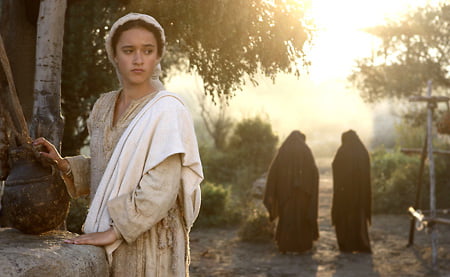 "Mary was greatly troubled at his words and wondered what kind of greeting this might be." (NIV)
And this is what we need to know: Mary found herself in a situation that she did not want and that she could not change.
Mary didn't want Joseph to die. If we pick up the book of Tobit-- a book not found in our Protestant scriptures but within the apocrypha held as sacred by our Catholic brothers and sisters-- we read of a popular folk tale that Mary surely would have known. It's the story of a jealous angel who appeared on a bride's wedding night each time she married and killed her bridegroom. One scholar writes, "Against the background of this popular story, the fear of a betrothed girl (Mary) at the appearance of an angel is all the more understandable. Could it be that she thought an evil spirit was threatening her marriage?"[i] Certainly the appearance of an angel before her was nothing that she had ever heard of being a good thing. She hoped that her planned marriage would go to Joseph as had hoped it would.
Then, when Mary was told she would soon be with child, she didn't want to be punished. Being a pregnant before the betrothal period was over was more than a cultural taboo, it was a religious no-no. During the betrothal time, which Mary found herself in with Joseph, she was still living under her father's roof. And, it would be until a year after the betrothal began that she would go to live at Joseph's house and thus have marital relations with him. Thus, for Mary to begin showing her pregnancy from the "overshadowing of the Holy Spirit" would be considered strange, inconceivable and ultimately could cost Mary her life if Joseph didn't claim the baby as his own. The sin of adultery could be placed over her life, unfairly of course.
And, furthermore, Mary probably did not want to be pregnant yet. Though girls married and had children as young as 13 or 14 in this era of time and having children was part of her responsibility to fulfill the laws of the Torah, I can imagine that it wasn't the leap into adulthood that girls like Mary dreamed for themselves. To soon face the potentially life-threatening complications of child-birth when she had not even had time to life much of her own life must have been overwhelming and unfavorable to say the least.
For all of these reasons and probably many more that Mary didn't even have time to think of in this very moment, she found herself in a situation that she didn't want and she couldn't change.
But, what was she to do? Especially as she was learning that this "thing" about to happen to her was from the hands of "the Lord." No longer could she go back to her girly innocence of thinking about goings on in her town. No longer could she be normal just like everyone else. No longer could she silently pray in temple without having to put feet to the words of prayer she had been saying all her life. God was about to change her life. And there were choices in front of her:
1. She didn't have to believe it. She could have said as we heard Zechariah say last week, "How can I be sure of this?" asking for a sign or proof of her pregnancy before she accepted it.
2. She could have balked at this word from the angel. Responding with something like, "No way. You're going to have to find yourself another girl, Gabriel. There ain't no way I am going to carry the 'son of God' in me. That's ridiculous."
And in each of these scenarios, Mary could have found her soul much like the state of my uncle who is dreading the forced gathering with his mother-in-law this Christmas. Bitterness could have crept in. Hatred could have begun to corrode her sweet heart. Having peace, well, Mary would have to kiss that goodbye as she hung on to dreams for her life that would just no longer work for her.
But, then there was another choice and that was to make peace with God. To accept that in our discipleship journey, we might have to endure transitions that are harder than we could have ever imagined. To accept that in this sinful world, often times there are good and even bad things that happen to us that we can't control or make better, as hard as we try. To accept that having this one named Jesus, who would save her people from their sins was the next step for her life.
If we keep reading the text, we know that the final choice-- making peace with God-- was ultimately Mary's chosen path. In verse 38, Mary responds to the angel saying, "Here am I, the servant of the Lord; let it be with him according to your word."
Yet, as quick as the transition is in our text from verse 29 to the acceptance of verse 38, I'd like to think that the transition of this "making peace with God" took longer than it did for Kirby to read this passage for us this morning.
I like to think of Mary as one who joined the great line of saints who were known to wrestle with God when faced with a difficult challenge: Abraham, who didn't want Sodom and Gomorrah destroyed completely, Jacob was willing to fight it out with God until his hip was thrown out of whack, and Hannah who prayed and cried and pleaded until the Lord gave her Samuel, the great prophet of Israel.
That when Mary said, "Here am I... let it be, according to the Lord's word" Mary allowed some things to die. Not in the physical sense of course, but emotionally and spiritually. Letting go of what her expectations and her plans were for her life. Letting go of constantly performing to others' expectations of her. Letting go of hiding innocently in the crowd, believing she was a nobody. Instead, letting peace reign in her being so that her life would exclaim about the Lord, "Let it be." Whatever, you want to come, God, let it be.
Sue Monk Kidd, popular author of the book Secret Life of Bees, writes in her earlier memoir, When the Heart Waits, of her struggle to "let it be." At this juncture in her life she details in the book, perched at middle age with children growing into adolescence and her role as mother and wife changing-- Sue finds herself on a spiritual search to figure out why she was so unhappy. And though it doesn't seem to have a name or a direct cause, Sue begins intentionally stopping more often and seeking to figure out what exactly was going wrong.
And in this process, one afternoon around this time of the year, right before Christmas, Sue went into her attic to get out some Christmas decorations, and found a stack of old Christmas cards in the process. Though she chastises herself upon finding the pile saying, "Why do I insist on being a hoarder of such cards, from as a far back as 15 years ago?" she found herself stopping to re-read some.
As she picked of one of these old cards with a picture of Mary on the front which read on the inside simply, "Let it be," Sue stops and recognizes this moment just for her. Maybe the experience of Mary wasn't as far from her life as she thought. Writing later on: "I sensed that the words were about to take up residence and sing their little aria of letting go."
Sue goes on to make sense of this experience by calling on the wisdom of St. Teresa of Avila. Sue remembers that St. Teresa once compared the soul to a silkworm: "It is necessary for the silkworm to die . . . as it does completing what it was created to do . . . A little butterfly comes forth. Oh, greatness of God! "
And, Sue realized then that God's call for her life was like that of Mary: to let die in her what was of the past, what would not be in the future, so that God could enable new life to spring up in and all around her.
Today, as we sit, also on a journey of waiting, also on a journey of soul-searching called Advent, we too are asked to make peace with God.
I hear people asking me all the time how it is that they can find peace, how it is they can move past the hurt of loss, and how it is that they find God's new plans for them after life-devastating pain. And, to this, I invite us to consider Mary, her witness of making peace with God by letting die in her what could no longer be. Mary ushering in peace, by saying to God, "let it be according to your word."
I can imagine that some if not all of us gathered here today have areas in our life in which we too are in need of peace. And to all of us I say, we too have a choice like Mary did.
So, I ask you what needs to die in you? What do you need to let go? Who do you need to forgive so that as we approach the table this morning, we have the chance to make peace with God?
I hate it that what I must preach this morning is about death to dreams, death to wishes, death to ideas we held dear about our lives-- for death is one of my least favorite things to talk about or to practice myself. But, even with this true, I must tell you today that THIS is the ONLY way to peace. For after all we follow a Christ who died so that we might have life. And, it is our call to way in this way.
Won't you join me at this table this morning. Let us make peace with God before we approach this table as we pray . . .
AMEN
[i] New Interpreters Bible: Luke and John. "Luke 1:26-38 Commentary" 51.
 "Everything happens for a reason" such are words that we, as pastoral care givers are often tempted to use though they are not in the Bible anywhere.
We deal with so much crisis. We get tired of saying profound things. We want to feel good about the care we are giving, knowing that our care is making a difference. We want to give people hope that their suffering is not in vain, that it will amount to something greater in the end. We want to be an expert with something to offer the pain of those in whom we are called to care about.
But the truth is we are not God. Sometimes there are no answers. And trying to give a plastic answer often makes it worse. (Read the book of Job lately?)
When I hear the words "everything happens for a reason," it's like scraping the chalkboard of my soul. For, as much as I am tempted to say such as a way to easily explain away life's pains for myself and others as a pastor myself, I simply can't say (or even hear) these words.
For everything doesn't happen for a reason. Sometimes life just sucks in this sin sick filled world we live in. And often it is not our fault. It just is.
I grew up in a tradition of faith that taught when bad things happened in your life it was the result of either a) a major personal screw up b) being out of touch with a close relationship with God via doing things like regular Bible reading, church attendance and tithing regularly. I was taught about a "if/ then God." If I do what God wants, then God will bless me.
I truly bought in to this way of thinking as a child, believing that if something was going wrong in my life, it was somehow my fault. God must be punishing me or trying to teach me a lesson. I remember the day my youth group leader told us that you could tell who was living right by who God was blessing with good grades, winning sport games at school, and happily finding mates after completing their "true love waits" pledge to remain sexually pure until marriage. What lies. And it got worse . . . we were told that those who faced difficult life circumstances such as death of family member, the coming of an earthquake or fire, or whose marriages fell apart usually resulted from sin. The reason for these horrible things happening was God saying: "Clean up your act."
Maybe for those of us who are leaders in giving care to others, we can find ways not to either explain away life's troubles with "it will all be good in the end" or "it is somehow your fault" instead to simply be with those in pain. Sure, there might be something beautiful that comes out of life's most tragic moments, but it doesn't take away the gut-wrenching grief of the process.
For I believe it is not important to figure out the why's of suffering-- life is simply too complex and mysterious such answers-- rather to simple be present in life's moments whatever they may be. Knowing that as we stay close to whatever emotions we are feeling, whatever is troubling our souls, there will be a path of peace to lead us to quieter waters someway somehow.
Let us stop, my caregiver friends, making this pastoral fail. I wrote this blog for this reason.
