There's a popular misconception when it comes to advice we give and crave during difficult times.
"You'll get through this. You can do it!"
"If I can survive this . . . I can do anything."
In life's hard places, we rally ourselves around images of strength and courage.
One of my personal favorites is the image pictured to the right. I mean, who isn't inspired by Rosie?
And while it is true: sometimes we need to just bear down and get through life. Something this is all we have the energy for. We live to see another day (and this is good!)
But is this the summation of life? Survival?
Consider this alternative: life is not something we conquer.
Life is not something we accomplish by checking off boxes at different stages.
Life is about living into abundance.
My faith tradition calls to mind the words of Jesus who said in John's gospel, "I have come that [we] might have life and that [we] might have it more abundantly."
Life is about abundance.
But now that I've said this, I bet several of you might be wondering if I've now gone off the deep end of a gospel of prosperity. Just become a better person and you'll have more . . .
Ok, gag. No. None of that Joel Osteen nonsense.
But this: the deep suffering of our lives illuminates a path to abundance. For as we walk conscientiously through life NOT with a "I can't wait till this is over" but rather with a "What can I learn from this experience?" attitude, we change.
Two years ago this month, I found myself in one pretty difficult season.
Here are some of the highlights. I was-
I have to admit in moments of August 2013, "survival" was often at the tip of my tongue. (And some whining too). I couldn't wait for this and that to get better and life to return to "normal."
But let me tell you what I learned. There was no normal. And I would not return to it.
Instead, I could be re-made.
I could see the world and my vocation differently.
I could claim life as good even when it wasn't from all outside appearances.
I could gaze upon God in places full of such unexpected joy.
I bore new scars, yes.
I could tell new stories of horrors, yes.
And, I would probably always move through life with deeper caution, yes.
But then these words came out of my mouth: "This is abundant life. And I'm living it." (And they were actually true!)
As I look back on all the terrors of that summer and where I stand today, I can honestly say I am grateful.
I'm grateful not just because I survived. Or I passed the test. Or because my body healed. Or however you want to describe it.
I am grateful because this difficult time gave me eyes to see my abundance.
My heart softened toward those who faced unexpected medical illnesses.
My vocation found clarity and re-definition in ways that felt more like "me" all along.
My soul could hang on to the good when showed up at my door, no matter if it came from one person or a hundred.
It birthed in me surrender to situations outside of my control, especially those thousands of miles away.
Now, I can't wait to see what gift of abundance come next through all the ups and downs of my newest life chapter.
This is what I know: you and I are living in a human community of rich provisions.
Let us stop just making it to another day. Or checking the hard stuff off our list. Such survival will get us nowhere interesting.
But let us claim the good and thrive! Let us live in this hard but beautiful world God has given us. There are so many wonders to behold!
A Sermon Preached at The Federated Church, Weatherford, OK on Isaiah 6:1-8
 It’s strange to put the words “good” and “death” in the same phrase as I’m doing with the sermon title isn’t it?
Because when we think death, we think grief, sadness, loss, and weeping.
And if we’re from the church, when I say death, you might think casseroles and church ladies.
(Oh, I love some good funeral food, don’t you?)
But good AND death? Nope.
Those aren’t words we’d pair together at all. For, death is a word that speaks to a separation, a pain that for most of us is just too much to bear. Death speaks of lose of a hope that we’ve channeled in a particular direction. Death is the end. And by death, I don’t just mean when a particular person dies but the death of a job, death of a friendship, or death of a dream that we’d planned on our life upon. Lots of things can die in our life all the time.
None of these “ending” experiences are good, are they? In fact, they are very, very bad.
But can any good come from death? Any good at all?
By this, I don’t mean adding expressions like “Everything happens for a reason” or “God makes everything beautiful in His time” that are empathy busters for the pain we feel during times of grief, but rather I’m wondering can death bring about any good?
Such is a question I want to explore this morning with our Isaiah text set before us.
I posed this question to Kevin this week, “Honey, can you think of any story in modern times when the death of a famous person brought about something good, when something better happened that could have happened because of a death?”
(You see, I was fishing for a good sermon illustration).
He told me I asked too many hard questions. Then, he said, “How about Hitler?”
“Oh” I said, “I can’t talk about Hitler. That’s so intense and a little clique.”
So since I can’t offer you a great example of what it means to have a good death (other than Hitler), I thought at this point, we’d just dive into Isaiah.
Isaiah 6 within this historical context: “In the year King Uzziah died, Isaiah saw the Lord.”
It seems like a phrase that could have easily been left out, couldn’t it? We didn’t really need to know this, did we? Isn’t the spiritual stuff that follows more important?
If you are like me you might be thinking, “Who in the world is King Uzziah?” You might even say, “I’ve been in church so many years and never heard of him!”
Good question. And today is our day to learn.
King Uzziah was the 11th king to rule after King David in the house of Judah. If you had to make a list of good kings in Israel’s history and the bad kings, Uzziah would most certainly be on the good king list.
We learn a lot about him in II Chronicles 26 as it tells us that Uzziah took the throne when he was only 16 years old and ruled the nation for 52 years in Jerusalem.
His accomplishments were many. He led Israel in battle against their archenemies the Philistines and won! Uzziah’s army was bar none with all the best gear.
He engineered a building project in Jerusalem, constructing towers at the gates of the city.
He “got folks to work” as modern Presidential campaigns often promise to do, through his plentiful agricultural projects.
And best of all scripture tells us that he loved God and sought to put God first in his life. When prophets such as Zechariah came to declare the word of the Lord to him, scripture says, “He did what was right in the eyes of the Lord.”
I tell you all of this because I believe it’s important for understand that King Uzziah was a larger than life figure in history at this time.
He was the JFK of the 1950s.
He was the Martin Luther King, Jr. of the 1960s.
He was the twin towers in New York of the 2000s.
King Uzziah was everything good that the nation of Judah built their hopes upon. And I can’t help but think that Isaiah looked up to him. He admired him. He saw how God was with him as he led and might have even wanted to be exactly like him. For 52 years he sat on the throne.
Uzziah however made one really huge mistake. He overstepped his bounds and began doing some of the priest’s work in the temple. God would not stand for such disobedience in the holiest of holy place. A sickness came upon him and he suddenly died.
News spread throughout the land that Uzziah died.
Can you imagine the shock? The horror? The fear? And for generations, remembering the exact place where they were when they learned the horrible news.
Isaiah’s hero was no more. He lost a giant figure in his life. And the nation was in mourning too. Everything about their future seemed uncertain.
But scripture reads, in the year, King Uzziah died, [Isaiah] saw the Lord.
What do we make of the connection between such? Why does this sentence read exactly as it does?
I believe because of the connection between the word good and death.
Consider situations and things in your own life that didn’t seem good in the moment but then later all became clear.
Things like- the terrible tasting cough syrup that your momma made you take when you were sick, but made you better sooner than if you’d hadn’t taken it.
Or things like the books your teachers made you read in the summers that kept your mind strong all year round, though you’d rather played outside with your friends and not read at all.
Or like the advice you took from your daddy to not buy your first car—though you really wanted one-- till you could afford the insurance and the gas money.
For an event to be “good” you see, it doesn’t always come without pain. Sometimes, the best things in life that happen to us can be very, very painful, can’t they?
And for Isaiah’s story, I believe that we get this one detail “in the year that King Uzziah died” because it says everything about his posture that day, to receive that the Lord had in store for him.
Because isn’t the message of our faith—when death comes then resurrection can follow?
 And in the case of Isaiah, this is what we can assume: his larger than life figure, this idol even had to die so that the new things of God could come. Death needed to come so that he could have EYES to see the glorious thing that was about to happen to him.
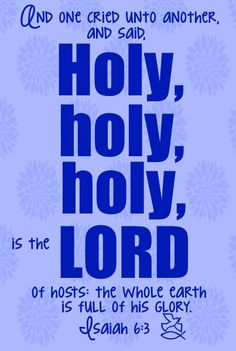
For Isaiah was about to have an opportunity to SEE something that few of living human beings ever get to see— “the Lord sitting on a throne, high and lofty.” He was going to taste the heavenly glory as he saw seraphs attending about the Lord crying to one another, “Holy, holy, holy is the Lord of host; the whole earth is full of his glory.”
It was the definition of an awesome experience if there was ever one. And Isaiah got it.
And in this awesome experience, Isaiah was about to get a calling to be prophet to a nation in crisis and be asked to respond. The Lord would ask him, “Who shall I send and who will go for us?”
Isaiah would then find the words to say, “Here am I: send me!”
And I believe that none of this would have happened if a death, a loss, a separation, hadn’t happened first. The death prepared Isaiah for all the new life to come!
The thing is that so many of us say with our lips that we “want to see God” or “we want to have more of God in our lives” or even that “we want fresh life in our church.” But we don’t really know what we’re asking for when we make such declarations.
For if we really want to see God, then, my friends, the news I have for all of us today is that death has got to come first.
It’s Trinity Sunday and my favorite time of year to pull out my favorite quote from Annie Dillard’s book Teaching a Stone to Talk who says this about the presence of God:
“It is madness to wear ladies’ straw hats and velvet hats to church; we should all be wearing crash helmets. Ushers should issue life preservers and signal flares; they should lash us to our pews. For the sleeping god may wake someday and take offense, or the waking god may draw us out to where we can never return.”
Our holy, holy, holy God full of power and might and just does not reveal Him or Herself to anybody. We have to be ready for it.
Something got to give. And it’s not going to be from God. It’s got to come from us.
We’ve got to be cleared of distractions.
We’ve got to let go of what exalted images of ourselves.
We’ve got to relinquish our sacred cows of the way things have always been.
And then the new calls, new experiences of God will come.
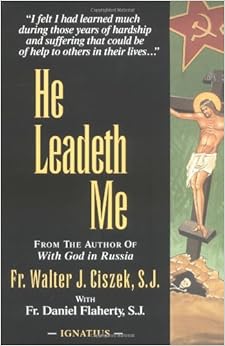 Recently, I read a book called, He Leadeth Me that tells the story of Walter Ciszek, an American priest who follow himself living and working in Russia at the time of the second World War.
It was one of the best books I’ve read in a long time because it gets at the heart of what relationship with God is about—surrender.
After begin taking captive in Russia and spending several years in solitary confinement waiting on his sentence for crimes he did not commit, he begins to realize that the only way he was going to survive was to let go of his own expectations of his life. Even though he’d lost so much, it just seemed like new deaths were coming all the time as his freedom was slowly taken away bit by bit.
Though he could have viewed what happened to him as unfair or unjust, he came to this conclusion: “For each of us, the trials will come in different ways and at different times--- for some, self may be easier to overcome than others—but we were created to do God’s will and not our own, to make our own wills conform to [God’s] and not visa versa.”
Or simply stated—Walter learned he needed to embrace death, loss and grief in his life so that God’s radical grace could take hold in his being more powerfully, so that even in prison he could more fully live!
So this is the truth I have to offer you today: if we want to see God, then death of what we want has got to come first.
You and I aren’t not the authors of our own lives—as much as we try to be, or want to be, or hope to be.
This doesn’t sound too much like good news this morning, does it?
But remember the title of the sermon again—a good death.
You might imagine when I was poking Kevin to help me with a sermon illustration I would not settle for his answer of Hitler. “Come on Kevin,” I said. “You’re smart, help me think of another good death.”
To which he looked me in the eyes and said, “Jesus.”
I smiled and thought to myself, “Duh. Of course Jesus.” (Why did I not think of that?)
For this is our faith we proclaim today my friends, that though death came to Jesus it was not the whole story. He arose! So, as we follow our resurrected Lord, our lives can have good deaths too. The lose of the best job we ever had doesn’t have to undo us. The lose of the dearest friend we’d ever known doesn’t have to undo us. The lose of the closeness of relationship with a child of ours doesn’t have to undo us.
No because we can believe that resurrection is on its way. Nothing is out of the realm of God’s redemption, my friend. Nothing. All things can be made new.
Death just has to come first. Though sorrow may last for the night, joy comes in the morning. And for this we can say thanks to God with hope.
AMEN
 It's the week of Mother's Day. And it's that time of year that the church struggles to know what to do with women who aren't mothers in the traditional sense.
Pastors muse about, "Who gets a rose and who doesn't?"
The church ladies are known to whisper: "What should we do since ___ doesn't have kids?"
And, women without children can't imagine feeling safe in worship services.
I recently did this interview over at Amateur Nester's blog with two other pastors about expanding the conversation between infertility and the church. I wanted to share it again here because I think these words might be helpful to all of us struggling to be more sensitive to those who find this Sunday to be a very hard day. If you'd like to see the full post, you can read it over here.
Q. What do you say to people who are struggling with their faith during infertility?
EH: I [struggled] too. You are not alone. To live in a very fertile world and to have the desire to parent (which is a natural God-given desire) and then not be able to without a road of intense hardship is difficult. It is very easy to feel like God has abandoned you or forgot you. Or loves your pregnant friends more than you.
Don’t beat yourself up about these feelings. Be honest about them. Share your faith struggles with somebody who can handle them (and not everybody can!). Stay close to people who are dealing with pain, especially older women. Let them be your teachers even if they have never been through infertility or child loss themselves. Talk about suffering with them. Read the book of Job, even together. Let God be with you in the pain to the degree that this is possible for you. For, this will be your way out.
Q. What would you say to people who struggle with attending church during infertility because of the emphasis on family?
EH: Stay at home. Do something makes you feel good about yourself.
Last Mother’s Day, I was in between churches so I didn’t have to attend. Instead of going to services, I went to a class at the gym, ate lunch with a good friend and then took myself shopping for a Mother’s Day gift.
Q. How do you acknowledge or address infertility in your own congregation? How can pastors address infertility from the pulpit?
EH: When people ask me why I don’t have children, I tell them. Or in small groups of women if this is something that comes up, I share. But if they don’t, this isn’t something I keep to myself. If I’m a crying mess about my own heartbreak, I’m not doing my job as a pastor which is to shepherd and lead others.
I don’t believe it is the role of a pastor to “throw up” their struggles on the congregation. Rather, this is what counselors, friends and family members are for. In being a pastor that doesn’t share the ins-and-outs of my infertility with the congregations I’ve served, it has given me an outlet to remember that I’m not as much of a failure as my body makes me feel.
This does not mean that my own struggles with infertility and child loss have not enriched and informed my own preaching and teaching. For example, over the years, I’ve preached during Advent while going through IVF. I’ve lead a baby funeral after just having my own miscarriage. I’ve even preached on Easter when I was convinced God didn’t love me. These experiences have helped me be more in tune with where most people in the church are at one point or another: unsure of God’s presence and fighting to have some kind of faith. I believe my struggles with infertility have benefited my congregations, even if they didn’t know the specific reason.
Q. How can the church in general better serve infertile couples?
EH: The church can stop saying stupid stuff like, “Everything happens for a reason” or “If you just pray harder. . . “ or “In God’s time . . .” These clichés are of no help to infertile women, or anyone going through a time of intense suffering for that matter.
Pastors need to do a better job of creating a climate of authenticity in church life. I mean, everybody is going through something. It could be infertility. It could be something loss of a loved one. It could be anything. We need to be able to talk to each other and abide with each other through the good times and the bad. Pastors set the tone for this kind of communal life.
Q. Do you have any resources (books, websites, etc.) you recommend?
EH: The resources I have to share deal with a theology of suffering.
One of my favorite books on this topic is Learning to Walk in the Dark by Barbara Brown Taylor. She has a lot of powerful things to say about how the “dark” times of life aren’t necessarily bad or full of God’s judgment on us, but rather an opportunity to more fully understand who God is!
I’m also a fan of Richard Lischer’s book, Stations of the Heart. Dr. Lischer was one of my professors in seminary and lost his son to cancer while his wife was pregnant with her first child. It’s one of the most real books I’ve ever read on grief and the forms it takes.
And Anne Lamott’s book, Stitches: A Handbook of Meaning, Hope and Repair is one of the best books I’ve read about what it means to walk with another person through suffering. Anne Lamott simply tells it like it is!
Today, I have one question: God, really what were you thinking hanging all of the hopes of the world on one birth and one night?
If you and I have any logical sense, hanging all ours hopes in life on everything aligning correctly as God did at Christmas Eve was a pretty stupid thing to do. We’ve all come to know that life is too fragile and too uncertain for only one plan of ours working out perfectly, haven't we?
Especially for the overachievers, we are the people of a back-up plan.
When we or our children are applying to college or graduate school, we want to know: “what is your fail proof school?”
When we are applying for our “dream” job, it is often asked of us, “what is your back-up offer?”
And, during late night sessions with best friends, we often ask: “If I am not with someone by this age or if my spouse dies early, can we be each other’s back-up plan?”
For we are a people who like to know that the odds of our decisions are working in our favor—and that if plan A doesn’t work, there is an equally good plan B around the corner.
But in the Christmas story as Luke 2 tells it, all of God’s hopes for the blessing of all the world were on one womb . . . one night . . . one mother . . . one willing partner . . . one band of shepherds . . . ONE chance to get it right or it would be a fail. For, there was not a back-up plan.
 There was only ONE plan.
And God trusted human beings to carry it out!
And, in this one plan, God trusted Mary and Mary’s body . . . as there was no room for error.
God trusted Joseph to be there for Mary . . . as we are told no midwife attended to the birth.
God trusted the shepherds to respond . . . as there were no other visitors right away.
God trusted the angels to sing . . . . as they were the creators of the first carols.
God trusted the star not to refuse to shine . . . as without the star, the shepherds did not know where to go.
The only ONE plan was built upon the audacity of God’s trust in everything happening as it should.
I was thinking this week if there was anything as audacious as this in our modern senses so to compare this to and I thought of a family facing foreclosure on their house and buying the most expensive lottery ticket. And, as they bought it, saying to themselves: “This ticket is going to save our lives.”
Never mind you, that it is commonly known from statistics that one’s chances of winning the lottery on a single ticket are highly unlikely with all of the probability variables. Even if you play a single state lottery (you best case scenario), the chances of one’s winning with a single ticket are 18 million to one. But, even still, this family buys the ticket, holds on to it and believes it is their one plan out of destitution.
And, so, it was the posture of God that night. Though no studies have been written to qualify the odds of the whole Jesus being born in a manger thing working out, we know the fates of this world were all stacked against this plan working out too.
Really, who could believe that a teenaged mother and a lowly group of animal watchers in a borrowed stable could be a part of something magnificent? What a motley crew!
But, yet we know on that Holy Night, the greatest lottery of all times came to be won as Jesus came forth and became called, Emmanuel, God with Us—welcomed by just these folks.
Though such a story can be hard to believe sometimes, especially for the most skeptical and analytic among us.
But our faith asks us to believe in the most bizarre of circumstances that God hit the jackpot that night and a child, who was called Christ.
And here is the real question: do we really want a story that makes perfect sense that is fully understandable? Do we really want a God in our lives who is just like us?
I don’t know about you, but as this year comes to a close and I look at all that has gone wrong and all that is not right in this world (oh the lists we could make!), I know one thing: that I don’t want my God to be just like me.
I don’t want my God to give me exactly what I deserve.
I don’t want my God to be one in whom I understand, explain away and make into a pretty scene sitting on my coffee table.
No, because life is just too messy. Life is just too painful. Life is just too busy. Life is just too unfair to hang my hopes tonight on a story I am in control of!
For, I need a God who is faithful, even beyond my most faithful friend to bring about something beautiful in my life.
I need a God who can work through the most impossible of circumstance to bring about something new, something that I cannot create on my own.
For, I need a God who can’t be explained through apologetics or formulas or charts.
I need a God who can align the paths and people and places of this world so that in the midst of darkness a great light is seen again.
For, I need a God who is beyond all comprehension as my ability to fathom mystery is to rational for the conception of something as wonderful as Savior born unto me again this evening.
For, I need a God to do the impossible . . . . to show up, to be present once again and to show me that life is not as it seems just as it is now.
If you are with me with any of this, then I tell you the good news this evening: Christmas, then, is just for you.
For just as we have been on this Advent journey all month, waiting for something, hoping for something, rejoicing with what was not yet, and imagining the possibility of loving fully once again: on Christmas Day, such blessing IS here.
The incarnation—this impossible thing— is a sign to us that no matter what happens in your life and mine or in this crazy world of ours, the impossible is always possible. And, we are not alone!
God came to earth and took a body. A body in all its messiness! God became one of us. If this is not humility and love, I don’t know what is!
What a gift! What a night! What a baby we have to celebrate!
When we think what will make our Christmas really amazing this year, I’m sure all of us have some ideas . . .
- A phone call from that family member we haven’t heard from in a while.
- Santa bringing us something that we actually like.
- An oven that magically bakes the best bread for Christmas morning—though we aren’t really good cooks at all.
Or, in my case no flight delays on Christmas morning . . .
It’s true: we come to this time of year with lots of expectations.
We want Christmas Eve to be magical full of light and love.
We want Christmas morning to be charged with feelings of peace on earth and no more cyber terrorism.
And if we are a parent, we want the days between Christmas and New Years’ to go by really fast so school starts soon . . .
But have we ever thought about Christmas as the day when nothing went as planned and God’s greatest blessings were completely unexpected?
This is the familiar story that we know: Mary has just gotten the word from the angel Gabriel that she is to bear a son, from the Holy Spirit whose name will be called Jesus.
Beautiful words to start a story, right? But, let’s think about it all from Mary’s perspective. What happened to Mary was nothing she ever planned.
It wasn’t as if Mary came from a life situation where having a child so young, some scholars believe she was as young as 14, was a welcomed joy.
It wasn’t as if Mary was born into royalty where she received a health care plan at Herod’s expense.
It wasn’t as if she had access to the best midwife care in her town.
It wasn’t as if Mary’s very life wasn’t at risk for bearing a child, no matter if this child was the son of God or not.
And, from the information scripture does not give us, we can assume this too: Mary did not come from a supportive family situation.
Never do we hear of her mother, or her father. Or, anyone for that matter that is coming to her aid.
One preacher friend of mine puts it like this: “What Mary does not have is sonogram, or a husband, or an affidavit from the Holy Spirit that says, ‘the child is really mine, now leave this poor girl alone.’ No teen pregnancy organization surrounding her with support.”
So, where was God in such a bewildering time like this? How on earth was she going to get through this especially as her body was changing more and more every day?
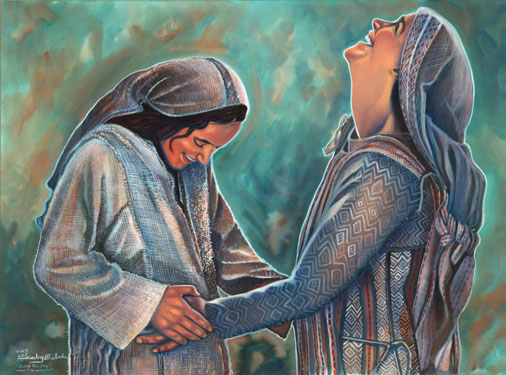 Enter into the picture, Mary’s older cousin, Elizabeth.
Another unexpected thing happens in this family---
Elizabeth, at an unknown age way past childbearing years, has found herself pregnant too. Though thinking for years that she was barren and thus, looked upon in society as second class beyond her already lower status state, a child comes to her womb too.
Her son will be named John and will be given the responsibility to prepare the way for the Christ.
So when Mary had the idea of setting out to see her cousin Elizabeth, it was an important meeting for them both. These two—together—might just have some insight into what this crazy God they worshiped was all about.
Then as soon as Mary greeted Elizabeth, Elizabeth’s child is recorded as “leaping in her womb.” It was a prophetic sign that even in spite of the confusion swirling around both of their lives something greater than both of them was occurring. God was very close.
And for the next three months, these two unlikely prophets and prophetic children they are carrying, come to see how their state of being can be considered a blessing.
Rev. Barbara Brown Taylor writes about what occurs with Mary’s state of mind as a result of being with Elizabeth: with her “the young girl doesn’t have to explain her situation to Elizabeth or ask her questions in search of answers, even to ask for acceptance.
When Mary sees her older cousin, Taylor imagines, she sees a ‘gorgeous’ woman, not gorgeous by ordinary standards, you understand, but so full of life that is hard to see beyond her joy.”
The unexpected thing that happens from the moment Mary walked into Elizabeth and Zachariah’s house is that Elizabeth became for Mary the mother figure or spiritual mentor that she needed to re-frame the story of all that was happening to her.
And so as the baby Jesus leaps in Mary’s womb, it is Elizabeth who speaks blessing over Mary’s life in a way that she could only have really heard from her: “Blessed are you among women, and blessed is the fruit of your womb.”
Elizabeth re-narrates this thing that has happened to her cousin in a way she could understand it to be the goodness of God coming to her. Elizabeth gives Mary language to understand this blessing so she can praise God for it!
And through Elizabeth’s loving care, Mary would begin to see that what was happening to her not as “that day that ruined my life” or “some unfortunate circumstances” but a blessing!
I love Elizabeth for this reason—and believe we all need more Elizabeth's in our life (no pun intended!)
But it’s important to say here that as Mary gained this new supportive friend, noting about the hardship of her situations really change (or Elizabeth’s for that matter).
A lot of hard stuff was next! Mary needed to tell Joseph some unwanted news. Soon she would have to endure the stares at the marketplace (everybody wondering, who is Mary’s baby daddy?). And Mary would still have to meet the sharp pains of childbirth in ancient Palestine without much help.
But she would not be alone. Elizabeth would be with her in spirit. God’s son would be growing in her belly.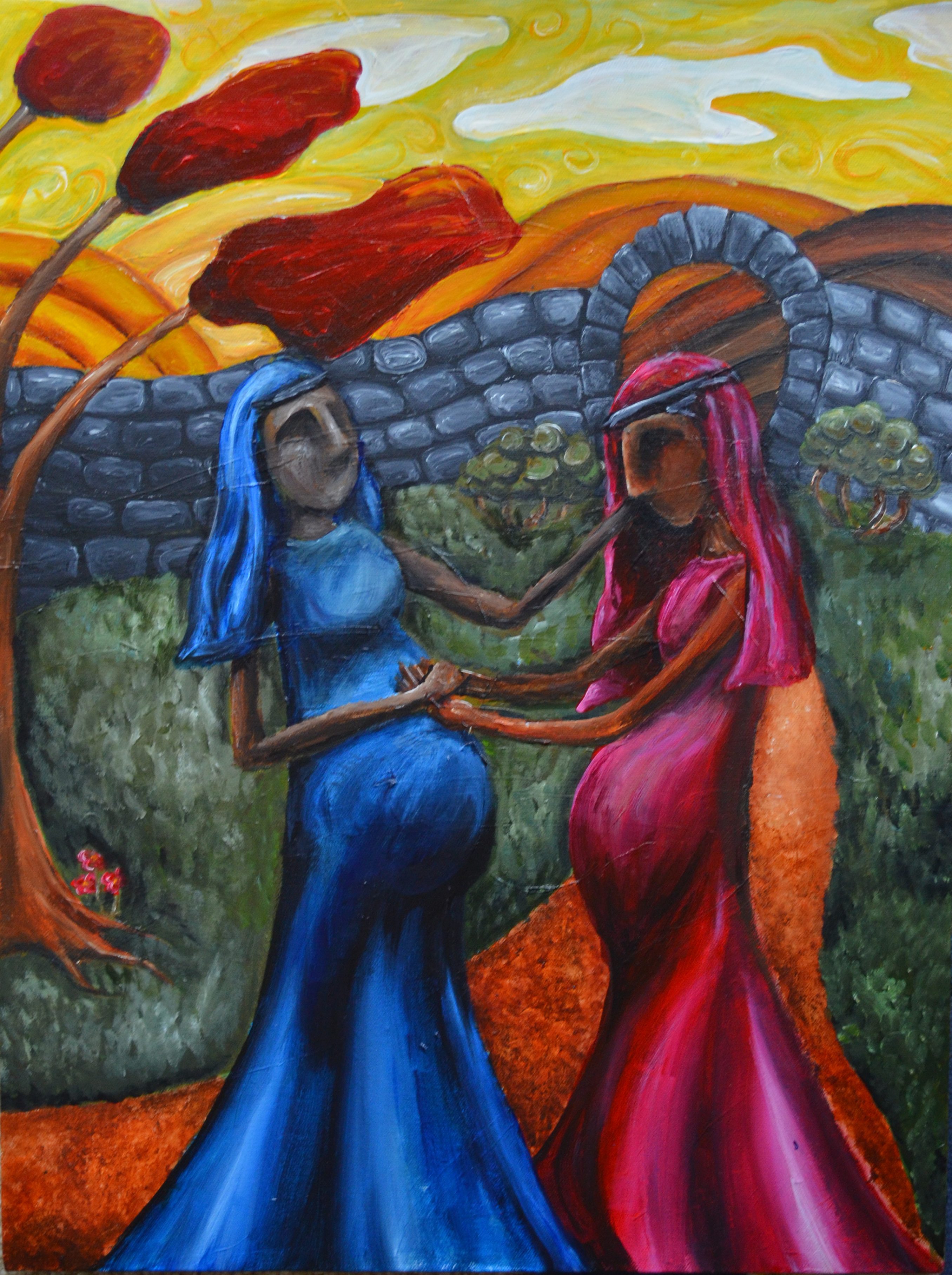
And even thought Mary may not have understood why God choose her, there was a lot to sing about.
That afternoon at Elizabeth’s house, Mary was the unlikely soloist in God’s choir (who knows if she could even carry a tune) but she sings: “My soul magnifies the Lord, and my spirit rejoices in God my Savior . . .. Surely, from now on all generations will call me blessed; for the Mighty One has done great things for me, and holy is his name.”
But, Mary could have been angry.
She could have been overtaken by fear.
She could have protested to God—this is not how the first Christmas should be! I don’t want this part in the play!
But she doesn’t.
She makes the choice to receive the unexpected. She welcomes God into her very being.
Maybe not in the way that history always tells her story—passive full of blind submission, but I believe with maturity that could have only came from sticking close to dear ones like Elizabeth and to her own spiritual instincts.
And as Mary sings about how God “has looked with favor on the lowliness of his servant” she is embodied this new direction of God’s song for all people!
For in God choosing her a peasant girl, God is saying loud a clear, the economic and social tables of this world will soon be turned upside down. A new world order is coming in the kingdom of God that Mary’s child will preach and proclaim. Everything will change!
The most unexpected blessing of all would be that the fruit of her womb, Jesus, would soon bless ALL people of the earth. You and I would not be sitting here today if Mary had not received God’s unexpected gift.
And isn’t it true? God’s unexpected gifts are always better than we could imagine!
So I ask you again, what are you expecting this Christmas?
Anon, a leader of the Islamic faith recorded this prayer about the coming of blessings:
I asked for wisdom...
And God gave me problems to solve.
I asked for prosperity...
And God gave me brains and the strength to work.
I asked for courage...
And God gave me danger to overcome.
I asked for love...
And God gave me troubled people to help.
I asked for favors...
And God gave me opportunities.
I received nothing I wanted.
I received everything I needed.
My Prayer has been answered.
I shared this prayer because I have seen it come true time and time again in my life.
How often have I set out on a life path thinking, I know exactly how the story is all going to end, only to land somewhere different? But ultimately is better if I’m walking in the ways of the Spirit?
Just think for a moment where in life you were on this day—December 21st or hereabouts last year?
What were you consumed with? What were you worried about? What were you spending most of your time on?
I think about my own life—last Christmas, sort of sad. I was thinking about how much I had to say but no place to say it. But now, I am having so much at The Federated Church.
If we take just a moment to gain some big picture perspective, what we’ll find is that God is doing unexpected things in our lives all the time. He’s making crooked paths straight. He’s leading us into new relationships. He’s opening doors where life’s cruelties have shut windows.
But the question for us is—how are we responding?
Are we blocking the movement of the Holy in our lives by being consumed in things that really don’t matter much in the end?
Are we blocking the moment of the Holy by refuses to see what are the best choices for our life’s routines?
Are we blocking the movement of the Holy by our own stubbornness to believe this unexpected story of redemption?
 Today, my friends let us take some encouragement from Mary. Let us follow in her footsteps and make the choice to believe. Knowing that as we do, an Elizabeth is on her way—whoever she may be—to inspire us for all that lies ahead.
Let us not let one more moment pass in this busy time of year where we don’t make room in our hearts for more peace, more hope, more joy and more love.
Why?
Because tis the season for Christ to be born and we need to get ready!
“Oh come my heart, Lord, Jesus, there is room my heart for you.”
AMEN
I travel a lot these days to hug children, to greet staff and to write stories about how Feed the Children’s donors are helping kids have clean water, access to education and more sustainable food sources around the world. Sometimes, I wake up not knowing where I am! But when I figure it out, I want to full present in that space, not somewhere else.
I'm back in United States this week, settling in, remembering, and telling others about my 3 week experience in Tanzania and Kenya. Trying to heed my own advice about being present here now . . .it is hard to do.
I keep thinking about Kenya. There are few words that can describe what happened. It was more profound that just seeing the life-changing work. It was more profound that having my eyes opened to deeper levels of poverty I'd ever seen. It was more profound than entering into the deep waters of relationship with my Kenyan friends and even more profound than being asked to baptize four of the children who are a part of our children's center in Nairobi.
No, this trip gave me a gift that only God could give.
The best words I have come from my songwriting friend, Sara Groves.
Something changed inside me broke wide open all spilled out
Till I had no doubt that something changed
Never would have believed it till I felt it in my own heart
In the deepest part the healing cameSomething so amazing in a heart so dark and dim
When a wall falls down and the light comes inAnd I cannot make it
And I cannot fake it
And I can't afford it
But it's mine
Something changed.
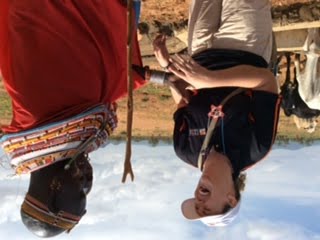
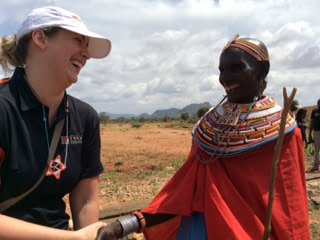
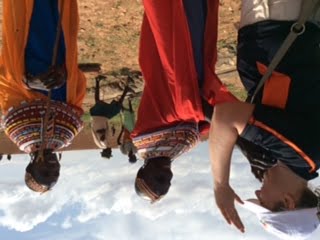
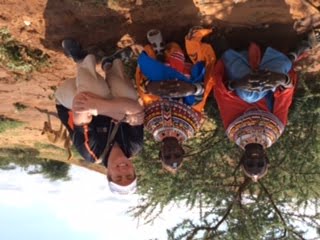
And if you wanted to see for yourself, let me introduce to two some mothers I met while visiting a Feed the Children water project in Samburu, Kenya. And I should tell you we could not speak a word of an understandable language to one another.

Mary is 36 weeks pregnant, and baby Jesus is due any day.
How do we learn to wait for a baby savior?
Waiting for Christmas is about waiting for a baby to be born, and as any mom will tell you, that kind of waiting is hard work. We get impatient. We get distracted. We take baby waiting as primarily an excuse to eat huge quantities of butter, chocolate, and combinations of the two. But babies change everything, and learning to wait with hopeful longing for God’s new life to burst into the world is at the heart of the Christian faith.
But not everyone who waits for babies waits 40-week gestational periods. There are some parents who must endure rounds and rounds of infertility tests and treatments to even have the possibility hearing that a baby is officially on the way. There are some parents who wait by wading through the rigors of adoption paperwork and court dates. There are some parents who wait for babies who doctors have said have little chance of survival out of utero. There are some co-waiters: aunts and uncles, grandparents, and siblings who come alongside those who wait for babies, both when there is a due date and also when there is not.
What can all of these experiences of waiting teach us about waiting for baby Jesus?
 We (Sarah and Elizabeth) became friends as roommates at Duke Divinity School. We later were both ordained as ministers within the Baptist church. Several years after seminary, I (Sarah) birthed two girls back-to-back and wrote a theological reflection about the experience in a book called, Creating with God. I (Elizabeth) am still waiting to become an official mother, and have written a book (forthcoming) about infertility. How could we as pastors and friends hold our radically different experiences of waiting in the same conversation? This writing project is our answer.
This Advent season, we invite you to learn to wait for a baby Savior by waiting with us.
We have asked 4 people with radically different experiences of waiting for babies from even us to write one meditation for each of the four weeks of Advent: Joe, Susan, Beth, and Dayna. We hope that over the course of Advent you get to know each of us better and enter into our stories in a deeper way. We’ve also asked guest writers to join their voices to our project too: Joy, Chris, Jonathan, Jennifer, Kevin, Ed and MaryAnn. They’ve got some fabulous things to say too!
Join us in this conversation of study and preparation this Advent. If you would like a PDF of the project emailed to you, leave your email in the comments or sent a message in the "Contact" section of the blog and we'll be glad to send you the daily devotions.
With anticipation,
Sarah and Elizabeth
If you want to read some posts- check out these favorite ones from some of our writers posted in Advent 2013:
“Discovering Joy” Dayna Olson-Getty (a grieving mom’s story about finding peace)
“Discovering Joy” Elizabeth Hagan (a grieving mom to be)
“Discovering Joy” Susan Smartt Cook (a midwife’s perspective on waiting)
“Love That Groans” Beth Dotson (a grandmother who has waited with others)
“Love That Groans” Joy Bennett (a grieving mother who lost a child)
“Waiting with Hope” Jonathan Wilson-Hartgrove (an adoptive dad)
“Waiting with Hope” Sarah Jobe (a mom of 2 young girls)
Jambo (hello) from Kenya.
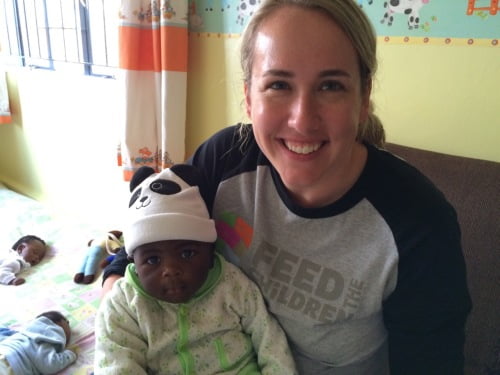 For the past two weeks, I've found myself traveling in East Africa to participate in the work of Feed the Children.
I've taken early morning flights. I've brushed my teeth with bottled water. I've visited primary schools. I've watched the sun set over the Indian Ocean. I've taken lots of pictures for FEED's social media. I've helped to cook Thanksgiving dinner for 50 kids. I've sorted Christmas presents. I've eaten more chips (french fries) than I should. I've held babies, lots of them.
In all of these things, I'm learning.
I'm learning about the importance of traveling with lots of vitamin C, good shoes and your own plane blanket.
I'm learning about having throw-up cloths near by at all times when holding babies, and never to underestimate the power of showing a child a picture of his or her face (what joy!).
I'm learning that slowing down is the way of life in Tanzania and good tea is everything you dream it to be and more in Kenya.
It's my 6th trip to the region since 1999. My East African country list includes Kenya, Malawi, Tanzania, Uganda and Rwanda as well as having flown through Ethiopia on multiple occasions. This region feels more and more part of my life every time I visit. In fact, the Feed the Children staff now greet me when I arrive, "Welcome home!"
I'm learning that when an African says, karibu (welcome) they really do mean it and want you to feel a part of their lives and space. 
I'm learning the sweetness of friendship is so very possible here, even if there were so many reasons to be disconnected.
But even more than this, this preacher on the plaza is learning about my faith, the faith that I want to have in Jesus.
Coming to Africa reminds me that the Jesus I think I know isn't wrapped up in my American citizenship. Jesus always crosses racial and language divides. Jesus always leads us to the stories of the most vulnerable and ignored. And then asks us do something about what we hear!
Most of all I am learning to not be surprised when Africa opens my heart, like no other place on earth can.
To new friends.
To eyes that tell stories.
To shocking possibilities.
To hope.
One of my favorite authors, Anne Lamott says this: “Hope begins in the dark, the stubborn hope that if you just show up and try to do the right thing, the dawn will come. You wait and watch and work: you don't give up.”
There's so much I'm hoping for here.
For more children to be well-fed.
For nations and their leaders to be at peace.
For my own heart to live into what has eternal value.
Africa: what a classroom!
I'm so glad I'm here.
A Sermon about Exodus 17:1-7 preached at The Federated Church, Weatherford, OK
 Do you remember the last time you were really thirsty? Parched mouth? Dry tongue? Dreaming of water flowing from a faucet?
In our water bottle, water fountain and Sonic on every corner culture, it’s unheard of that any of us would ever "die of thirst” as we are all known to dramatically say from time to time.
Water is something we have enough of, almost always in this part of the world. Unless, of course, a tornado threatens to come through or an ice storm hits and our neighbors hoard the bottles of water off the shelves at Wal-Mart leaving nothing for the rest of us . . .
In Old Testament reading for this morning, Israelites found themselves with one very big problem and it had everything to do with water.
Two weeks ago, we left the Israelites on the their journey out of Egypt as the miracle of the crossing of the Red Sea just happened. With joyous celebration they exclaimed the amazing provisions of their LORD leading them on their way into the Promise Land!
Just three days after crossing the Red Sea-- the big and dramatic-- experience of faith, the group was short on water. Scripture tells us that God led them to a spring where their thirst could be quenched. All was well. God was mightily at work among them, providing for their every need.
But, of course we know that their water jugs did not stay filled for long.
In chapter 17 verse 2 they said to Moses again: "Give us water to drink."
And, such was a good, normal, everyday, essential need, right? Of course they had a right to ask this request of God.
H2O, we know, is critical to our very existence: the definition of a need. Most medical professionals will say that a human being, in reasonable to good health can only live between 3-5 days without water before suffering from extreme dehydration and shock leading to death.
So, while, we might read Exodus 17 with thoughts in our head like "here they go again complaining,” simply the Israelites sought to express a deep need. They needed to say to Moses, their spiritual and administrative leader, "We must have water now!"
In the meantime, however, what were they to do? How were they to wait?
How were they to respond to an unmet need that they were powerless to fix?
Did it mean that their need was not really a need?
Did it mean that God had abandoned them and truly wanted them to die, as they feared? It sure felt that way . . .
It's easy to kick the dog when you are down right? And, so, went the days of the lives of the Israelites and their relationship to Moses.
As they perceived God not giving them the life they wanted, they took out their pain on the easiest next best thing: Moses.
Voicing their frustration to the point that we hear Moses fearing for his life in verse 4-- believing that in their extreme thirst the crowd might stone him if they didn't get a drink and fast.
Moses' natural response to the crisis as a leader was fearful of the crowd's response, but tempered. We hear in the words of this text, Moses saying to the crowds: simmer down stop bothering me and simply trust in God’s provisions-- as this was God's job to meet their needs.
I can imagine, if I were a member of the crowd, I would have found Moses' calm as a cucumber leadership style really annoying. Wouldn’t you?
Trust that God would provide?
"Oh, Moses," I would have said. "It's so much harder than that. When, tell me, when God is going to get God's act together and find us some water!”
For, secretly they hoped that in Moses' bag of superpower, bring on the 10 plagues kind of tricks, he could lead them by another spring and they'd worry about water no more. But, such was just not going to happen.
They needed to wait. They needed to wait to see what could become.
A friend of mine shared with me this week a similar frustration with the world and with God.
After being out of work for the past nine months due to a company downsizing in these difficult economic times, she is currently at the end of her rope.
After sending out over 500 resumes, doing everything she can to do what experts say to do when you are looking for work: networking, staying on a schedule everyday and trying not to get down on herself even as the funds in the bank account slowly begin to run down, she says the best parts of her life are dying more every day.
After interview after interview, rejection letter after rejection letter, and sleepless nights and pleas for prayer to any religiously minded person she knows, my friend shared she was beginning to think that God had forgotten her.
No one in her life seemed to care that she was out of work and without a job coming her way soon; she might lose everything she's worked so hard for including her modest home. She hears her pastor say often at church that “God is going to work things out” but to her God is a distant figure that doesn’t seem to care about her pain.
But in the spirit of these same frustrations, the Israelites were asked to have ACTIVE faith in their waiting.
They were asked to believe that God was still at work, even if they couldn’t recognize it in the moment.
And so, these were Moses' instructions from God: "Go on ahead of the people, and take some of the elders of Israel with you; take in your hand the staff with which you struck the Nile and go. . . . Strike the rock,” God said, "and water will come out of it."
It was a simple as that. Strike the rock with your staff.
I can imagine that laughter erupted from the crowd AND anxiety of what might be next (if this didn't work) from Moses. This God they were serving was just getting crazier and crazier all the time . . .
But, Moses did as instructed by the LORD. And to the amazement of all, it worked. Sweet God Almighty brought them water from a big ole rock!
Let’s stop here and note that this provision was nothing like they expected. NOTHING. But yet it was water nonetheless and EXACTLY what they needed.
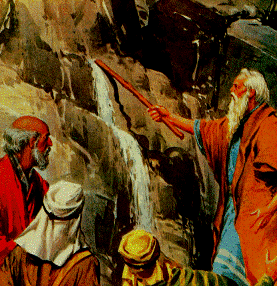 The water came not from a spring (as it did before) nor from going back to Egypt (as they had suggested), rather, it came from something that was dead.
Though it would have not been a word they used at the time, the best way I know how to describe the scene is by calling it resurrection! That out of something that seemed life-less and certainly not life-giving, out flowed streaming of living water.
Professor Amy Erickson sums up what happens in this way: "It strikes me (pun intended!) that God choose to bring water-- and the life it symbolizes and will impart-- out of something that appears to be lifeless . . ."
But, this my friends is exactly how God works.
Dead is never dead in the kingdom of God.
Lost causes are never really lost.
And the broken down and washed out are really never without hope.
When I was serving as an associate pastor at Untied Methodist congregation while in seminary at Duke Divinity in North Carolina, I told it was my job to make most of the pastoral visits.
On a Monday afternoon only a couple of months into my second year at the church, I found myself sitting in a rocking chair on the back porch of Mrs. Melba’s house. She offered me some iced tea—as good southern women do. We began chatting about life. She wanted to know how my classes were going.
Mrs. Melba, a spunky woman in her early 70s, tried to keep a brave face for this young pastor student. But soon she was fighting back tears as she began to recount to me details about her husband’s recent death. He’d died of cancer recently.
She misses him more than she could even say.
She had trouble, she said, finding the energy to get out of bed in the mornings, many days still.
She couldn’t seem to find her purpose for living life anymore, she told me.
I remember this afternoon so well because in the moments that followed, I broke what I had learned only a few days earlier in class, some of the “rules” of pastoral care. My classmates and I were told to not show too much of our own emotions when we made visits. But, I cried too. Melba and I sat and rocked on that porch and cried. Her feelings of this great “dead end” sign life had handed her felt just as overwhelming to me. Sadness felt thick in the air.
Because most of all Melba felt like God had forgotten her. Everything around her felt dead. She felt dead without her beloved, even though her pulse told her she was still living.
A few years later, a man in mid 30s sat in my office. We were chatting about life. How crazy the amount of snow that winter had been.
But soon, Tom began telling me about how he felt his life had hit a dead-end too.
Tom was the father of three kids, but none of them were living with him at the time. His ex-wife had sued him for full custody of the kids, and had won because of the hot-shot lawyer she’d hired.
Lies had been told about him court.
Though Tom had made some mistakes in life—been a big fan of drinking too much in his younger years—he’d cleaned up his act and there was no good reason why he couldn’t even see his kids on the weekends.
To make matters worse, at a church Tom had previously attended, he was told by an associate pastor that he was no longer welcome to worship at the Sunday services. The pastor, it seemed was the reason his marriage broke up in the first place. His wife and the pastor had a long-term relationship on the side that he was just now finding out about.
Tom felt let God was as far away as possible. Everything around him felt dead too. No wife, no kids, and no church family to help him through this hard time in life.
But—and there is always a BUT in the kingdom of GOD—these feelings of deep despair was not the end for Melba and Tom.
Though in these moments they faced some of their darkest hours, God was still at work.
New water was about to come out of rocks in their lives.
As Melba continued to put one foot in front of the other, getting out of bed every morning, slowly she began to see that life wasn’t finished with her.
Through the loving embrace and watchful care of her church family, she started moving toward service of others once again. Melba started singing in the choir. She involved herself in the mission projects of United Methodist Women and she took her turn leading the lessons in her Sunday School class—using the lessons she learned about finding God in this hard place with other widows like herself.
And Tom, as he took the risk of being a part of a new church community, putting aside the hurt of his previous church in the past, began to see new life spring up around him too.
Tom’s secret passion for writing became a real gift to the church’s communication ministry.
And with encouragement from some new friends and the recommendation of a new lawyer, he was able after 5 long years of separation to spend weekends with his kids again.
.jpeg) Both Melba and Tom learned through their pain that this exactly how God works. Dead is never dead in the kingdom of God. Lost causes are never really lost. And the broken down and washed out are really never without hope.
Both Melba and Tom learned through their pain that this exactly how God works. Dead is never dead in the kingdom of God. Lost causes are never really lost. And the broken down and washed out are really never without hope.
So, my friends, I tell you today, the God of Israel, the God of Moses who struck that rock that day to watch water flow from such a dead place is alive and wanting to be at work in your life too.
Let us be active in our waiting.
Let us not grow weary in doing good.
And let us surround ourselves with loving community to remind us of the Lord’s goodness if we forget.
And in fact, this is what we are about to celebrate in a few minutes as we come to the table of God—we’ll taste and see that what was once dead has come to new life. We’ll taste and see the sweetness of resurrection called the body and blood of our Lord. And we’ll celebrate together that anything, yes, anything is possible in the kingdom of God. God is always at work!
AMEN
God Sent Me Before You: Genesis 45:1-15
Sermon Preached at Idlywood Presbyterian Church, Falls Church, VA
It is so easy look out on the world with a lens of two categories in which to place people: heroes and villains. Maybe this is indeed why the movies with the highest gross sales this summer (or anytime of the year usually) are those films about superheroes using their  powers to defeat the evil characters. We can’t get enough of depictions of do-gooders vs. villains it seems. Batman vs. the Joker. Spiderman vs. the Green Goblin. And of course, Superman vs. Doomsday. It’s an expression of this to:
- Label one group as right and another as wrong and to have no grey in the middle... .
- Label one neighbor as good and another as bad without hope of rehabilitation . . . .
- Label everything in life in fact according to the statement of “either you are for me or against me.”
And in doing so, our depiction of what it means to be human in this world becomes quite flat, doesn’t it? All the complexity, all the compassion, all the grace simply isn’t present.
Even if we call ourselves opened minded or even progressive Christians, we have to admit we all like to play this game of assigning parts both to ourselves and those we encounter in our daily lives . . . And of course, you and I always play the role of “good guys.”
This morning I am going to propose that when we read scripture, we do the exact same thing. We read Biblical stories assuming we’d find alignment with only the best of the best. And if not this, then we’d find ourselves in the group of the characters that emerge in the end as heroes. Right?
We’d be like Jonah preaching to Ninevah. We’d be like Stephen, preaching the gospel until our death. We’d be like Paul going on his 3rd missionary journey bringing hundreds to the faith. But, wow.
What a distorted image we have of what doing good in this world is all about! And of God's word too.
So this morning, I’m inviting you to take a deep breath. To take a 15 minute and counting holy pause and open our eyes anew. And in this time, see again the limitation of what is our human lens but what is the vastness of our God.
In our Old Testament reading for this morning we encounter Joseph, several chapters into this story as outlined with careful detail in the book of Genesis. This is what we know—and probably what many of you might know well from Sunday School or a certain Broadway play called Joseph and the Amazing TechniColored DreamCoat.
Joseph was one of the younger sons of the great patriarch of the Hebrew story, Jacob. Joseph was born to Rachel, Jacob’s favorite wife along with the youngest Benjamin. And for this reason and others that only Jacob knows—Joseph was a highly favored child. And everyone knew it, including his 11 other brothers. In his favored status, Joseph became the kind of guy that all of us might just want to slap around for his “know it all” attitude.
So you can imagine how well this went over with his brothers . . .
One day Joseph came and spoke to them about a dream he had (that one day they would bow down to him) ALL while wearing the special coat that father gave to him and only him. In response, Joseph had to die, one brother said! And the prank that should have just been a boyish prank went one step too far.
Joseph was thrown into a pit. And he was left there. In an effort to get rid of him, a brother sold him into slavery to a band of travelers that just so happened to be heading toward Egypt.
That night Joseph’s father, Jacob was told that his beloved son was dead.
Joseph goes on to Egypt in chains. He makes the best of it though, becoming a house slave for prominent Egyptian citizen. But his good luck didn’t last for long. Soon he was accused of adultery (that we clearly see he didn’t commit) and thrown into Pharaoh’s prison.
It’s at this point of the story that we start to feel sorry for Joseph. Poor guy was not loved by his brothers. Poor guy was thrown into a pit. Poor guy was sold as a slave. Poor guy found himself in prison. Joseph, clearly is the good guy, then, right? Poor Joseph.
And while I’m all for compassion to those who have suffered--- after a week like what we’ve had this week, we know our world is in need of more compassion and kindness, isn’t it?
But, let us stop ourselves from making this story into good guy moralism tale—as if Joseph had no responsibility (even a little) for what happened to him that day his brothers threw him into a pit.
The story goes on that Joseph rises up from a prison inmate to become Pharaoh’s advisor, again by relying again on his dream interpretation ability. He tells Pharaoh that he sees that a famine is coming to the land. In the days of plenty, Egypt needed to prepare for the lean times that would be up ahead.
The Pharaoh trusts the counsel of Joseph’s dreams so that when the famine does come—just as Joseph said it would be—Egypt has already positioned itself as a nation of great influence. Everybody who needs grains has to make a journey to Egypt to purchase some.
And as the story goes, the sons of Jacob are hungry—they are running out of food and Jacob sends them to Egypt to purchase some food. But, Rachel’s other son, Benjamin cannot come. He must stay at home with his father in case anything happens to the band of brothers along the way.
So the brothers come to Egypt. They make their case. They tell their story. Joseph knows right away who these men are, but the brothers do not know Joseph. It is at this point of the story where most would say that Joseph had every right to take revenge, to make his brothers pay for how his life was ruined as we’ve heard shouts of “somebody’s going to pay for this” all week on the news.
And this is what we know, Joseph doesn’t cause them harm. But he doesn’t openly embrace them either. Instead Joseph plays a game.
Anyone watch the popular reality TV show called, “Undercover Boss?” It’s found its way to cable television now though it used to be shown weekly on CBS. The basic premise is that a prominent CEO goes undercover in various positions throughout the company for a week.  In doing so, the CEO usually puts on a wig or special costume, tells no one whom he or she is with hopes of finding out the real story of what is going on with the morale of the lower level employees.
It can be funny at times as a person used to wearing a business suit every day is ordered by their trainers to wash dishes or hang power lines or even collect trash—all while no one knows that the "trainee" is really the ultimate boss. The show usually climaxes in a reveal moment—where everyone knows the truth about the big boss. Those who have done a good job while in the presence of the CEO unaware are rewarded and those who have misbehaved are disciplined.
When we arrive at Genesis 44, what we find is Joseph acting a lot like the CEO of “Undercover Boss”—he gives his brothers a series of tests to see how they will respond. He places a large amount of money in several of their bags—as a test of honesty.
He throws his brothers into prison until they can come back with his youngest brother and then later his father.
As I was sitting with these verses this week, trying to come to the conclusion that most commentators do at this point: “Oh, Joseph was just trying to be sure his brothers could be trusted…. Of course he’d put them to the test.” I just couldn’t go there, because what I saw Joseph doing was playing tricks on his brothers, torturing them with his games.
Why? Because he was doing what those who have been abused often do to others—abusing them in return.
Joseph helped his brothers feel some of the pain he’d known for all those years. And sure, while it would have been nice if Joseph’s brothers had enough awareness to recognize him in the first place . . .
And sure while it would have been nice for his brothers on first sighting of Joseph, bow down in tears of repentance . . .
They didn’t. But, such did not give Joseph a free pass at playing hurtful games on his brothers.
To be abused does not give a person the right to be an abuser. Ever.
Eventually, much like the ending of one of the Undercover Boss shows—Joseph could not control himself anymore. Upon sight of his full-blood brother, Benjamin he weeps then collects himself again then declares to all: “I am Joseph.”
And Joseph makes this statement in chapter 45, verse 5: “And now do not be distressed, or angry with yourselves, because you sold me here; for God sent me before you to preserve life.”
It is at this moment, church that we want to bless Joseph as the good guy, the one who pulled himself up by his bootstraps, the hero of providence that used the circumstances handed to him for good—and all of this true. Joseph is a good man as much as any of us are good. Joseph did seek to do well with the difficult life challenges he was given. And he certainly was a guy who could be labeled with the virtue of “perseverance.”
BUT, is this a story about Joseph and what it means to be on the good guys team? Many Biblical commentators might say yes, as they often want to turn this chapter into a role-play about “how to make friends with your enemies.”
But consider Joseph’s statement again—“For God sent me before you. . . .” I believe that one sentence is the best thing Joseph ever said or did. Joseph may have gotten a lot wrong and he might not be a perfect model on reconciliation, BUT he stopped to acknowledge the Lord. And by saying, “God sent me before you,”
Joseph gives a short sermon summing up what could be the entire message of scripture.
Let me explain: you see, in the end, the story wasn’t really about Joseph. It wasn’t about his brothers or his father. It wasn’t even about the continuation of the tribe of Jacob and their sticky relationship to come with the nation of Egypt.
No, Joseph’s life is a story about God. It’s story was and is about how God includes us, uses us and cares for us as we live into the good news of life’s grey in between.
It’s a story about how nothing of our humanness can hinder the movement of God’s presence in the world—not our pride, not our deceit, not our trickery, nor our famines or war.
It’s a story about how God is such a mystery beyond all our comprehension—even on the darkest of nights, most confusing of landing points, we can still believe in God who goes ahead of us to forge a way. It’s a story of God being very much present. When I look at our world and all the big things that have happened in the past week or two-
- Cease fires not honored in Israel and Gaza
- Children starving in Syria
- Beloved comedians taking their own lives
- Innocent black teenagers being shot in Ferguson, MO
(And more than I can name)
I have to think that all of us need some more good news of a God who goes before us, a God who never leaves us (though we might feel the absence), and a God who uses even the greatest evil plots of human hands for the good.
Later on in chapter 50 Joseph says this to his brothers, “You meant [what you did] for harm, but God meant it for good.” Why the horror of corruption, of evil, of injustice go on in this world, I do not know.
Why God does not intervene sooner than we would like, I do not know.
But what I do know is this: good always wins in the end.
And, God’s vision for our lives, for this world, for the human race is always bigger than we could ever imagine. So we need not go back to our search for a superhero, or our camps of “He’s good and she’s not.”
No, let us find another way to be together that begins in love.
And though weeping may come for the night, joy will come in the morning.  Would you join me in singing this song of hope as our reminder of God’s presence with us?
He´s got the whole world in His hands, He´s got the whole world in His hands, He´s got the whole world in His hands.
He´s got the the tiny little baby in His hands, He´s got the the tiny little baby in His hands, He´s got the whole world in His hands.
He's got ev'rybody here in His hands. He's got ev'rybody here in His hands. He's got the whole world in His hands.
AMEN
“All In”
Sermon Preached at Oaklands Presbyterian Church in Laurel, MD
Matthew 13:31-33, 44-52
 I don’t know about you but I’m not the kind of person who enjoys taking BIG risks.
I like to make measured decisions with the risks carefully analyzed and put into a larger perspective. I’m the kind of person who likes to shop the sale rack for the best prices and then comes back with a coupon for a discount 2 days later—with a spring in my step because I know I’ve made a really good decision.
In light of this, I’ve always thought that gambling with money was stupid because of odds.
But on a recent stop through Las Vegas while on vacation with my husband, Kevin, I found myself sitting in front of a slot machine, something I've only done a few times in my life.
And not just any slot machine, a DOLLY PARTON slot machine that sang to me “Working 9 to 5” and “Jolene” anytime I put coins in. I know it’s not a preacher-ly thing to do—starting off the sermon talking about gambling . . . but hang with me.
Within minutes, I found I’d doubled my $20 bill with Dolly singing my praises with another round of “Jolene.”
It was exciting but I was ready to stop. My husband—the biggest Dolly Parton fan—egged me on though.
“Don’t you just want to keep playing?? You’re hot! Why don’t you bet it all? I think you’ve got Preacher’s luck!”
But, I said no. I just wanted to leave the game and the entire experience while I was ahead. Proud of the fact that I was doing what few do: leaving Vegas with more money (if only a few dollars) than I started with.
Sure, I could have made more money, but I could have lost more money just as easily!
Though I don’t think that the parables before us this morning really have anything to say about gambling as we know it in our modern context, they do challenge our sentiments toward risk management and playing it safe. The scriptures before us today ask us questions like:
Why do we NOT make impulsive decisions when the Spirit moves us to act?
Why do we NOT stay in the game longer, even if we can't be assured that we'd win?
Why do we NOT make so- called “unwise” investments when a neighbor is in need?
For what we see before us is teacher Jesus telling stories about what it looks like when the kingdom of God comes near.
Look with me at verse 44.
“The kingdom of heaven is like a treasure hidden in a field, which someone found and hid; then in his joy he goes and sells all that he has buy that field.”
We don’t know much about this featured person, and Biblical commentators warn us from supposing an extra detail or even focusing on the morality of a man or woman hiding a treasure in a field that is his or hers to have.
But what we do know is this: there’s nothing that holds him or her back from selling EVERYTHING owned so that the treasure buried in the field can be obtained.
Can you imagine how crazy this must have sounded to friends and family?
“Well there’s this treasure that I need to have so I am going to sell everything so I can have it!”
No more house. No more land. No more well. No more bed. No more, anything else other than this field.
Such is the kind of purchase that we might deem worthy of a psych evaluation, wouldn’t we?
Look with me at verse 45.
“The kingdom of heaven is like a merchant in search of fine pearls; on finding one pearl of great value, he went and sold all that he had and bought it.”
It’s important to understand here that at this time, pearls were the jewel of choice. Not diamonds, not rubies or any other precious object. In the first century Mediterranean world, the pearl was often the symbol of the highest good.
And, for this person to find one fine pearl, ONE, and sell everything that he had to purchase it was an unheard of!
Imagine how crazy this man would have sounded in his Christmas letter to family and friends:
“Well, this year’s highlights include becoming homeless so that I could purchase this fine pearl.”
Again, such is the kind of purchase that we might deem worthy of a psych evaluation, wouldn’t we?
We just don’t do things like this in the civilized world do we?
But according to Jesus, we do. This is what the kingdom of heaven is all about.
I want to pause a minute and consider what is meant by the phrase “kingdom of heaven.” As an aside, the terms “kingdom of heaven” and “kingdom of God are often used interchangeably in the gospels.
In the church I grew up in—the Southern Baptist Church— a phrase like “kingdom of heaven” or “kingdom of God” would have always implied one thing: the life hereafter. In Sunday School, we would have interpreted the two parables we just re-read as passages that shared a message to us about what it means to “win souls for the Lord.” I could just hear echoes from my past saying things like, “How could we put a price on salvation of one person? Wouldn’t we sell everything we owned if it meant that just ONE more child of God would get to heaven one day?”
But, as I have grown both in my faith and the tools given to interpret scripture, I’ve come to realize that the “kingdom of heaven” is not explicitly about the life to come, but rather a way of being in this world that brings more of the love of God to it.
The kingdom of heaven, in short, is Jesus’ way of pointing to the Spirit filled world, a world without limits of race, nationality or tongue, a world where righteousness always wins and truth is brought forth to life.
The kingdom of heaven, as Jesus says in other parts of Matthew’s Gospel IS NOT far away, out there for someone else or about the holy waiting on their reward. The kingdom of heaven IS possible in the here and now, everyday life.
Theologian Frederick Buechner says this about the kingdom of heaven,
“If we only had eyes to see and ears to hear and wits to understand, we would know that the Kingdom is in the sense of holiness, goodness, beauty is as close as breathing and is crying out to be born both within ourselves and within the world; we would know that the Kingdom of God is what all of us hunger for above all other things even when we don’t know its name or realize that it’s what we’re starving to death for . . . The Kingdom of God is where we belong. It is home, and whether we realize it or not, I think we are all homesick for it.”
And it is just for this that we are ALL asked to be ALL in for. No matter the cost.
In the earlier part of the reading in verse 31, Jesus put before them another parable which said:
“The kingdom of heaven is like a mustard seed that someone took and sowed in his field. It is the smallest of the seeds, but when it is has grown, it is the greatest of shrubs and becomes a tree, so that the birds of the air come and make nests in its branches.”
If you have been around church people for any length of time, you’ve probably heard the phrase: have faith like a mustard seed.
Folks are often to quote the words of Jesus saying, “If you have faith like that of a mustard seed, you can move mountains.” And/or put this verse of scripture on magnets, coffee mugs and mustard seed chains to wear around their neck.
And it is true, just as Matthew 13 says that the mustard seed is small and our contributions to the kingdom don’t have to be large and overbearing to be important. What I think is even more significant than this is: mustard bushes are stout. They never grow as tall as an oak or a pine tree. But when they grow, they spread across a field quickly. And out of nowhere they are EVERYWHERE.
A similar plant that we might be more aware of is kudzu. Growing up my grandparents had kudzu in their yard. My grandmother hated it but every time she’d send my grandfather out to the garden to get rid of it, it would just come back and come back and come back. So annoying.
 In the same way, once you’ve got a mustard tree, you’ve got all you can handle and then some.
And in the kingdom of God, though our radical living might come in deceivingly small and seemingly insignificant ways, our presence in the world will be like an unstoppable weed. We cannot be controlled. The powers of evil of this world can do nothing to stop us. The kingdom of God comes. Period.
But first we have to be all in. We need to make that choice to give ourselves over to kingdom living. To say to the Holy, I am going to follow your leadings. Period.
Pastor Kyle Childress writes on this blog of how he has come to see this principle lived out in his congregation:
Kyle says: I have a woman at my church who has Multiple Sclerosis. Since I’ve known her she has declined from a very active life, involved in a variety of concerns including backpacking and camping, to a person who is in a wheelchair and some days can’t get out of the house.
But every single day she writes letters and notes and cards. Every day. She writes our congressman urging him to work for peace or to care for God’s good creation or to show compassion for the least of these.
Every day she sends birthday cards to members of the congregation and every single day she sends prayer cards telling people who are ill or suffering of her prayers for them.
Every day, day after day.
Never relenting, never giving up.
No one blows trumpets or shoots fireworks when she slowly, sometimes painfully writes her notes and cards and most of the time no one knows about it at all unless you’re the person on the receiving end of her correspondence.
But like the mustard bush she persists. Like a mesquite root under a sidewalk, one day the sidewalk cracks. Our congressman has no idea what he’s up against.
And the same is true for us when we too are all in . . . whatever all in looks like in our lives.
Maybe it’s like my friend who's almost blind who bakes bread every single week for communion at her church and can’t wait to present it to her rector.
Maybe it’s like my friend who knits blankets for newborns born premature, taking them to the NICU of her local hospital as often as she can. Then sticking around to rock the babies who moms are at work.
Maybe it’s like my friend who regularly welcomes those who are recently released from prison into her home without any questions asked until they are able to get back on their feet again.
In all of this, the unjust powers of this world better start shaking in their boots for when the kingdom comes and our "mustard seeds" are planted, the duplication of God’s love is about to roll across our highways, our fields, our schools, our workplaces, and our government offices.
Nothing is ever the same once you’ve experienced the coming of God’s kingdom.
This is what I most know:
We can’t play it safe my friends and live in the kingdom of God.
We can’t hold back part of ourselves my friends and bring the kingdom of God.
We can’t not lay ALL bets on the table my friends and expect more of the kingdom of God to come.
We’ve got to be all in.
It’s what the kingdom of heaven is like.
AMEN
Life.
It is always happening.
Sometimes it's great. Other times it is not.
 And today I am wondering about existing when things aren't well.
How do you go on when we are very aware that life’s broken edges cracked parts of you that might never be repaired?
How do you keep breathing when everything in you wants to lay down in surrender to what is lost?
How you have hope when life is never full of any guarantees?
Such are questions I’ve been thinking about a lot lately both for myself and those in whom I love that are experiencing suffering.
Getting out of bed. Putting on pants. Cooking at home. Making hopeful plans. Going to the gym. Calling a friend. Laughing when something is funny.
This is what not so well seasons of life are all about.
Making space for Grace to surprise.
Accepting conversation and loving embrace.
Appreciating the kindness, even small gestures.
Walking in the sunshine.
Bathing slowly.
Remembering the breath of life that is and has always been within.
When it is time to pray again, it will come.
When it is time to walk on a new path, it will be revealed.
When it is time to create, it will flow.
But when all is not well, it is good to accept it. It is good to surround yourself with people who don’t mind your crying. It is good to drink hot tea and pour a glass of wine later. It is good to wear fuzzy pajamas.
One day, Grace will help you move on. One day.
Until then, you know that there you are. Breathing in and breathing out.