Someone around you is grieving right now. Even if you don't know his or her name. Even if you don't know why. Even if you'll never know why. So many people grieve on overdrive at this time of year.
Recently, I was teaching at "Attending to the Grief We Don't See" workshop at a congregation and I encouraged them to pay attention to certain times of the year trigger grief.
We all agreed that a season that tops that list are the calendar days from Thanksgiving to New Years. Such was my experience for years as my husband, Kevin and I waited with hope that we'd be parents one day. For a couple expecting but not yet expecting a baby or who have recently lost a baby, Advent can be a miserable time. (As everything in the culture screams children and babies!)
And for others of us, we're weighed down heavy by--
Hearing our cancer has returned.
A bout of depression which isn't getting better.
A child diagnosed with a learning disability.
An aging parent given months to live.
Enduring a job search with dead-end after dead-end.
Family dynamics that are just weird.
While songs of “peace on earth, goodwill to men” and “joy the world, the Lord has come!” are blasted on the radio, the grieving among us experience December more like Holy Week than Advent.
That first Christmas without mom here . . .
That second Christmas of being a divorced dad sharing custody of your kids . . .
That third Christmas that your son is in jail . . .
And on and on it goes.
Yet, because it is the holiday season many of us want to be happy, regardless. We want to be able to put whatever is bothering us aside and rejoice as the scripture exhorts us too. We want joy—even as much as our life circumstances aren’t naturally joyful.
So how can we be joyful? Is it even possible for the grieving?
I would love to offer that joy is a formula that can be followed (as many preachers offer: Jesus first, Others second, and Yourself last).
I would love to suggest that joy is an emotion of the will that we can just pray harder to make happen.
Or, I would love to tell you if you "Sing one more Christmas carol or bake one more sheet of cookies, then joy of the Christmas spirit will find you!"
But I can't.
Maybe you’re better at joy than I . . . but it has been my experience that seeking joy in the midst of waiting does not come through formulas and cookies.
Waiting on joy has looked more like:
Crying until I’ve run out of tears.
Sitting among the rocks and dirt in my backyard.
Drinking too much wine.
Pulling myself out of bed, brush my teeth and go to work without clean socks believing I'm doing the best I can.
And I've done these things on repeat. Then when I've been lucky, others have come to sit with me and done these things with me.
Here is what I most want to tell you: as I've allowed myself to feel what I feel and been honest with others about it, a miracle has happened.
My spirit has began to move just a little. It moved toward hope—that the next day would be brighter than the one before.
It moved toward love—that someone needed me to notice their pain so getting out of bed was, in fact, a really great idea.
And finally it moved toward joy—that though sorrow lasts for the night, in the morning joy comes.
Such is what I'm hoping for you this holiday season.
Your joy might not be bright and showy. You may not be the one in the choir singing the carols loudly.
But you'll be hanging on because of your quiet strength. And you will get through because you're braver than you know.
_____
Did you know I wrote a book for Advent? Check out Seeing a Different World here.
Want to hear more of my grief story? Check out my spiritual memoir about my long season of infertility. You can buy it here.
Would you like me to come speak with your congregation or community group about sitting with grief during tough times? Contact me.
It’s Time to Wake Up . . my first sermon preached at The Palisades Community Church on
 There’s something about the pace of the summer that gives us all an excuse to slow down.
We disappear at our favorite vacation spot for as long as our budge allows.
We don’t answer emails right away. Nor do we get as panicked when others follow suit.
We don’t expect as much out of our colleagues at work. We give ourselves permission to give attention to projects that we really want to accomplish. Or maybe clean out that closet.
But of course, come the Tuesday after Labor Day—all the relaxed vibes of summer come to a crashing halt for so many of us.
Traffic, especially in a city like DC, gets ten times worse, as if out of nowhere.
Neighborhoods that felt dead in terms of activity just weeks ago are bustling with life, like our street was this week as the preschool was back in session.
We have to start thinking more strategically about our routes home around 3 pm as school buses full of kids are stopping at every block.
I don’t know about you, but even though I know fall is coming, the week after Labor Day always feels harsh. As exciting as it to look forward to bonfires, pumpkin spice lattes, and Halloween costumes, there’s always a desire in me to savor the slowness of summer . . . to make one last trip to the pool even if the water is freezing cold, as I did on Monday.
Post Labor Day weeks signal one huge wake-up call to us all.
And for us, specifically, change is certainly right here at our doorstep. For today, it’s not only Rally Day—the tradition a part of the Palisades Community where we celebrate the start of a new church year and invite the kids back to Sunday School but on this particular Sunday, you and I begin our ministry with one another for whatever season God gives us to be together.
And with all of this true, our New Testament lectionary reading has a lot to offer us about how this day is not just a seasonal wake-up call, but a spiritual one as well.
As we open our Bibles again to Romans chapter 13 what we find is that Paul is on the homestretch of his action-packed letter to the church at Rome. It’s time to get serious about how he wants the church to receive his message. And he’s ready to be very direct and very clear about his thoughts.
Who’s first receiving these words?
Well, we know this: the church at Rome finds itself in a city where power, status and discrimination was had everything to do with who was in and who was out. But is a place where being a Christian simply wasn’t the “thing to do.”
Remember this was long before the days of Constantine declaring the Roman world to be under the directives of Christian teachings. Signing up for a Christian journey in Rome meant a life of ridicule, second-class citizenship and exile from family members. It was a very brave choice.
And for the many who had clearly made this choice, they’d been walking with a life led by the teachings of Jesus for a while now. Paul knows of the regularity of their worship and gathering together. But Paul fears many of them are going through the motions of worship. He fears they no longer have their eyes or ears open to the power of what God can continue to do in the midst. He fears they’ve lost their spiritual excitement.
So, in response, Paul has one clear message to share with them. It was time to wake-up.
It was time to wake-up.
Look with me at verse 11. “Besides this [CHURCH, he says] you know what time it is, how it is now the moment for you to wake from sleep.”
Commentators help us understand that it’s not a literal sleep but a spiritual sleep he’s referring to. Paul is speaking against the type of spiritual slumber that hangs the word “Christian” on the front door of your house or even your Facebook page but then proceeds in the world forgetting how life is different because Jesus is a part of it.
I can just imagine Paul penning these words with all the strength and conviction he could muster--- thinking about  how the church at Rome had everything they needed to be the people of God their neighbors in Rome needed: they’d previously been baptized, they knew the teachings of Jesus and they had the Holy Spirit to be their constant guide. But they had no urgency. They lacked courage. They lacked bravery. They’d forgotten how to articulate why they were doing what they were doing in the first place.
And it was as if Paul was looking them directly in the face and saying, “Church: See! Believe and Do! The time is now."
. . Be who I’ve called you to be! Feed the hungry. Take care of the sick. Do good to those who hate you. Always make room at your tables for one more, even if they’re here one week and gone the next.”
This waking up business was something that Paul deeply longed for them to do.
What I find most fascinating for what comes next is how Paul seeks to motivate the church. It would have been so easy to use guilt in effort to stir them from their sleep. Any parent or teacher, knows that guilt is a powerful motivator (no matter if we want to admit to it or not).
I’ll be so disappointed in you if you don’t make it home by your curfew at 9.
I’ll ask only the girls with gold stars by their name to line up to go to recess.
I’ll cry myself to sleep every night if you don’t plan to come visit me over the holidays.
But Paul does none of this. Rather they’re positive words about the gift that awaits the church if they DO wake up. He writes that “salvation is nearer to us now than when we became believers.”
The race wasn’t finished. They were almost there. New life was waiting to crack out of every seam! This great gift, he called it salvation.
Salvation, you see, wasn’t a one and done experience it was lifetime work!
In fact, all of this “waking up” business came with instructions for how to prepare.
So, by time we get to verse 14, we read specific instructions for this kind of preparation. The church was told to “put on the Lord Jesus.” The Greek verb used here is the same one that would be inserted into a conversation about putting on clothes. Which helps us to consider this: when you and I select what type of clothes we are going to wear each day, we’re essentially making a choice about what our public image of ourselves to the world will be. Questions like:
Is it a I really need to impress my 2 o’clock meeting kind of Wednesday suit day?
Is it a dress down Friday meaning flip-flops are ok?
Or it is a I don’t get out of my sweatpants Saturday?
And likewise, Paul was asking the church to spiritually wake-up to the public witness they were putting forth with their actions. They needed to put on the Lord Jesus because
Did anyone know they were a person of faith?
Did they live their lives with hope for the future?
Did they use the moments of their days to bring more of God’s love to their neighbors?
Waking up, you see had everything to do with their next steps forward into the future. A future that was bright and came with freedom, with joy with relief from all the temporary pleasures of this life.
Because in the end, Paul was hoping for the church to see that they only way they could truly “love their neighbor has themselves” was if they woke up to the reality of God being WITH them. God was with them. And so, they had good news. I mean, really good news to share with others.
A couple of times a week, I make it to a Zumba class at a gym near my house. I enjoy the group exercise experience because it’s one hour of peer pressure to not abandon ship if the routines get too hard or I don’t feel like it.
There’s a couple that always attends the 10 am class. I imagine that they are a husband and wife or at least life partners because they always stand together and are wearing matching jump suits. It’s really cute, I might add. And though I haven’t asked, it’s very clear that the woman of the couple is dragging the man there. While the woman gleefully gets into some of the salsa routines with the rest of us, the man does not.
Some days I wonder why he’s even there for as we’re raising our hands as high as we can get them, he simply keeps his very close to his chest. Often the peer pressure does not even keep him in the room for the whole hour. I walk out the door when class is over and see him with a coffee cup in his hand reading the newspaper.
Nothing about the salsa beats seem to wake him up.
During Friday’s class as the man was doing his small movements and rest of us were doing our larger ones yet again, I couldn’t help but think this is how so many of us approach our spiritual lives.
We show up. We wear church clothes when we’re at church. We might even write the church a check or two. But when it comes to being awake spirituality, weren’t not. We’re simply going through the motions.
There’s a popular slang term these days that you’ll find all over social media or often used in communities of color and it’s “stay woke.”
The urban dictionary defines stay woke as a call to action, or living with intentional mindfulness of issues that are important.
And I can think of no better guiding statement on this day of new beginnings. Stay woke, church. Stay woke.
We, my new friends at Palisades Community Church, are also living in times where we can’t afford being asleep at the wheel when it comes to our faith or our public witness.
We can’t just keep what we’re doing for the sake of doing it.
We can’t burn our energy out on traditions that no longer shine the hope of our good news as Christian people into those around us that need it the most.
We must wake-up.
We must wake up to the powerful good news of the gospel that God loves us. I mean really loves us. Because I believe if we believe this, then it truly changes everything.
We must wake up to the wonder that is authentic community—given enough of ourselves to our church so that we can be known and cared for when we need it the most and lend a hand to others in this same way.
We must wake up to the amazing calling that God calling that God gave this church over 94 years ago to be a place where all people were welcomed in this neighborhood. Though we’ve been worshipping here for so long the need for the calling to be the church remains the same.
We must wake up.
Good things are in store for us, church good things as people on a journey to be woke.
AMEN
 Today, I was at the Wild Goose Festival in Hot Springs, NC offering a group conversation about how you make peace with a life you have but may never have intended to be yours!
I told the group that in my story, in particular the story I tell in my book Birthed, that I found hope for the future by dreaming in the present tense (living in today not five tomorrows from now), opening our hearts up to new communities of support (not every friend can make every journey with you) and most of all to re-dream how our deepest desires can be fulfilled (just maybe not in the ways we first thought). Our "problems" may never be resolved but new life is always possible.
Most of all I wanted to say that HOPE comes as we make room for SURPRISE!
Do you like surprises?
I know I do (especially if they are parties for birthdays), though I realize not everyone holds this same joy. 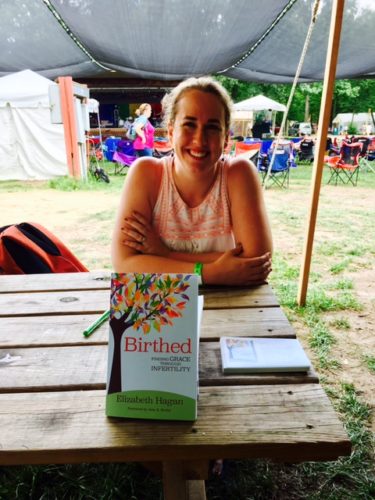 Surprises can be scary. Details are unknown. Preparing for what comes is out of the picture!
Yet, no matter how you feel about surprises, I think our DNA (as made in the image of the Triune God) invites into giving up control and lean into surprise. None of us is ever the complete author of our story.
Because isn't this the Christian faith?
Christ died. Christ is risen. (What a surprise that was Easter morning!) And Christ will come again (A surprise we anticipate even today).
Our lives paths no matter what stage we find them in aren’t about charts, graphs and what society says we should be doing or experiencing because we are a particular age/ color/ gender/ and on and on. Our lives live and breathe and have their meaning from the One who is ALWAYS in the business of surprises.
A couple of weeks ago, I was chatting with a group of new friends and they asked me, “Where do you see yourself in 5 years?” (This is totally an Washington DC type of question to be asked by the way)
I think I totally shocked them because I simply said, “I don’t know.”
And what I meant by the “I don’t know" is not that I don’t have hopes or dreams or projects I’m working toward. I do. (For, there’s nothing wrong with looking toward the future). But what experiences in life (like infertility) have taught me is that life can never be managed. Rather life lived well is always about being open to the Spirit of God and how the Spirit’s movement blows into lives and takes us where we are to go.
Listening to the Spirit IS how we end up in the places where goodness and peace overflow out of us. And our feet land on the solid paths.
My dear readers, I don't now where in your life you need a surprise-- but I do know it's always possible!
So, for the widow who can’t get out of bed on so many days because life is just too void without her partner by her side; there is hope of healing lament as "God’s faithfulness is new every morning." God can surprise you!
For the family struggling from paycheck to paycheck wondering how the bills are going to be paid this month, there is hope of comfort: “Do not let your hearts be troubled, trust in God; trust also in me.” God can surprise you!
For the young adult trying to make sense of life with their first career hitting a dead-end, there is hope of guidance: “I guide you in the way of wisdom and lead you along straight paths.” God can surprise you!
For the high schooler who is already dreading going back to school because math homework is just too hard, there is hope of peace: "I will never leave nor forsake you!" God can surprise you!
Keep your eyes open, my friends. The unexpected can be very good. So very good!

It's National Infertility Awareness week. Welcome to several new readers of Preacher on the Plaza! And I’m happy to use this blog over the next couple of days to give others a platform to share their stories of grief, loss and deferred longing. Even if “infertility” is not your thing and you read my blog for other reasons, I ask you stick with me. Did you read Sarah's and Ronda's stories earlier in the week? Like them, chances are you know someone going through infertility or who has infertility in their story just as I wrote about in Birthed: Finding Grace Through Infertility.
Today, I'm glad to introduce you to my friend, Lara. Though you might see her happy family photo at the bottom of this post, there's so much more to her story. So much imagining, re-imagining and tears that went into building her family as it is today. I was reminded as I read her words that we truly never know what someone is going through (or has been through). I admire her perseverance.
My below the belt troubles started when I was a teen and by 20 I was flatly told that I would never have children.
It is hard, when you are still a child yourself, to really know what infertility means in practical terms but looking back I cannot recall ever feeling “incomplete.”
Yet, I had a niece and nephews that I adored and a good life, full of travel and access to experiences that many people never get to enjoy. I felt strong, secure, and confident with my empty belly. I filled my house with expensive, light-colored furniture and fragile works of art. I bought sexy and impractical shoes. I researched graduate programs, planned exotic vacations and genuinely enjoyed my life. I was the Anti-Mommy.
And then, on a blind date in 2002, I met my husband, Jon. A man born to be a father.
He was a youth mentor, coach, and all around kid-whisperer. All children loved him and it was mutual.
I never hid my issues and told him on our second date, before he even knew my middle name, that I was incapable of carrying a child. When he proposed, I was thrilled to say, “Yes!”, but also unambiguously stated, “All you get is me. But, I’m all yours. Forever.” He said he was okay with this bargain and I believed him.
From where I stood, this was a really good deal. A few weeks after the honeymoon, the comments started. “Don’t wait too long, aren’t you thirty?” People were well-intentioned but relentless. I started to feel less like a prize and more like a burden.
So I decided, maybe we should at least try.
I started with the gateway fertility drugs as well as yoga, meditation and, herbs. And I prayed. Fervently, earnestly, and often while on the toilet holding a pregnancy test pee stick. After almost a year, I found a specialist.
Our baby chase didn’t always work out so well. There were losses, and failures that hurt like losses. I tried to get and stay pregnant for almost eight years.
I succeeded at least five times, possibly more depending on what you mean by “pregnant.”
If you think you can’t be “a little pregnant” than you have a lot to learn about chemical pregnancies, blighted ovum, and other such novelties.
I tried everything from we will just “not think about it” which is much harder than you’d think, to medications by injection, and procedures that I wouldn’t wish on anyone. Physically, the process of miscarriage was the same as early labor, only without the joyous payoff. No baby to cradle, just more cramping.
My husband and I took the losses very differently, at least in the outward sense.
I’m sure he was as heartbroken as I was. I cried often, unable to let go of the deep throb of heartache that replaced the baby’s heartbeat. Each time as I physically recovered, I felt like I had lost my mind and my baby. My confidence, my sense of purpose and my ability to mother the child I did have all suffered. But I kept going.
When I look back and ask myself the hard questions, I know I did it because I am stubborn but also because I wanted to make people happy, especially Jon.
On one of my visits I went through the normal drill, I put the cup on the ledge in bathroom and waited in the drafty examination room. I remember shivering with my legs folded under me trying to keep warm and hoping that the nurse would come soon. The walls were so thin that I could clearly hear a doctor giving instructions to patient in the next room. “Scoot your bottom all the way down. Good. Good. Now let your legs fall open. Great. Now stay right there. You will feel a tiny pinch.” Frustrated and in a disintegrating paper robe, I wished could just put my clothes back on and leave. There was something especially humiliating to me about laying naked on a table, scooting, opening, and yet falling short. But in the balancing of my options, nothing was more humiliating than spending another year having to answer the question, “Why don’t you have any children?”
“It’s positive.” I heard the nurse say to someone in the hall.
Unexpected fear like a lead weight landed on my shoulders. I knew she was talking about me. My hands covered my face as the door opened and the doctor and the nurse walked in. “Surprise, you are pregnant!” she says. I forced a smile but inside I screamed, “No!”
I imagine God hearing me, scratching His head and saying, “That ungrateful so and so. She begs you to give her a child, and then she’s upset when you do it.”
I was also afraid. I was considered high risk and lived every moment until the baby was born wondering if that day was my last 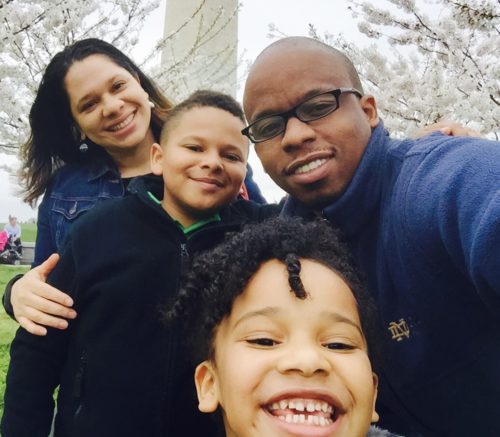 day as a mom. While pregnant, I did even more fervent toilet praying with every twinge, cramp or pink spot. But we made it and I gave birth to my first child in 2005. I now am a mother of two.
If I could go back in time, I would tell my heart-sick self to ignore the lie of shame and acknowledge that there are few better ways to guarantee an unhappy life than rejecting contentment, living like someone owes you something. God doesn't. In fact I owe Him more than I will ever be able to repay just for waking me up in my (mostly) right mind today. It has not been easy, but today I honor my losses and rejoice in the knowledge that I have been given exactly the full and beautiful life God intended for me to live.
I’ve come to embrace my children, as well as our infertility journey, as a gift.
This bumpy road is a testament to free and unmerited favor. My children, the living and the lost, are reflections of God's grace and their presence reminds me that their lives, like my own, belong to Him.
Lara is a technology law practitioner and aspiring retiree. She lives in the DC Metro area with her husband and two children who share her love of baking, naps, and old school cartoons.
*SHARE this blog on Facebook or Twitter this week and be entered to win a free copy of Birthed! Tag me on Facebook or Twitter when you post.
 Here we are: Advent week #2. Lighting the candle of peace each day.
Though it's the time of year that we sing "Let there be peace on earth."
Though it's the time of the year when we hear Amy Grant singing about her wish for "No more lives torn apart. And wars would never start."
Though it's the time of year when we long for and idealize moments of family harmony with everyone being under the same roof.
I'm not sure this is exactly what Advent's peace is all about.
I've been preaching this Advent over at Springfield Christian Church in Springfield, Virginia and I have been struck by the Isaiah lectionary readings that . . .
Peace is often nothing like we expect.
Consider this: there are places we expect to see beautiful growing things, aren’t there? A greenhouse, a tropical vacation spot, Disney World.
But then there places we wouldn’t expect to find anything new or life-giving.
Such would be the tale of the house that Kevin and I lived in for 5 years before selling the property (thanks be to Jesus) over a year ago.
In a historic neighborhood, large oak trees filled every corner of the street. Sure, these trees were trees were lovely to gaze upon in the spring time, but when it came to this time of year, the trees rained leaves and leaves and leaves.
I’d be raking, blowing and blowing leaves some more often up until nights before the prediction of the first snow.
No matter how hard we worked to remove our yard of them, they never seemed to go away. We always seemed to keep some from fall to fall no matter if we wanted to our not.
We’d ask for input from some great landscapers only to hear each one of them say, “Well, have fun growing moss.”
Of course, we could have cut some of the trees down to solve our problem, but the neighborhood had some rules about that and who had 10,000 of dollars lying around just for “tree removal?”
So . . . with our “throw our hands up in frustration” approach to our yard, I never tried growing anything even though I love flowers and the idea of fresh tomatoes.
I affectionately referred to our yard the Hagan wasteland.
However, I remember one March walking outside in the crisp of the morning in shock.
Before my eyes stood tulips breaking forth from the rocky ground.
I wanted to shout, “How in the world did my desolate yard grow something so beautiful?’
Because let’s review: we did not till the soil. We had not planted any seeds. We didn’t even remove all the leaves from the flower bed months before.
Yet these were gorgeous pink, white and yellow tulips. I couldn’t stop staring at their loveliness.
If you’ve ever had a surprise in your backyard or somewhere you’ve visited, then you’re in the perfect emotional spot to hear this word from Isaiah 11:1:
Isaiah offers this prophetic word, “A shoot shall come out of the stump of Jesse, and a branch shall grow out of its roots.”
It’s equally unthinkable vision of the future both for the time and place over which it was spoken and the image it presents.
Think about what a dramatic metaphor this is? A branch growing of a stump. There’s nothing more dead than a stump, isn’t there?
For we know, right that a stump the remains in the ground of a tree that has been cut down. It might have been great at one time but is no more. And it’s an unsightly part of any yard or forest patch, isn’t it? So much so that when we do have trees removed from our yards we often ask for the stump to be dug out as well. What good is a stump in the middle of a patch of earth?
Stumps tell stories of death—and who wants to be reminded of that?
I had a neighbor once who told me of her difficulties selling her house because the giant stump in the middle of the yard was perceived as an eye sore. So much so that her real estate agent came and made her plant a flower bed over the top of the stump. And it worked—days later with the disguise in place she finally got an offer.
Yet, Isaiah says this unthinkable word about a stump that has nothing to do with ignoring it or covering it up. “A shoot shall come out from the stump of Jesse, and a branch shall grow out of its roots.”
But here’s the heart of Isaiah’s message. Death was not the end of the story: “A branch shall grow out of [the stump’s] roots.”
 As I was sitting with this text last week, the image that came to mind for me was of a stump with a Charlie Brown like Christmas tree growing out of the top—small, fragile branches with a few leaves on each stem. Can you see it too? Shockingly brilliant in its existence.
Contextually this image is helping us see that God had a plan to reconcile not only Israel, but all of humanity. A branch would soon be growing out of a dead stump. This plan would also be shockingly brilliant in its existence too.
And in a couple of weeks, we’ll all start talking about “For unto us a child is born and unto us a Son is given.”
We'll talk about a movement of God that was birthed in a sleepy little town, in disdained tiny stable and attended by some unknown shepherds.
We'll talk about some swaddling clothes.
But we’re not there yet—
I think in the waiting God wants to expand our imagination of what peace looks like.
Jim Wallis, founder of Sojourners tells the story about a trip he took to South Africa in 1987. Nelson Mandela was still in prison. Segregated everything was alive and well.
During his trip, he said, "I met a 14-year-old boy who was, like many, organizing in elementary and high schools [toward social change]. I asked him if he was optimistic for the future and he said, 'Yes.' [Then] I asked him if he thought there would be a new, free South Africa someday, and he stated to me matter-of-factly, 'I shall see to it personally.' ...There is simply no other alternative than for each person to see to it personally."
Though we all know in 1994 this boy’s vision became a reality, you can imagine how crazy he sounded in 1987? Reconciliation in South Africa in his lifetime? Release of Nelson Mandela? He had to be kidding, right?
And I believe, the vision of this South African boy is what Isaiah 11 is begging us to see—a world where peace actually happens.
One of my professors from seminary Dr. Portier-Young puts the message of the text like this, “This is the promise, the glorious, abundant resting place where the root of Jesse stands. This is the vision of security. The shoot will grow tall and become a visible sign for the nations. Not a battle standard, but a standard of peace.”
Or simply put- God’s reconciliation work looks as wonderful and as laughable as this. Peace looks like this. New life coming from what is really dead.
So do you have something dead in your life? Then open your heart up to expectation. This is where the peace is going to come.

Over the next 4 weeks of Advent, I'm thrilled to offer you the voices of some articulate storytellers--- storytellers with wisdom to share about how their experiences of pain or loss is birthing in them something beautiful. Not in a Pollyanna sort of way of course, but in the spirit of what Leonard Cohen once wrote: "There is a crack in everything. That's how the light gets in."
And isn't Advent is all about light shinning in the darkness?
Today, I'm glad to introduce to my friend, Meredith Holladay who I met this year while attending a writing workshop at Austin Presbyterian Seminary. Sometimes the best we can do is be exactly where we are now.
_________________
I’m still waiting to get my period. That is something I never thought I’d feel the need to say to strangers, on the internet, by way of introduction.
In October I miscarried, and now we wait until we can “try” again. (A phrase I’ve never entirely understood, but that’s neither here nor there.) And when it finally does come - and flow - and go - we get to wait again. This whole ordeal is such a series of waitings. There is very little either my husband or I can do to affect anything. Even the “trying” is just a shot in the dark (weak pun, weakly intended).
We were pretty surprised that the pregnancy happened as fast and as easy as it did. So surprised, that I took no fewer than 5 pregnancy tests. We both know too many people for whom the journey from trying to parenting was long, difficult, sad, that it just seemed too good to be true.
No one told me (why would they tell me?) that losing a baby - an embryo - would hurt so bad. In retrospect it seems so obvious. I had never felt more like an unwelcome guest in my own body. My own attempts to understand are defied at how we could want something so bad, and my own body turns in on itself. Of course the doctors say all the right things about chromosomal abnormalities and how “this would have happened anyway,” and all the medical stuff to offer comfort. But that did not change the fact that my body had rejected a life it had helped to create and I was the one curled up suffering pain in all the ways I could possibly feel it - physical, emotional, spiritual.
One of the worst parts was the distance I felt from my husband, whom I love more than anything, more than any idea of a child.
As much as he tried to understand and help, he could not be inside me in the ways that the grief seem wrapped up in the cramping and bleeding and hollowness. How could he understand the feeling of his own body rejecting life - rejecting something that is supposed to be good and right? It was, to say the least, hard.
My counselor suggested that we find some way to find closure about the loss. I didn’t know what that looked like. (I still don’t. It seems part of the waiting.)
My husband likes to be outside and likes to work on our yard. He likes to discover new plants, flowers, shrubs.
The idea came to me that we should find some kind of flower that would bloom about the time that baby would have - should have - been born, and something we could plant now. It seemed like a small way to say - here’s this life we lost - we’re putting it in the ground. We’ve turned that life over to the earth, and the seasons. It seems too poetic, but perfect, that the life we  lost, and then planted, must first endure the frozen ground. And then the miracle of sun and rain and warmth will bring blooms into our yard.
The flowers seem enough for now.
But we’re still waiting. I’m still waiting. Hoping, longing, that life that breathes and cries and poops and walks and talks will be birthed from this.
We don't know. Maybe closure will be a much longer wait- A Come, O Come Emmanuel kind of waiting.
Living in the middle is where we are. It's almost too poetic that we continue to wait as we have officially entered the Advent season. I'll try not to overthink that part.
But for now, we are just hoping my period comes back soon.
By day, Meredith teaches 7th grade English in Kansas City, Kansas; by night, she is dog-mom to the two cutest cockapoos around. You can find her reading and laughing alongside her husband, Zach.
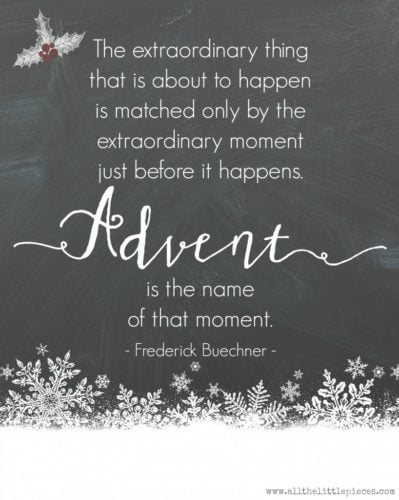 It's the week of hope. Happy first Sunday of Advent, friends!
Advent is one of my observances all year. And it's not about the pretty decorations or the special candle lightings. . . .
Advent is four weeks that slow us down when everything in our culture wants to speed things up.
It's four weeks that remind us that waiting is our work as people of faith. Nobody gets what they want by snapping their fingers.
It's four weeks that tell us the good news of faithful ones who have lived through dark times in their journey so we can too!
I love what theologian Walter Brueggemann says about Advent: “Advent is an abrupt disruption in our ‘ordinary time’ . . . an utterly new year, new time, new life.”
And don't we all need newness these days?
Though not common like many do with Lent, I love the idea of taking on a practice just for Advent.
Maybe its intentionally having more moments of quiet and meditation in your day? This year I'm using Chalice Press's Partners in Prayer as for my readings. (You can order your own copy too over here).
Maybe its intentionally taking on an act of service in your community as there are so many extra opportunities to care for others during the holiday season. From buying Angel Tree toys to taking cookies to shut-ins, to going caroling with your church at a nursing home there's really so much that can be done!
Maybe it's adding an activity to your week that remind you to not give up hope. A couple of years ago my practice was watching episodes of the PBS series, Call the Midwife (which I highly recommend by the way) You might think this is strange. Watching a tv show? But for me it was really important. For I really found the topic of childbirth painful, especially at Christmas. Yet, by watching these stories of new life unfold it was my way of giving my hopes back to God. It helped me to see the world from a perspective I'd long ignored.
Have an Advent practice that you (or your family) participate in every year? I'd love to hear about it. Share it in an email or comment.
Whatever it is that you decide is your way to make Advent more meaningful this year, do it with full expectation.
Allow God to meet you wherever you are.
Open your heart to the coming of something unexpected.
And most of all, say yes to those urges that could only come from the Spirit.
It's what the season is all about. Really.
Better things are coming. Just wait for it.

 Money doesn’t grow on trees. Prepare for retirement. Have your nest egg for security. Always get the most bang for your buck.
Such life management principles are what many of us adhere as if they were Bible verses. And, it’s common sense, right? Life is short after all. We need to make good choices with our money as well as our time. We do things that are good for us and those we love in the end. If not, then why do we bother? Why make stupid decisions?
This past Sunday I preached on the lectionary text of Jeremiah 32 in which was a direct contradiction to our best investment wisdom anyone could offer us.
God tells Jeremiah to continue to follow Jewish customs (of keeping property in a family) and buy a field from his cousin. But, there was one big catch. It was a horrible time! War would soon begin. Exile was on its way. And the people of Judah would be forced out of their town.
The Suzie Ormons of the Jeremiah's day would be shouting, “This is NOT a time to invest in real estate”
YET, God says to Jeremiah (who happens to be in prison at the time): buy the field in your town. This time of hardship will continue, yes. Exile will happen, yes. But one day you'll return to this country and to this land. Keep the faith. Have hope!
I have to say it's one of my most favorite passages in all of the prophetic books. Why? It has a lot to teach us about WHO God is.
Our God makes unimaginable investments!
The object lesson of this passage can be summed up by the Message’s paraphrase Jeremiah 32:15 which says, “The God of Israel says, ‘Life is going to return to normal. Homes and field and vineyards are again going to be bought in this country.’”
See buying this land was a spiritual gift to the community. It was a symbol of hope! For the future of their country, the future of their families and most importantly the future of their relationship with God had nothing to do with what they saw exactly at that moment. A BIGGER story was at play.
Through the hard places of life, God was doing a beautiful work! (They just didn't see it yet).
Yet, if you are like me, such an audacious hope is hard to believe in! It’s hard to realize that God loves us so much to show us hope like this.
It’s hard to believe that such love and faithfulness poured out for us not just on our finest days, but on our darkest, especially our darkest too.
It’s hard to imagine that when all our accolades are stripped away God would still love us the same.
Maybe then, this is why we need symbols of hope so badly.
__________
At the end of the service, I told the congregation about the meaning behind one of my favorite spices in our household: rosemary.
Native to the Mediterranean region, rosemary is a small perennial scrub known from the mint family. Yet, beyond this, it’s an herb that known as a symbol of remembrance.
 Did you know that in ancient times it was known to strengthen memory? Muses in Greek Mythology often appear with rosemary in their hands. In Shakespeare’s Hamlet, Ophelia says: "There's rosemary, that's for remembrance, pray, love, remember." And in modern times, researchers of “brain foods” often have rosemary atop their list of ingredients you can add to a dish if you are having memory problems.
I brought a basket of rosemary and as we sung the hymn, "Great Is Thy Faithfulness" I went one by one to the folks in the pews and gave them a piece of rosemary. I told them to take it and place it somewhere in their homes where they would see it often and remember. I told them at it could be a symbol for their spiritual memory that:
There’s nothing they could do to separate them from God’s love.
No situation is ever too hopeless to be redeemed by God’s beautiful new story.
Even while we were all sinners, Christ loved so much to die for the human story to have new life.
And, just as Julia of Norwich once said as a statement of trust in God’s investment in her, “All will be well, all matter of things shall be well.”
For God is always investing in us . . .even if we can't see it. Even if we don't understand it or believe it. Let us remember this when the hard patches of life hit us this week and in the weeks to come. If you need to remember, go find yourself some rosemary too.
There are some scriptures that feel like the bread and butter of our faith. They are the ones that make the best Sunday School lessons for our children. They are the ones that we take verses from and hang on plagues on our walls. They are the ones that we come back to time and time again for encouragement.
The scripture I studied for this week's sermon, I Kings 19: 1-16 contains some of these kinds of verses—for it tells the story of Elijah during one of his darkest hours as a prophet, an hour in particular in which he finds God.
We might remember Elijah from the big “Who’s God is better contest?” that the corrupt King Ahab challenge him to. Both sides created altars. The deal was whoever’s altar raged in fire first would point to the true God. Ahab prayed to Baal. And Elijah prayed to God. Elijah even ordered water to be poured over his altar (to the taunts of many).
The fire of the LORD fell and burned up Elijah's altar.
A complete victory? Right. Wrong.
For what comes next in the story is that King Ahab “tells Jezebel everything that Elijah had done and how he had killed all the prophets with the sword. So Jezebel sent a messenger to Elijah to say, ‘May the gods deal with me, be it ever so severely if by this time tomorrow I do not make your life like that of one of them.” (19:1-2)
Or in other words: Elijah you are dead.
So Elijah, fears for his life, obviously, but start running too. He wants to get as far away from Ahab and Jezebel as he can. He travels for 100 miles.
Elijah becomes depressed and wants to die. Yeah, really he wants to die.
But in all his sadness, Elijah is met by angel who touches him and tells him to get up and eat bringing him a jar of water and some bread—does it remind you of any good church ladies at funeral reception you know?
With the strength he’s given by this force feeding, the angel of the Lord, we are told comes back for the second time and says, “Get up and eat, for the journey is too much for you.” Or in other words, Elijah, you’ve got to go through that potluck line just one more time—I don’t care if you say you’re full!
Elijah, now with a full stomach is given the strength to travel to Mt. Horeb. Sound familiar? It’s the place where Moses met with the LORD on several points of his journey. And it is here in this place again that Elijah also has a powerful encounter with God. For Elijah hears the LORD say to him, “Go out and stand on the mountain . . . . for the LORD is about to pass by.”
What comes next is my favorite part-
First there was the wind and an earthquake . . . but . . . The Lord was not in the earthquake.
Then, there was the fire, but the Lord was not in the fire.
And after the fire came a gentle whisper—and God was in the whisper.
Makes me think of the Psalm, “Be still and know that I am God.”
And there are a thousand different good sermons that have been preached or I could preach on this text—especially ones that exhort us all to quiet down our hearts knowing that God is with us no matter what our troubles may be—but might there be a word for us this morning in this passage in light of what our eyes and ears and hearts have been captivated by this week?
A world where the unbelievable happened only 7 days ago when we woke up the news that 49 people died and countless others injured by a single gunman in a gay nightclub in Orlando motivated by hate, radical religious beliefs and homophobia.
A world where Mother Emmanuel church in Charleston, SC was attacked only one year ago where 8 people were killed in a church sanctuary just like this one attending a Wednesday night Bible Study.
A world that feels a little less safe, especially for those of us who are not straight, white or male.
A world that has dimmed for the helping types who have thrown up their hands to sky this week saying: “What is there to live for anymore?” in the same way that Elijah did on that day under the broom tree.
Or like one of my pastor friends told me yesterday: “On Monday morning, I wanted to give up. Nothing made sense to me anymore. Why was I trying to so hard to bring good to the world when events like Orlando keep happening?”
So, I ask you: where do we find our gospel this week? Where do we find our God?
I believe Elijah's tale has a lot to offer us about our God—a God who is always moving us along like he did with Elijah.
A God who won’t let us wallow in fear driven threats for long.
And most of all a God who uses our lives to show his great concern for the whole world. I Kings 19, I believe re-introduces us to a God who includes.
There’s so much about this passage that can leave you feeling breathless and the end of the passage is no different!
Very direct orders are given by God: “Go back the way you came, and go to the Desert of Damascus. When you get there, anoint Hazel king over Aram, and also anoint Elisha . . . to succeed you as prophet.”
For it’s not that the Lord doesn’t hear Elijah’s complainants but he gives him something to do about it. He needs to go! In fact, from where Elijah stood at Mt. Horeb he’s told to go 200 miles to Damascus which is in a whole other region of the known world!
And when he arrives Elijah is given the tasks of blessing a king that is outside his jurisdiction as a Jewish prophet—it’s the king of Aram—a Gentile king!
It’s another way of saying, “Look Elijah, this ministry of being my spokesperson is not just for you or about you and it’s not just about Israel but it will continue with Elisha and go on for generations to come!”
I believe these two specific instructions of are of great importance in this tale because they are point us to a God who always has a wider perspective then we do.
For, the love of our God cannot be contained in our little corners of the world, no matter how hard we want it to stay close and look just like us!
And in all of this, Elijah still wanted to be depressed. He wanted to wallow. He wanted to lick his wounds and say, “Why me? . . . Why might bodily harm to come to me for just being who I am?”
But God says to him through this encounter—open up your eyes, Elijah, don’t be discouraged! Come see my love for others. Let your life bless others, all kinds of others. Don’t stay here focused on yourself. Remember, you serve the God of all people, of all nations, of all races, in fact. Now, be on the move!
And so I’m wondering this morning, is this the God we’re sharing with the world in the year 2016? Is this the God America knows the church to be?
Like Elijah, it’s so easy to get discouraged. It’s so easy to find ourselves bewildered, depressed or even lost.
(And, hear me saying, it’s ok to take a time-out from life when you need to—to embrace self-care, to rest, to play and see professional help if you need it. None of us can be warriors solo.)
But, our faith following our inclusive God always and I mean always leads us out—out from what feels familiar, out in relationship with people who speak differently than us, look different from us and might even be voting for President for someone different from us! And the love of God asks us to act.
We are all called to do our part in our little corners of the world. We are all called to be a voice of inclusion to those who need to hear they’re welcomed most of all.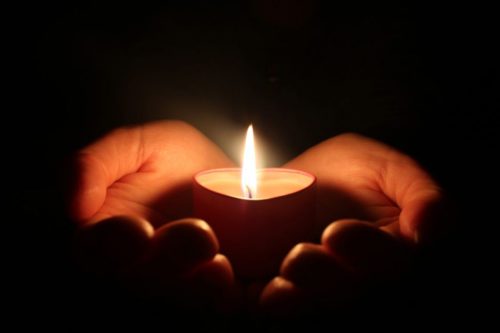
This week I feel deeply moved by this words over at the Awakening Women Institutes’ website written by Clarissa Pinkola Estes.
Ours is not the task of fixing the entire world all at once, but of stretching out to mend the part of the world that is within our reach. Any small, calm thing that one soul can do to help another soul, to assist some portion of this poor suffering world, will help immensely. It is not given to us to know which acts or by whom, will cause the critical mass to tip toward an enduring good.
So what will you do this week to stretch out your hand in love in your corner of the world?
I think this is what our land needs more of, don't you?
 For years, Holy Saturday was my every day. I knew all too well the death of Good Friday. Easter had not yet come.
Pain, loss and more pain and loss. Kicks in the gut. No obvious way out. No clear path about the future. Days when I didn't know how to get out of bed. I wondered if my life really matter to anyone or anything.
As much as I wanted to move on to the joy, to the hope to the shouts of affirmation of "The Lord is risen! The Lord in risen indeed!" I couldn't. (In 2013, I even wrote about my depression during Holy Week).
Actually during this time, I didn't like Easter Sunday at all.
Not because I didn't need its hope. Not because it wasn't a good story to preach. Not because it wasn't fun to see the big crowds the Sunday draws.
No, I didn't like Easter because it came too quick. I needed a longer Saturday.
If that. We do such a poor job in the church of teaching people to stay put on Saturday. To sit with the hopelessness of our world. To cry tears for the injustice. To mourn what the world must have felt like when Jesus was gone. And to remember that our world, even with risen Christ here doesn't always feel like it.
This world can really beat us down sometimes. And in life we're good at avoiding this kind of pain.
For most of us the Holy is taken out of the Saturday because we spend the day running around preparing for a big meal, shopping for new clothes or even dying eyes and hiding them in the backyard.
And for me, during my years of many Holy Saturdays, I just felt so lost at church-- no matter if I were the preacher in charge or not. I can imagine tomorrow there are countless people sitting in the pews of your resurrection celebration that might feel the same way.
They'll be struggling to sing "Christ the Lord is Risen Today."
They'll be crying tears for the loss of someone who is not sitting beside them this year.
They''ll not be able to shout about any good news in their life.
I think we start by remembering that as much as we are a people of the supper of Maundy Thursday and the "It is finished" of Good Friday and Easter to come, we also belong to Holy Saturday.
We belong to that yucky, in between, not sure how the story is going to ever get better club.
We belong to a God who doesn't answer prayers in a timely way (according to us at least).
We belong to a world of so many unanswered questions. And because our faith story includes Holy Saturdays, we must champion those who are stuck there.
As for me, today, I woke up with such gratitude for those who were companions for all of my Holy Saturdays.
I'm grateful for those who were never afraid of my tears, my questions or even my rants on hard days about "How I didn't believe in the resurrection" even as a pastor.
I'm grateful for the pulpit that gave me words to preach my way through these hard days.
I'm grateful, too, that I'm not there anymore. (I've got SO much to say about Easter that I can't wait to preach soon!)
Here's my word; if you're stuck, see it through. Take all the time you need. I promise you won't be there forever. Sunday is coming! It really is. So keep going. This is the best Holy Saturday prayer I know. Just keep going.
Excerpts from a sermon preached at Broadneck Baptist Church, Annapolis, MD from Luke 2:41-52

I don’t know if you’ve participated in the social media craze called, #TBT (Throw Back Thursday) when folks post pictures of themselves from years ago on Facebook, Instagram or Twitter.
Though some simply post pictures from last Christmas or a fun vacation a few years ago, my favorite #TBT are those that go back to childhood.
Over Christmas week, while Kevin and I were visiting with my extended family in Georgia—something happened that hadn’t happened in a long time. We had a whole 30 min of Kevin and Elizabeth Hagan #TBT on the TV.
For, my nephew, Landon got out our wedding video. And before our eyes flashed toddler and elementary school pictures of both Kevin and me while sappy music played in the background. Though there were points that both Kevin and I wanted to look away—I mean who really needs to see a picture of herself as a 6-month old self in a kitchen sink taking a bath?
I have to say the joy that it brought the younger kids in our family to watch it was palpable.
For to see “Uncle Kevin” and “Aunt Elizabeth” without clothes and smiling surrounded by bath was the very best thing in the world, it seemed. In their eyes, these photos made us more like them! I've included one of them-- me, aged 8 and my sister, aged 2 playing in a pool in my grandmother's backyard.
For these reasons and many more, I believe this is why we get a rare glimpse of boy Jesus in Luke’s narration of the gospel story.
Luke wants to show us a boy with parents named Mary and Joseph. Luke wants to show us a boy with a strong Jewish heritage. Luke wants to show us a boy who make a yearly pilgrimage to Jerusalem to celebrate the Passover.
We don’t learn anything about the event itself, only that when the festivities are over something huge is about to occur.
This is the main event: Jesus’ family and friends are on their way home to Nazareth—seemingly in a large group. Safety in numbers, right? For it would be a 3-4 day walking journey depending on how fast their caravan traveled. No small trip!
And for a day everything went swell. I can imagine the mood was light, full of the inspiration they’d just received from the biggest religious holiday of the year.
But, what came next was the ancient Galilee version of “Home Alone.” As it played out in Luke’s account, instead the boy Kevin being left at child in home or on the streets of New York City while the rest of his family went on vacation elsewhere, boy Jesus is in Jerusalem. He’s in Jerusalem alone.
It’s one of those “worst case scenerios” of parenting!
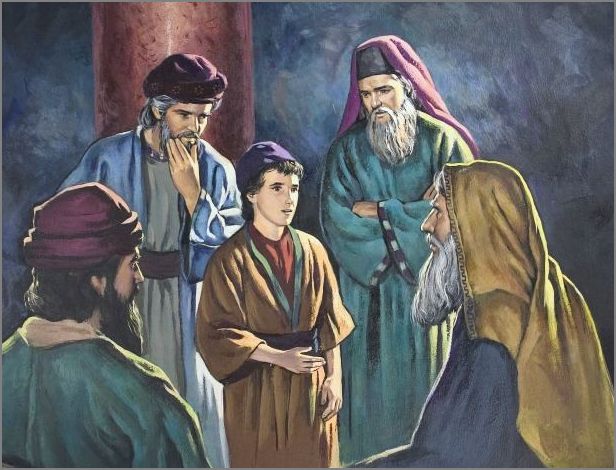 And what horror must have come over Mary and Joseph once they realized that Jesus was not with them. I know this, because although I am not a parent who has lost a child, I am a pastor who once lost a junior high boy at King’s Dominion . . . what was worse is that he’d just arrived in the US from Liberia and spoke little English . . . (I know not one of my shinning moments!)
But in Mary and Joseph’s case I can imagine they shouted-- “JESUS!” as they re-traced their steps toward the place they last saw him. “Where in the world are you??” though scripture leaves out any emotions like these.
Eventually they do locate him and the conversation begins in what a former professor of mine, Peter Story calls the “censored” version.
They find the boy among the teachers in the temple and Mary says to him, “Son, why have you treated us like this? Your father and I have been anxiously searching for you.”
And Jesus answers, I can imagine with a look of complete innocence on his face, “Why were you searching for me . . . Didn’t you know that I had to be in my Father’s House?”
And the answer is they don’t.
For scripture tells us that “they did not understand what he was saying to them.”
The boy Jesus tries to speak truth to his beloved caregivers and they just don’t get it.
But after this exchange we learn that Jesus goes with Mary and Joseph back home and was obedient to them from this point on.
So enter drama into the narrative right here.
Professor Peter Storey helps us out again here: “If we struggle with Jesus’ being ‘fully human and fully God,’ it should not be surprising if the Jesus child wrestled with his identity too.”
Can you imagine how frustrating it must have been for Jesus? Can you imagine how much tension he felt in his little body? Can you imagine how hard it was for Jesus to play the part (or not) that his parents expected him to play as THEIR first-born and also be THE son of God?
The struggle looked like obedience to parents boy Jesus knew he was smarter than, wiser than and the Creator of, in fact!
The struggle looked like Jesus’ momma hugging him tight thinking she knew what was going on but being completely clueless.
The struggle looked like Jesus going home, humbly submitting to authority and growing “in wisdom and stature, and in favor with God and humankind.”
The struggle of human and divine- it was boy Jesus’ path to walk.
I don’t know if you are like me but I want to file a complaint with Luke right here. I don’t mean to be greedy but I want more. I want more of Jesus. Tell me Luke what Jesus liked to eat, how he liked to play, what it was like when he got into fights with his brothers (or did he?), did Jesus like his chores or did he prefer to spend more time studying after school?
Yet we get nothing else besides these 11 verses until he was 30 years old which starts chapter 3.
So, it begs me to ask these question as the reading is over.
I’m sure there’s more to uncover as you and I keep studying texts like this, but for now this is what I know: as you and I follow Jesus we too, my friends will know the struggle.
The struggle of being told we’re “lost” when we’re really exactly where we need to be!
The struggle of rejection from those who say they love us the most.
The struggle of our mommas wanting something for our life and God saying, “No, I have something bigger.”
The struggle of balancing mundane tasks vs. eternal destinies.
We too will face such pain. We too will be separated from our beloveds. We too will feel so alone.
But we have hope! We have hope like boy Jesus had hope that day as he traveled back to Nazareth, to live his life with all that knowledge in his heart gained from the temple. God was with Jesus. And, God is with us too. We are never told that we must face our struggles alone.
And even better, God gives us the tools we need to face our struggles, our tensions between the tasks of earth and heaven and we learn as we go.
“It's funny: I always imagined when I was a kid that adults had some kind of inner toolbox full of shiny tools: the saw of discernment, the hammer of wisdom, the sandpaper of patience. But then when I grew up I found that life handed you these rusty bent old tools - friendships, prayer, conscience, honesty - and said 'do the best you can with these, they will have to do'. And mostly, against all odds, they do.”
My friends, if boy Jesus taught us anything this we know: we have all of the tools we need to keep going.
We have the tools we need to discern wisdom from folly. We have the tools we need to both submit and rebel. We have the tools we need to connect with our heavenly Parent!
So in this life on earth in community with God and our human brothers and sisters, we keep going. Bit by bit. Step by step. Year by year. Believing that we too will grow in wisdom and favor with God too.
If you want to listen to the full sermon, click here for an audio file.
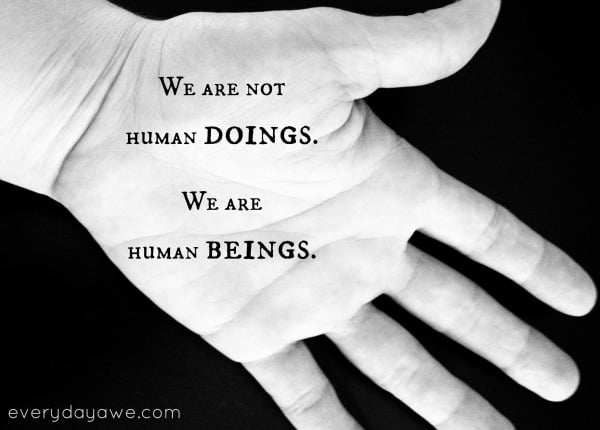
A whole new way of looking at "my labor" came many years ago when a friend introduced me to a quote from Barbara Brown Taylor's book, Leaving Church.
I copied it right away from the email she sent and put it on the bulletin board above my desk at the office.
I looked at it often trying to figure it out in my own context of professional ministry. What did responding to the call "to be fully human" mean?
I loved the idea of more balance, more harmony in how I moved from task to task (not just the ones I was "paid" for).
Sure, I had a job description and goals, but could being a human being be my life goal? Because I liked being a human being who was also a minister, not just all those piled on expectations.
So, just for kicks I tried an experiment of living by these words. This is what I noticed:
Bottom line: more of us ministers need to let our humanness show.
And I don't think this lesson is exclusive to pastors. Maybe it is a call to all people of faith.
But instead these are the messages that the church is known to project:
"Oh no, don't join Rotary Club. That will take time away from the Property Committee at the church."
"Oh no, don't serve as a PTA mom at your child's school. That will mean you can't come to the women's Bible Study on Tuesday mornings."
"Oh no, don't give your money to Habitat for Humanity. That will mean less money you can give to the church."
Yes, Christian community is important. Yes, being a part of worship on a regular basis helps us give God, God's proper place in our lives. Yes, the sacraments are important and the work that can only be done in the church.
But, there's a great big ole world out there. And if we're trying to be human, we've got lots of ground to explore, people to visit, and moments of rest to take (because God took days off too).
Serving God is not a check box that will fulfill solely within the confines of any church activity. It's a way of life.
It's how we treat people.
It's how we show up for people.
It's how we use our time and resources to move forth good things in the world both for others and ourselves.
It's how we say we're sorry (because we all make mistakes).
And it's how we give ourselves a break.
We're only just human after all.
