How are you feeling right now? Would you say something aches in you? Is something sprained or broken? Or are you a-ok?
As much as we fall into the trap of thinking we are simply a soul walking around in a shell -- we're not -- which brings us to our word of the week: body.
Body is defined as the main, central, or principal part of something or someone.
I love this definition of body because in the context of our physical bodies it brings us back to this truth: we can't get along in life without a relationship with our body. It is the core of who we are. It's our main thing.
Yet how poorly so many of us treat ours, right? How poorly our life can feel when ours simply don't work as they should.
But is body + faith something you hear a lot of people talking about? From my vantage point, no.
I can't tell you how many times I've sat in people's homes and they've forced an extra piece of cake on me. Or I've been in a meeting that goes on and on without any breaks. Or no one talks about mental health or how trauma informs how we treat the body.
Don't stop reading right now. This will not be a lecture about diets, exercise or a daily meditation plan. I wouldn't do that to you.
But here is what i really want to say-- if you're interested in being a spiritual person, then you can't ignore what your body is trying to tell you for the good or bad. Your cells, your nerves, and your muscles are guiding you all the time.
Your body wants to teach you about what you need and how excess makes you feel.
Your body wants to teach you about what is unresolved in you and what needs more attention.
Your body wants to teach you about what brings you joy and what makes you anxious.
And how do you learn? You pay attention. Yeah, it's that simple. Listen to the cues. You remember that you are a creation with a body that God made and called GOOD. Your body can be a good teacher.
So I'm wondering this week, how might you carve out some time to pay attention?
XO
Elizabeth
P.S. if you're looking for a great read on faith and body, I'd love to recommend to you This Is My Body: A Memoir of Religious and Romantic Obsession by Cameron Dezen Hammon. Such a great read that I couldn't put down!
This weekend, Mother's Day, while joy-filled for many is full of anxiety for others.
If you're in the anxiety producing camp, know I am with you.
It's so hard to have complicated feelings about the mothers in your life.
It's so hard to have longings for children (or relationships) unfulfilled. Or to be grieving when everyone else is so happy.
We don't know what to do with these sort of "uneasy" feelings in our "How are you?" "I am fine" culture.
And faith communities really are the worse. Mother's Day is also know as a the day that the grieving don't feel safe at church.
I need to tell you that even as a pastor, one year on Mother's Day, I took the day off. I turned off my phone. And I just couldn't wait till it was Monday already!
I couldn't handle someone else asking me "When I was going to have kids already?"
And even now, though I am a mother with little feet running around my house (after a long infertility journey), I still find Mother's Day so complicated.
As much as there is joy in my life, there is also loss, frustration and delayed expectations.
I don't believe I'm alone in these feelings, so as a pastor, I want to be sensitive to the complicated feelings so many of my beloveds will bring to worship on Sundays.
For it's my belief that we can help the grieving feel safer at church by the attention we give to our words and presence on Sunday (or any day really!)
Here's a prayer I wrote in the spirit of truth-telling, sensitivity and kindness. Adapt, use and share as it's helpful to you.
One: Mothers come in many different forms, and today we remember them all.
Many: Thank God for all mothers.
One: For those women who have left earth too soon and in whom we miss dearly.
Many: Thank God for these mothers!
One: For every woman who is raising children now making sacrifices for her children’s becoming.
Many: Thank God for these mothers.
One: For those women who have taken in others’ children through adoption and foster care, showing us that the love of God far extends beyond biological ties.
Many: Thank God for these mothers.
One: For those women with grieving hearts for children that could have been with futures so different from they planned.
Many: Thank God for these mothers.
One: For the special neighbors, teachers, and friends who’ve nurtured us, supported us and helped us to become the people we are today.
Many: Thank God for these mothers.
One: For mothers in which our relationships are complicated, difficult or strained, but who have forced us to choose healthier paths for our lives.
Many: Thank God for these mothers.
One: Mothering God, help us all to reflect more of your compassion, kindness and strength to those around us today. As Meister Eckhart has said, “We are all meant to be mothers of God. God is always needing to be born” let this be true of us! We need more of you, here, God!
Many: Thank God for mothers. AMEN
If I can be a resource to you, as a grieving mother, particularly, don't hesitate to contact me.
Can anything good come from chronic pain?
Today, I'm glad to introduce to you my friend and fellow writer, Dena who shares her testimony about her years of chronic pain and how she met God in the midst of it all.
In 1992, I had a head-on collision with a car whose driver crossed a median.
Since then, I’ve dealt with chronic pain and fatigue. A few years ago, I had neck surgery to replace a degenerated disk and remove a bone spur, and currently, I’m undergoing testing for lower back pain which has been bothering me for over a year.
Some days, I want to stay in bed. (And on certain days, I do.) I cry and moan and wail, having honest conversations with God. I’m often frustrated by well-meaning people who continue to offer remedies—whether pharmaceutical or spiritual—when they know nothing of what I’m enduring. Believe me…I’ve tried it all.
Don’t get me wrong: I am grateful for a supportive spouse and kids, understanding friends, a job in which I can work from home, and the skillful physicians who have treated me over the years. I function pretty well most of the time. And of course, I am thankful God allowed me to live and not die in that wreck. However, for some reason, my prayers for complete and total healing have either been answered with silence or encouragement to endure.
Have I been tempted to despair? You bet.
Have I given up on God healing me? Not a chance. However, I have stopped trying to find answers about WHY God has chosen to deal me this particular card. I realize no one goes through life unscathed, and I recognize that I have been refined by this, my own personal fire.
I wouldn’t have chosen this kind of life, but I do see beauty in some of its twists and turns.
My two sons have learned to serve others in practical ways, because I’ve often needed their help. My union with my sweet husband, Carey, grows stronger every year. (There’s nothing like physical pain to strip off the masks we wear and force us to communicate honestly!) God has also used the empathy and vulnerability I’ve gained through suffering to allow me to minister to others more fully. And most of all, my relationship with God is deep and real.
So, on some days, I find strength and peace in His arms. As I soak myself in the truth as 2 Corinthians 1:20 says: “no matter how many promises God has made, they are ‘Yes’ in Christ,” the Holy Spirit gives me abiding joy.
And then, on other days, I complain and rage, lamenting like the prophets of old. I know that He hears and holds my pain, because He created the language of lament. As Esther Fleece writes in No More Faking Fine: Ending the Pretending, “He doesn’t compare our pain to another’s; He doesn’t minimize it; He doesn’t spiritualize it away. We can wrestle deeply with the character and nature of God, because He is longing to give us a deeper revelation of Him all the time.”
I long for that deeper revelation, while I cling to the glorious promise that someday, I will see God, and my body will no longer hurt. As I live in the midst of chronic pain, that promise becomes more than a scripture in an ancient book.
It has become a lifeline.
Dena Dyer is a professional writer, speaker, and teacher, as well as the author of eight books and hundreds of articles. Her most recent book, written with her husband Carey, is Love at First Fight: 52 Story-Based Meditations for Married Couples. She and Carey have been married nineteen wonderful years, and a couple more they don’t talk about. They live in Texas with their two sons (Jordan and Jackson) and a spoiled dog, Princess. For more about Dena, visit denadyer.com.
Can anything good come from divorce?
Today my dear friend, Alice joins the Birthed conversation that I'm picking up again this Lent. (If you missed the Advent series you can start reading here). I'm so glad to share Alice's hard earned wisdom today. I know you'll find it as moving as I did, no matter if divorce is a part of your story or not.
“You never really expect bad things to happen you. Well, maybe some bad things . . . but not really bad things.” That’s how Elizabeth Hagan begins Birthed, her memoir about infertility and the blessings that eventually came into her life following so much heartache.
In my own life, the unexpected “really bad thing” was divorce. It shattered my life not once but twice.
First came my parents’ divorce, when I was sixteen years old. As if being a teenager wasn’t hard enough! I did not welcome this catastrophe into my life. I didn’t want to hear their arguments. I didn’t want them to hate each other. I didn’t want them to find other partners. I didn’t even want them to comfort me. I just wanted to escape the whole situation, including my own feelings of sadness and shame. How could they do this to me?
This unhappy experience did not stop me from getting married in my twenties and plunging immediately into parenthood. Even as I carried so much negative baggage from my childhood, I was convinced that I would never inflict this heartache on my children.
I was in for a humbling surprise.
Despite my determination to make the marriage work—and to spare my children of ever having to feel the pain that I had felt as a child—my marriage fell apart, and I was powerless to save it.
And so began a dark and stressful time in my adult life. I could write a long, long book about all that went wrong during that time. I could give you all the reasons why my marriage was unsalvageable. I could cast myself as the heroine of the story, the one who endured injustices and who fought to protect our two boys. But that’s not the story that really matters.
One afternoon, during the early days of our marriage meltdown, my ex-husband and I were sitting in the living room—a room that soon would no longer be ours to share—engaged in one of our many unpleasant disputes. As we sat on the couch, facing each other awkwardly, he said to me point blank, “You are a very unhappy person.”
Now, I could have taken that statement very badly. I suspect that in the moment I didn’t take it well, though I don’t remember for sure. But for whatever reason—I choose to think of it as the grace of God—the observation stuck with me. It was like a gnawing and persistent toothache. I couldn’t get rid of it. I couldn’t shrug it off because, deep down, I knew he was right. He might have been my worst enemy at the time (and I’m afraid I was his too), but he also knew me better than anybody else did.
Here’s the truth: I was unhappy.
Yes, I was good at putting on a cheerful front with my friends and coworkers. Sometimes I even managed to fool myself. If I acted like a happy person, didn’t that mean I was happy? But I wasn’t enjoying my life. And now that my ex was bowing out as my life partner, I couldn’t blame it on him.
In her book When Things Fall Apart, Buddhist nun Pema Chödrön writes about the end of her own marriage years ago. She recounts the moment when she learned of her husband’s infidelity, when “my whole reality gave out on me.” She writes about losing her sense of security and about how this opened her soul wide open. She couldn’t fool herself any longer: “instinctively I knew that annihilation of my old dependent, clinging self was the only way to go.” As human beings we tend to cling to the idea that if only the people closest to us—maybe a parent or spouse or boss—would change, our problems would end. It doesn’t work that way, though, and my own life had to fall apart for me to finally recognize this truth.
How had I let happiness slip from my grasp? How had parenthood, so eagerly longed for, become an anxiety-ridden burden instead of a joy? Why weren’t my boys and I having fun together? Why had I stopped listening to my favorite music? Or laughing?
As I began to seek answers to these questions, a season of recovery began for me.
It was time to accept responsibility for my own happiness. Step by step, I began to do just that, consciously letting go of bitterness and blame. “Let it begin with me” became my personal mantra, and it remains so to this day. I never w
anted divorce in my life. But I also never expected the joy that would burst forth—as soon as I was willing to claim it—after such sadness and pain.
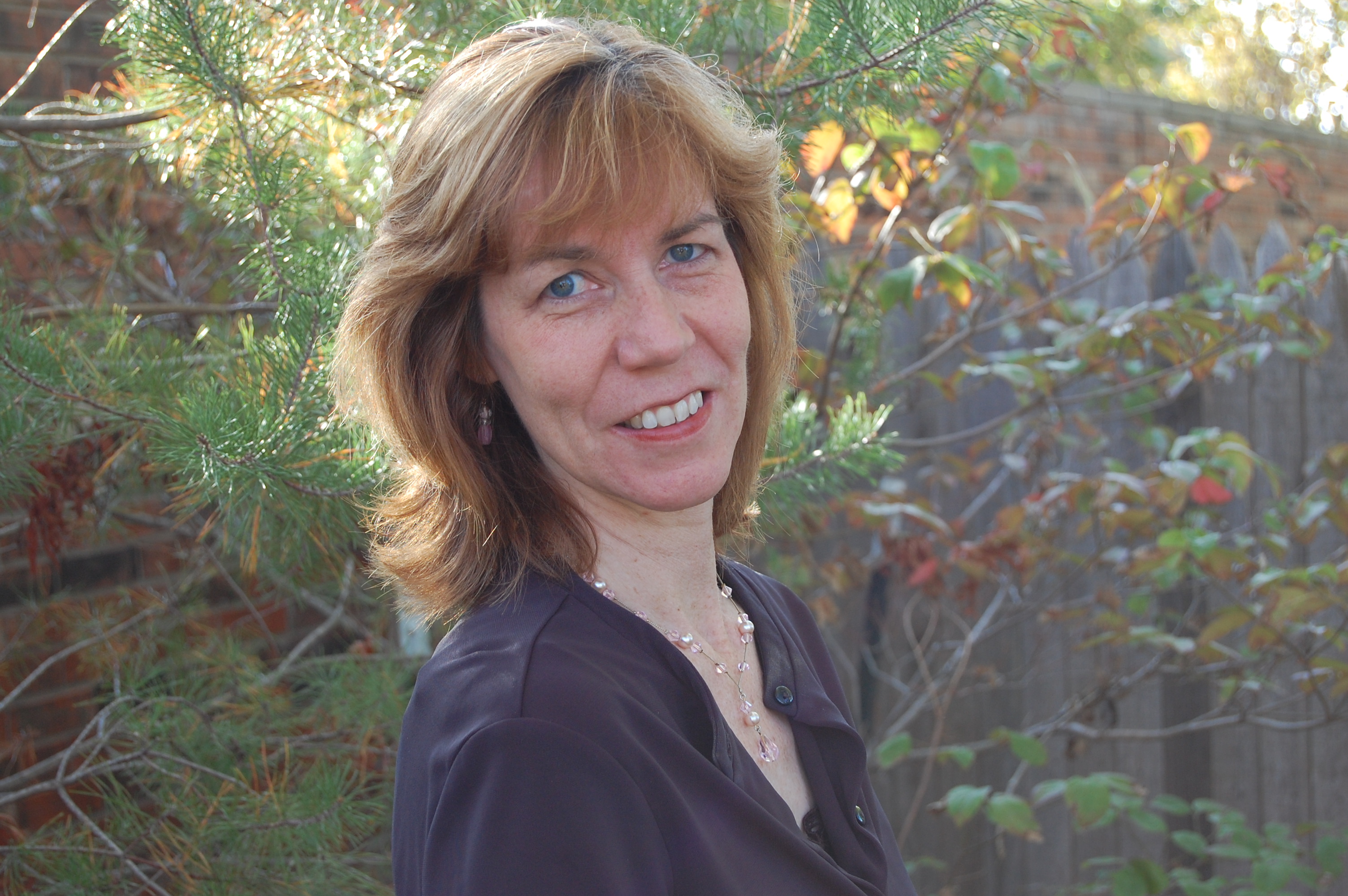 Alice Stanton is freelance book editor. For more than two decades she worked as a manuscript editor for the University of Oklahoma Press. A native of New York City, she currently resides in Weatherford, Oklahoma.
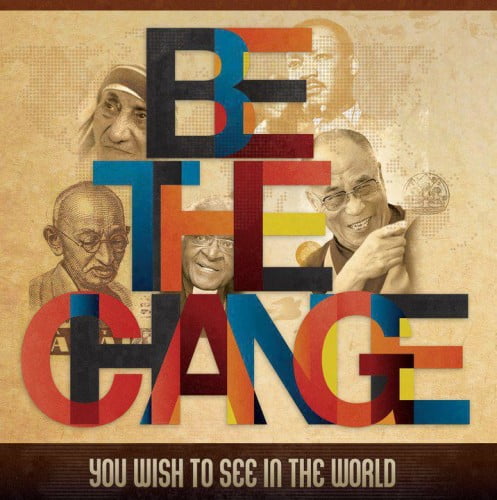 Gandhi once said, "Be the change you wish to see in the world!"
And, truly, God bless the fixers in this world because there are so many big problems out there that need solving.
There are children who need to be feed-- if only someone will figure out the resources of how to get them food.
There are elderly who are literally dying to know that somebody cares about them-- if only someone could motivate those of us with extra time to be moved in their direction.
There are diseases in certain parts of the world that could be prevented-- if only someone could move better medical care in their direction.
What about those problems that though we put all our might, all our effort, all our prayers toward, nothing seems to change?
What do we do then?
Such is a terrible plight for the best fixers among us.
I write this because I often try to be a fixer. And I know the pain of delayed expectations. The pain of knowing that as much as I want to fix something for myself or for someone I care about-- I can't.
We all hate this hard truth of life: we're not in control.
As much as I want to, I can't make a job to come out of thin air for my unemployed friend.
I can't take way the cancer diagnoses for that 12-year-old girl who I adore!
I can't re-write laws in countries which are unjust, keeping essential resources away from the most vulnerable who need them the most.
I can't spark joy into the lives of my friends who are weighed down in a season of life of funeral after funeral.
I can't. And it's so frustrating!
But what I can do is be is right where I am. I can be right where my loved ones are. I can stand with them in the midst of our unknowing. I can sit with my grief and theirs too, if I'm invited.
And I can live with the discomfort-- not run from it.
Yet, it's so easy for a "fix it" mentality to set in, though. Before we know it, we're saying:
"Oh, let's find a 3rd opinion and a 4th for that timeline of death"
"Oh, let's send out twenty more resumes and re-write 20 more versions of your cover letter."
"Oh, let's fill up the days with appointments and evenings with parties-- all of my time should be filled!"
For I believe that God calls us to live with our discomfort.
Not as punishment. Not as a fear producing exercise. But as an expression of our faith.
Because sometimes, the BEST things happen when we have no idea where we are or where we're going next. And as we give our pain time to move through us.
One of my favorite scriptures comes from Exodus 14. Moses and the Israelites found themselves at a pretty desperate place too.
They'd only just left Egypt after 400 years of slavery and Pharoah was on their tail. Moses felt beside himself in worry with so much responsiblity on his shoulders. He could not see a way forward! And, he cries out to God for help.
Or in other words, "Live with the discomfort, Moses! And let Me be in charge."
So wherever you find yourself today, hear me preaching to me and preaching to you: help is always on the way! This trust is what faith is all about.
 Few of us intentionally set out to hurt those we love.
But we do.
Angry words come out of our mouths.
Jokes that seem funny to us, offend.
We forget birthdays.
But even worse than this, often our exclamations of joy can rub deeper wounds into a loved one's pain.
I know I've been guilty of such.
But, the clash of pain and joy is not something you learn about early in life.
From where I sit, I believe, it's often a lesson that tackles us in our 20s and 30s when age no longer equals simultaneous activity with our peers. College, relationships, birthing, etc all come (or not) at a unique pace.
My first hint of this lesson came when I visited a mentor's house while home on a college break.
My friend suffered from depression (though I didn't have any idea what this meant back then) and toxic friendships. She really needed a friend to sit and hear her pain. It had been a tough week.
But she was my mentor, so I wanted to tell her my stories before any of that.
So, I charged right in.
I pulled out a photo album I'd put together and started showing her what I'd been up to. Pages after pages of posed pictures and happy faces. I was so proud of the new college friends I'd made.
But I could tell as we neared the end of my "show and tell" hour that sadness found its way to her face. Though I didn't have the courage to tell her what I noticed, the truth was this: my joy rubbed against her pain.
*******
A year ago, I sat with another friend, a peer who was visiting my home for the first time.
I was so excited that she'd come to visit that I was eager to share all those things you can only see when you are in a person's home. I gave a tour, especially of our new basement remodel. I showed her the framed pictures in my office. Hours later I pulled out old pictures from the upstairs bookshelf including my wedding album. On auto pilot, I told her the stories.
But again, the same thing happened.
As much as my friend tried to engage what I told her about the happy day in Southern Georgia when I became a Hagan, by the last couple of pages she was done. My friend loved me, but she was single. She didn't want to see any more pictures of me in a white dress.
Whereas my wedding album told a story of a fulfilling union for me, my wedding album to her said, "You're alone."
My joy rubbed up against her pain.
*******
I've been on the other side of this conflict too.
Friends have gone on and about their babies, and then sent more emails about baby #2 and #5.
My Facebook feed is full of ultrasound pictures (even some in 4D!)
And invitations to baby showers fill the mailbox.
It's joy rubbing up against my pain. It's a stomach sinking, crappy feeling that I am learning how to endure.
Because at this juncture of the Hagan household, children in the home is not something we can have (though we want).
Every time I hear stories after stories of pregnancy and "the cutest thing" my child said today from a well-meaning friend, I want to be happy and supportive. Yet, my heart aches.
But, I believe in community. I believe in sharing in the joy and pain other's lives. My faith gives me this desire.
Is there a way to be better and ask others to be better in return?
There many not be easy answers. If any answers at all.
Our world is full of both joy and pain.
All I know is this: "I'm sorry" and "How can I be a good friend to you? with a spoon full of self-awareness is a good start.
 One of my favorite children's books of all times is the Velveteen Rabbit.
But like most good children's stories, it's really not a children's story. It's a tale that has important things to say to adults trying to figure out the great question of: "How now shall we live?
The following scenario (that is one of my favorite) is a conversation between the Skin Horse, the most senior member of the children's nursery and Velveteen Rabbit about what is real:
“Real isn't how you are made,' said the Skin Horse. 'It's a thing that happens to you. When a child loves you for a long, long time, not just to play with, but REALLY loves you, then you become Real.'
'Does it hurt?' asked the Rabbit.
'Sometimes,' said the Skin Horse, for he was always truthful. 'When you are Real you don't mind being hurt.'
'Does it happen all at once, like being wound up,' he asked, 'or bit by bit?'
'It doesn't happen all at once,' said the Skin Horse. 'You become. It takes a long time. That's why it doesn't happen often to people who break easily, or have sharp edges, or who have to be carefully kept. Generally, by the time you are Real, most of your hair has been loved off, and your eyes drop out and you get loose in the joints and very shabby. But these things don't matter at all, because once you are Real you can't be ugly, except to people who don't understand.”
― Margery Williams
Many of us think we are real. We think we are living an authentic life.
But, we aren't actually real because our love has cost us nothing. Or it has cost us very little.
We aren't loving till we hurt. And by this I don't mean self-destructive pain. No, I'm talking about heart wide open living.
Think about it: when is the last time you cried tears over the suffering endured by a friend?
When is the last time you prayed for someone longer than a couple of seconds?
When is the last time you picked up the phone to just tell someone "I love you" them and were thinking about them?
Being real is about laying aside selfishness. Being real is about loving extravagantly. Being real is about not being afraid to love, even if you aren't loved equally in return.
But the pain. Oh, the pain. I wish being real did not come with so much pain! But it is does.
When we love deeply, we are also hurt deeply. There is really no way around it. It can feel like--
Friends who we thought would be in our life forever no longer talk to us.
Family members that we thought would always remember our birthdays no longer send us cards.
Colleagues who we thought we would work together with gleefully for years turn on us.
But this is what being real is all about-- having your hair loved off, your eyes popped out and your protective coverings looking sort of shabby. However, in the end, according to the Skin Horse it doesn't matter. We learn as we love that being real is one of life's greatest gifts.And those who can recognize the treasure we are and are becoming will find us. Our hearts will heal eventually. And the storehouse of experiences we've gathered through life's most authentic journeys will make us better people, more loving people.
But I still hate it when my heart breaks. I really do. But, I hope that I am becoming a little more real everyday.
Life.
It is always happening.
Sometimes it's great. Other times it is not.
 And today I am wondering about existing when things aren't well.
How do you go on when we are very aware that life’s broken edges cracked parts of you that might never be repaired?
How do you keep breathing when everything in you wants to lay down in surrender to what is lost?
How you have hope when life is never full of any guarantees?
Such are questions I’ve been thinking about a lot lately both for myself and those in whom I love that are experiencing suffering.
Getting out of bed. Putting on pants. Cooking at home. Making hopeful plans. Going to the gym. Calling a friend. Laughing when something is funny.
This is what not so well seasons of life are all about.
Making space for Grace to surprise.
Accepting conversation and loving embrace.
Appreciating the kindness, even small gestures.
Walking in the sunshine.
Bathing slowly.
Remembering the breath of life that is and has always been within.
When it is time to pray again, it will come.
When it is time to walk on a new path, it will be revealed.
When it is time to create, it will flow.
But when all is not well, it is good to accept it. It is good to surround yourself with people who don’t mind your crying. It is good to drink hot tea and pour a glass of wine later. It is good to wear fuzzy pajamas.
One day, Grace will help you move on. One day.
Until then, you know that there you are. Breathing in and breathing out.
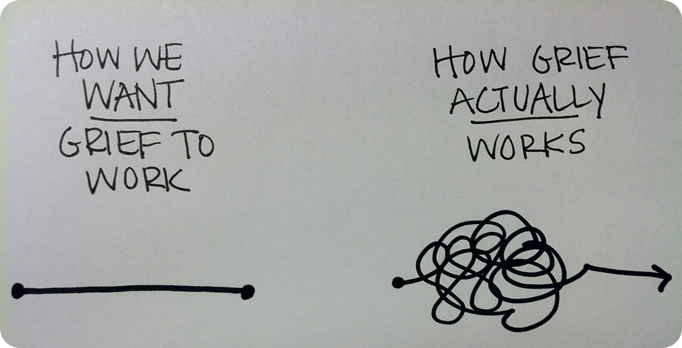 What do you do when the unspeakable happens to those you love?
A month or so ago, a dear seminary friend, Rebekah who had recently lost a baby at 20 weeks shared this list on Facebook as a way to help people know how to care (brave and awesome of her!).
It was a handout that she'd shared in an adult education class in the church she serves in New York City.
I loved the list-- not only because it helped me understand where my friend was in her journey of grief, but because it was a great conversation starter for other friends who were going through their own difficult situations.
It is so easy, even as a person who wants to have a compassionate heart to get so consumed in your own stuff. It's easy to forget the grief is long journey. It's easy to forget that a person is more than just their pain, especially when their pain so raw at a particular time. It's easy to fear saying the "wrong thing" that you end up doing nothing at all.
So, here's some suggestions for some helpful and less helpful approaches.
Four categories of how we DON’T help; what not to say to people in pain:
--The “fix it” sayings: Resist any urge to jump to a conclusion for someone; folks don’t always need a solution, it feels dismissive of their pain.
--Sayings that can dismiss pain: Any sentence that begins with “at least”, “This too shall pass”, “Everything happens for a reason”.
--Bad Theology: when in doubt, don’t open your mouth. Do not say: “Everything is meant to be or "happens for a reason”, “When God closes a door, he always opens a window”, “God doesn't give you more than you can handle”, “It was God’s will”—(don’t ever say this unless you’re God), “God needed another angel” or anything that communicates that God takes the person away.
--“I know what you’re going through”: Don’t rush to share your own experience; it can minimize the pain of someone else who needs to share their own story and feelings. Finding commonality is helpful, but sometimes folks need you to listen. Especially don’t do this if the outcome was bad: “I know of someone who had that kind of cancer and she died”
Four ways of how we CAN help:
--Ministry of presence: Being present, letting them be angry/sad, telling them that it’s not ok that this happened and you’re a safe person for them to talk to.
--Intentional listening, without judgment and without an agenda. Listen with the intention of helping them think through their decisions. Don’t try to fix their problems. Be careful of interrupting.
--Doing the practical things: laundry, food, childcare, cleaning, etc.
--Remembering that they are more than their pain. They have another identity outside of their pain—they are more than someone with cancer, more than a widow, more than someone who lost a parent, a child. Some folks don’t want to enter a conversation and have everyone be sad for them all the time. They want to move on and have another identity.
Thanks, Rebekah! What might you add to the list?
[If you missed Elizabeth's post on "Love That Groans" check it out]
Nehemiah said, “Go and enjoy choice food and sweet drinks, and send some to those who have nothing prepared. This day is holy to our Lord. Do not grieve, for the joy of the Lord is your strength.” Nehemiah 8:10
For a woman expecting but not yet expecting a baby, Advent can be a miserable time.
While songs of “peace on earth, goodwill to men” and “joy the world, the Lord has come!” are being blasted on the radio, this time for the wait-ers among us can often feel more like Holy Week than it does Advent.
But it is the holiday season, and most of us want to be happy. We want to be able to put whatever is bothering us aside and rejoice as the scripture exhorts us too. We want joy—even as much as our life circumstances aren’t naturally joyful.
I would love to offer that joy is a formula that can be followed as many preachers offer: Jesus first, Others second, and Yourself last. I’d love to suggest that joy is an emotion of the will that we can just pray harder to make happen. Or, if we force ourselves to sing one more Christmas carol or bake one more sheet of cookies, the joy of the Christmas spirit will find us.
Maybe you’re better at joy than I, but it has been my experience that seeking joy in the midst of waiting for children does not come through formulas and cookies. Throughout my journey to become a mother, I’ve waited through some of the darkest days of my life.
I’ve had to cry until I’ve run out of tears.
I’ve had to sit among the rocks and dirt in my backyard.
I’ve had to pull myself out of bed, brush my teeth and go to work without clean socks.
And this is all I’ve done and then repeated. I needed to attend to my own grief. There was just no other way to get through the day.
And slowly my spirit began to move just a little. It moved toward hope—that the next day would be brighter than the one before. It moved toward love—that someone needed me to notice their pain so getting out of bed was, in fact, a really great idea. And finally it moved toward joy—that though sorrow lasts for the night, in the morning joy comes.
Light came forth from the darkness. And this light was called joy.
And every time it happened—joy happened— it has surprised me. Every time over these past five years when I’ve found a smile on my face (when I had every reason to keep crying), when I’ve found a desire to make dinner (not just have take-out for the 10th time), and when I’ve called my doctor and said “Let’s try again” (when I could have easily given up), joy has become one of waiting’s greatest gifts.
Joy, I believe, is completely nonsensical.
How could a grieving mother-to-be like me smile on a week when her doctor gives her some worst-case scenario news?
How could a grieving mother-to-be like me laugh when a toddler dances around the church parlor, a little one the same age as a child who could have been my own?
How could a grieving mother-to-be like me delight in a childless season of life, even when what she wants more than anything is to mother one particular child?
I’ve done these very things, and it’s joy, I tell you. Pure joy.
Joy, as we discover it in our waiting seasons reminds us of this: we can be happy even in imperfection. We don’t need a “due date” for the work of our callings to be in motion. Jesus brings us true joy. The kingdom of God may not be in its day of fulfillment in our lives, but joy is still ours for the taking as we wait.
Let us pray:
Lord Jesus, today we wait on joy. We wait for its movement to come into our lives to fill up the loneliness, the heartache and the disappointments that loom around us and in us. We wait today for your coming. Amen.

 I Want to Know Christ
Philippians 3:7-11
Preached: August 11, 2013, Martin Luther King Christian Church, Reston, VA
I always knew when I was younger that one day I’d want to be married. I would want to have a life partner—someone in whom I could share in all of life’s most memorable moments with and one day grow old beside.
By my teenaged years, I had expectations on how this might happen—mostly coming from the stories I’d heard from how my parents met.
From the time that I was small, when my sister and I would ask my mom about how she met my dad, she’d tell us about the day that she stood in registration line on her first day at Belmont University in Nashville, TN. As she waited her turn to sign up for her classes, her last name was Duncan and my father to-be was Evans, so naturally they found themselves in the same line—the D-E’s. And there they struck up a conversation and the beginnings of a friendship that led to a marriage began.
So, I too thought if I wanted to get married, all I’d have to do was go to college. And there on the first week would I meet the man who would make me his Mrs.
I’d arrive at college and bam! I’d walk on campus and say “Hello fine young men!” And, he’d be there.
Well— you can imagine how great this “bright” plan of mine worked out!
I was shy at the time and really didn’t like going out of my comfort zone of who invited me to tag along with them. I saturated myself in an all-girlfriend kind of community—eating, studying and going to the movies with girlfriends, not boys. I guess it kept me out of trouble, but that was about it.
Even still, I thought without any work, effort or sacrifice Mr. Right would make himself known to me: the man I most wanted to know and marry one day. In my head, I imagined he’d just knock on my door one day, introduce himself, we’d date and then we could just get on with our really happy lives.
Yes, I said I wanted to be in a relationship. But, no, I didn’t try to get to know any new young men.
Well—you know how that went. I didn’t really date anyone for the next four years.
When many of us think of our relationship with Christ, we approach it in a similar way that I did with dating in college. We say that we want to grow.
We say that we want to have a relationship with Christ that is vibrant.
But, we get stuck.
We get stuck in a version of faith that closely models what we were taught in children’s Sunday School back in 2nd grade children’s church.
We get stuck on the faith we observed in our grandparents but never truly made our own.
We get stuck when the most difficult life situations find us—throwing in all our cards and say, “Well, there must not really be a God. Because if there was a God this bad situation would not be happening to me!”
We get stuck even though most all of us understand this basic truth:
To be a Christian is to what? Follow Christ.
But we equate knowing Christ with church membership—showing up regularly on Sundays.
We equate knowing Christ with having hope of eternal life—resting on the fact that we know where we’ll go one day when we die.
We equate knowing Christ with doing unto others as we would have it done unto us—being a good person because that is how Jesus showed us to live when he was on earth.
And, while all of this is well and good and there’s noting wrong with any of these things, faith of that depends only on these sort of things becomes a sideline only type of faith. Yes, we say with our lips that we are a Christian but there’s no movement in our lives toward the direction of who Jesus actually was.
We say we are following Jesus but our life looks nothing like His did.
The apostle Paul has a few words to share with us about this found in his letter to the Philippian church. It’s a book of Paul clearly laying his feelings about how much this congregation meant to him and what he wanted Christ to be in his life.
It’s a book that Paul wrote from jail—during what was most likely the end of his life, a time when we was saying the things that he most wanted to say.
In fact, scholars feel that the book of Philippians is in fact that the book the one they are most sure that Paul wrote by hand. Put simply, Philippians is Paul’s heart put to paper.
And within this context we hear the Apostle Paul say, “But whatever was to my profit, I now consider loss for the sake of Christ.” And then he goes on to say in verse 10: “I want to know Christ and the power of his resurrection and the fellowship of sharing in his suffering, becoming like him in his death.”
These are familiar words. If we’ve been around church awhile, we’ve heard them a lot. We may just gloss over them with our ears thinking we understand already what they mean. Following Jesus is about death and resurrection . . . Ok, preacher, I’ve got that.
But pause with me for a moment.
Paul is elevating the supremacy of Christ by saying “whatever was to his profit (as we know from his life story that he used to be a very righteous law-abiding Jew), he now considers loss for the sake of Christ.”
But not only this, Paul says that he wants to know Christ in two particular ways.
The first is that he wants to know the power of Christ’s resurrection. And the second, is that Paul wants the fellowship of sharing in his suffering.
(Have congregation REPEAT).
Do you hear what we just said?
Paul says to know Christ is not what most of us think knowing Christ is about.
I heard nothing about joining a church. I heard nothing about having correct theology. I heard nothing about reading the Bible and praying so many hours a week. Or any sort of easy or straight forward task that any of us could just snap our fingers and achieve.
Paul says, “I want to know the power of Christ’s resurrection” and “ I want the fellowship of sharing in Christ’s sufferings.”
I’ve been struck by the simplicity and the profound nature of these two qualifiers over the past couple of weeks.
Paul tells us it is only about two things: resurrection and suffering. But, these aren’t small things . . .
Let’s start with resurrection. Resurrection is the word that most of us associate with the Easter season, isn’t it?
On Easter Sunday morning we sing, “Christ the Lord is Risen Today” and “Up from the Grave He Arose” and we talk about how almost and amazing it is that Christ defeated the powers of sin and death and so we too can live forever more. It’s a happy day isn’t it? Full of bright flower dresses and new hats and lots of joy . . .
So following Jesus about resurrection—that might sound easy enough, right? We just have to show up in our Sunday best! Huh? Wrong!
Do we not remember all the stories that followed that bright Easter morning?
The stories of the men afraid in their scandals hiding in the upper room not believing the news that the women brought them about the empty tomb.
The stories of women like Mary finding Jesus in the garden outside the tomb holding so tightly on to Jesus that Jesus had to reprimand her saying: “Don’t cling to me.”
The stories of the disciples like Peter, filled with shame and grief having to have a conversation over and over again with Jesus about what he needed to do going forward at the seashore.
Resurrection is not about instant beauty or perfect circumstances. Resurrection is a process. Resurrection is a slow transformative process.
And while yes, resurrection is about new life and hope; its birth is not an easy process. Resurrection rattles of the foundations of what is normal, what is comfortable and most certainly what we might have expected before it comes.
It’s the power that dismantles every other power in our life that controls us, keeps us in bondage, or has any pull at all over our lives.
To want to know Christ and the power of his resurrection is much like a story that author Annie Dillard tells.
When speaking of the resurrection power of our Lord, she gives this advice:
“It is madness [for} ladies’ [to wear] straw hats and velvet hats to church; we should all be wearing crash helmets. [Instead of passing out bulletins,] Ushers should issue life preservers and signal flares; they should lash us to our pews.”
To say that you want to know Christ is to be ready for resurrection power to shake your life upside down.
And in the same way, Paul also says that he wants to share in the fellowship of his Christ’s sufferings. To know Christ is to know Christ’s sufferings.
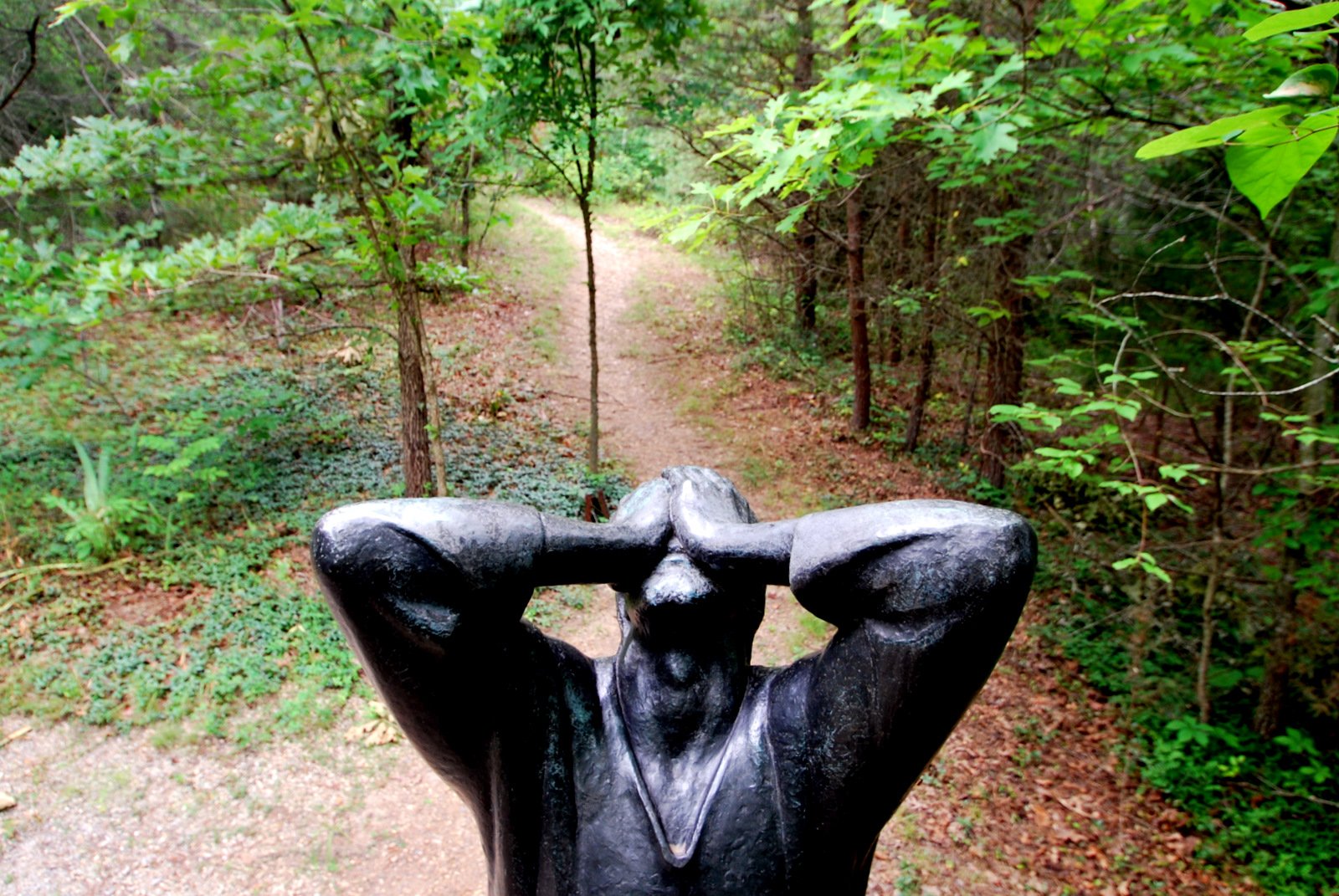 Sufferings . . . if you are like me, it’s never good when a sentence starts with this word is it? I hate suffering, what about you?
Suffering involves change not only in the way that resurrection is about change, but it is about pain and how pain changes us. Blood, sweat and tears as the saying goes. . . .
To know Christ, Paul says, we have to be ready to suffer.
To follow Christ is not to sign up for a ticket to life happiness (as some tv preachers—you know who they are might tell you) but it is to accept that in life, no matter how good we think we are, difficult situations are going to find us.
And in fact, the particular the MORE we begin to align our lives in the direction of Christ’s teachings, then the more we are going to get push back from the world.
It is as if Paul is saying, start following Christ and then get ready, because pain is going to come!
It’s going to be pain you or I didn’t ask for, didn’t make happen, or even is not the fault of our poor choices.
May I just take liberty to say that following Jesus sometimes means somebody is going to tell lies about us, somebody whom we love might leave us, or maybe even one day we are going to wake up and realize that our life has to take a completely different life path with some really hard choices.
And it’s going to hurt!
Even more so, people might just steal our clothes, spit on us, speak all kinds of ill against us, and our stands for Jesus might even cost us our very lives. If it happened to Jesus, then why do we think it won’t happen to us?
Suffering is just part of the commitment.
I ask you church, do you still want to know Christ?
I began my sermon with this morning telling you that as a child I dreamed of getting married one day.
Well when I was in seminary, God answer such a prayer and brought into my life an amazing life partner named Kevin Hagan who would be God’s instrument of love, challenge and encouragement to me for all that lied ahead.
And all was well and great and all—you know things were going fine. A year and a half ago, Kevin was working on the leadership team of a non-profit in Alexandria and I was happy over there at Washington Plaza—until Kevin got a call one day that would lead to another call and then a visit and then another visit where he would be named the President of Feed The Children that just so happened to be in Oklahoma.
And you can imagine as excited as I was for this opportunity for Kevin, how I felt about that—Oklahoma.
I told Kevin, “They don’t like my kind of outspoken female pastor-ness out there.” His optimist self said, “Give it a try.”
And now after I’ve been out there part-time for 6 months I can say indeed my assumptions were right. They don’t like my kind. And Oklahoma is a 22 hour drive away from here. It can feel very lonely. And there have been many tears in our household as much as there have been celebratory moments of all the new experiences.
We have to be careful what we pray for.
Sometimes God’s biggest blessings to us can also come with pain. Sometimes God’s biggest blessings can involve resurrection that forces our world-view upside down.
And it is a process.
Notice with me that Paul said, “I want to know Christ.”
NOT, “I know Christ” or “I know Christ already.”
Paul is exhorting us by example to A PROCESS of knowing the power of the resurrection and the fellowship of sharing in his sufferings.
Even for Paul it was never something he achieved or arrived at, it was about a relationship of wanting to know Christ more every day.
The last time I did a class preparing persons for baptism. I started the session by asking them if they were ready to die? “Have you lost your mind, Pastor?” their eyes said back to me in response.
And no, it wasn’t some sort of “hell fire and brimstone” are you sure you are saved sort of line of questioning. And no I had not lost my mind. I was serious. Were they ready to die?
Because as baptized believers who are desiring to know Christ, what we believe being immersed under the water and then coming back up symbolize the fact that we are dying to ourselves and being raised to a new kind of life.
The Christian life—at least as the Apostle Paul saw it was about death to our normal human experience. It was about the power of resurrection and sharing in the fellowship of Christ’s sufferings.
So I ask you church today, do you want to know Christ?
Do you want to walk in Jesus’ footsteps?
If you answer is yes, then I say, hold on for the ride of your life—for it will be a journey filled with the power of the resurrection AND the fellowship of sharing in Christ’s sufferings.
For those who commit afresh today to this way of dying to self and living for Christ, let the church say (AMEN).
 You haven't seen me blog as much as I normally do lately other than posting sermons. Writing like a crazy woman some days, I've sought to give more attention to my book long project instead of other stuff.
When I come out of my writing cave and seek to tell people what I've been up to, the number one thing people say often in a condescending tone of voice is: "That must be so healing for you" or "Writing is so therapeutic, so good for you."
And in response, I use self-control to not growl. And I really want to growl.
I realize people mean well. They're just trying to be supportive. Many can't imagine writing as honestly as I am trying to do.
But, I want to proclaim writing is not an "all about me" task. It's not something I do rooted in selfish motives. I' m not trying to throw up my emotional baggage on the world. I write because I am a writer. I write about painful things sometimes because painful things have happened to me and need to be heard. I write about joy sometimes because happy things happen to me and I want to encourage others. I write because like a painter or a carver or a sculptor, word choice is my art form. I write to practice my art. Sometimes what I produce is good art. Other times it needs to be sent back to the drafting board altogether or thrown in the trash. But it's still art. And I still must write.
If I wrote for therapy, then I should get a journal or talk to a therapist (I already do both from time to time). These things are less painful. More private. Less drafting and wasted paper.
It's burdensome task, I believe, putting your honest self out to the world, having no idea how people will respond to a story that isn't just a story to you. It's your life, and the only one you've got. Writing about your own life, I believe, can be one of the most courageous things people do.
Sure, as they say, writing can mature the soul. In writing, the pain has somewhere to go: to the paper. And, when you have to think about something long enough to find just the right word, you usually walk away with heighten self-awareness (which is never a bad thing). Healing and self-awareness are cousins. It's true.
But I don't think most writers, write because of personal sickness (though I'm sure some do, but I'm not friends with these folks). I don't think writers write so that just anyone can know their less than flattering thoughts or moments. I don't know think they write just to feel better. Writers write to connect them into what it means to be human.
And this is my point: I write because I don't know how to not write. So if you stick around, you'll have more to read in the future. And, this is what I can promise you, the stories to come will be my truth.
