Lately when someone asks me how I'm doing, I offer this: in the past 4 months, I've led 6 funerals.
Dear, dear people whom I've loved and people who've held significant roles of leadership and care in our congregation have died after seasons of debilitating illnesses. Some got sick and died quickly. Some simply reached the end after long health struggles. So much of my pastoral work the last 4 month has included sitting at bedsides of the dying, talking about funeral plans and services. Heavy stuff. Privileged work. Sobering.
With all of this in mind, I'm offering grief as our word of the week because it's been something I can't get off my mind.
Grief a word that means: mental distress one feels while experiencing a loss.
Maybe for you, this is not a season or grief, but I'm sure you know someone is walking through such a time right now. And if you don't, our world's news is full of stories of the grieving. I'm thinking especially about our friends in the Middle East who are continuing to navigate such a horrible war.
This is what I know: as much as you and I would love to shy away from the tender and painful emotions of loss-- grief can be one of life's greatest teachers, helping us focus on what is most important in a way that nothing else can.
Here's what I'm noticing about grief's invitations:
1. The final conversations you have with loved ones are never all you want them to be (you always want more), but that you remember those last words and savor them like gems. So maybe life would feel richer if you had more "get to the point" conversations sooner?
2. You never know when memories of loved ones will float back to find you. Music can be triggering. So can times when when you really want to have a talk on a subject. Or happy times were your loved one's absence feels overwhelming. So maybe you should just make friends with your grief knowing in part it will always be with you?
3. The journey of dying doesn't have to be avoided like a contagious disease. Beautiful things happen in the transition from this life to the next for those who can stay awhile and participate in it. So maybe you shouldn't be so afraid the next time you are asked to be present at a passing?
While my heart still feels tender for our church's grief, I smile at the beauty of what has been our experience of so many funerals. Community. Hope. Hands held. Joy through the cracks. And though there is a motto around our congregation right now, "No one else die now for a while" I do know that death will always be present in my living experience as it will yours. So we can't not think about it. We can't not talk about it.
May your grief be a good teacher for you too-
XO
Elizabeth
Good morning friends!
Today I'm wondering if you can remember the last time you were really really upset about something? Can you remember the last time you ate your feelings or just had to pout around the house for a while? To such experiences, enter our word for the week: anger.
Anger: a strong feeling of annoyance, displeasure, or hostility.
Such of course is something that we don't like to admit aloud or at least say in polite social circles. "Me, angry? Oh no, you've got the wrong person!"
Let me tell you this: several years ago after a long season of so many things crumbling around me and so many things not going as planned, I had a friend look me in the eye over lunch one afternoon and tell me that I was angry. She said, "Can't you see it? You have gifts to give! You have love to share! But you aren't being YOU because you are so angry."
I bet you can imagine how well that went over . . . .
But after a couple of days thinking through these piercing words, I knew my friend was right, and I was so touched by her bravery in telling me the truth.
Here was the thing: my anger was all about grief.
I love what Shauna Niequist says in her latest book, I Guess I Haven't Learned That Yet about anger:
When we've experienced a great loss, often we say we're sad but what bubbles out of us like a volcano is anger: hot, volatile, explosive anger. Anger is active, powerful; it buoys us along and gives us something to do and focus and sharpen. Anger makes us feel like we are in control again, because loss at its core, loss of control, or the myth of it anyway.
Anger is not a bad emotion, contrary to what I was taught in my "How to be a nice southern woman" upbringing. Jesus after all was angry throughout the gospels. Angry at how children were mistreated. Angry about greed expressed in the temple. Angry when the most vulnerable were not protected by those who claimed to be full of "religion."
BUT when you do your deeper work with anger, you realize that it's truly your grief that needs some attention.
You are sad about other people and circumstances not being what you wanted them to be.
You might not yet be ready to be vulnerable yet about the grief that is under the anger you feel, but know when you are: God will be there waiting to cry tears with you. For to find our way out of anger space, often we have to grieve first.
May your anger be a good, good teacher this week to what lies beneath.
XO
Elizabeth
Do you remember ever going to summer camp or a school trip as a child and missing home something crazy? Writing letters home everyday or begging to use a phone to call your parents? Maybe even cutting your week short because you just couldn't stay away from home one more day?
Even if you weren't one of those kids-- so many of us have had the experience at one time in our lives or another of this week's word: homesick.
Homesick: a longing to return home.
To be homesick is to experience a deep longing, a deep dissatisfaction with the way life used to be but is no longer.
You can be homesick over the loss of a job or a friendship that offered a community of deep belonging.
You can be homesick for a time when your children were little, when assisted living was not necessary, or when a spouse or loved one was alive or had their memories intact.
You can be homesick for a state of mind, a feeling of peace or comfort that once offered purpose and direction.
Homesick is not just about missing a physical location.
Are you homesick for anything right now?
Take a minute and say it aloud.
Ultimately homesickness is about grief. It's about the insecurity of not knowing what to do in an unfamiliar space. It's about feeling like the wheels of control have flown off without a guide as to how to put it back together.
It's hard to find your footing when you're homesick for something or someone. Everything in this state of mind feels more complicated than it should. Sigh.
Yet, if there is anything I know for sure it's that sometimes God calls you to dream in the present tense of your actual life.
By this I don't mean that you ignore or belittle the pain or loss of homesickness in you, but figure out how to dream in new ways where you are.
To notice where hope might bubble up again. To pay attention to joy's surprises. To lean into authentic conversations that might bring encouragement.
I'm hoping that in whatever you are homesick for this week, you'll feel the presence of a God who has promised to never leave or forsake you wherever life takes you.
XO
Elizabeth
 Not all men are fathers.
Men can long for children and not have them or lost a child in their family.
Families can have their fathers taken from them too soon.
The anticipation of what will be said (or not said) in church, especially on special occasions like Father’s Day is scary for so many.
This is what I know for sure: words really do matter. Words said in places of worship have the power to hurt as much as they can heal. Even if we think we know what someone is going through, we never really know.
As someone who has watched my own husband grieve through an infertility journey and sat with other families struggling in various ways, the words I heard over and over about these days was, “Please talk about me. Don’t leave my story out on Sunday. If you do, we’ll come to church.”
It’s no surprise that we like happy stories in the church that make sense and are straightforward to all. (Enter man with wife and X number of children beside him in the pews.)
So why not take this opportunity on Sunday to name the multitude of many ways all of us connect to fathers, are fathers and hope to be fathers?
Why not honor the ways that men can can father even if is as an uncle, a mentor or a friend?
Why not just be kind to all the men (if you're going to celebrate the holiday at all)?
Below is a responsive prayer I have used in congregational life on Father’s Day. Feel free to use or adapt in a way that fits your congregation’s needs as we all seek to be a welcoming as we can to all on Sunday morning!
______________________
Fathers meet us in some very different ways, and today we celebrate them all!
Thank God for the gift of fatherhood!
For those men who have left this earth and who we dearly miss.
Thank God for the dads whose legacy remain strong.
For those men for whom we had/ have difficult relationships as fathers.
Thank God for being our Dad when we needed You the most.
For those men raising his children now making sacrifices—rising early to make lunches, picking up from soccer practice and tugging kiddos in bed at night.
Thank God for the dads whose pace is so hectic today.
For those men who have taken in others’ children through adoption and foster care, showing us that the love of God far extends beyond biological ties.
Thank God for the dads with vision to include.
For those men who have lost a child to death or want to have a child and know they can’t without much trouble carrying on with the pain of lost dreams, often not being able to talk about it at all.
Thank God for the dads who carry heavy burdens.
For all the men in our community; who nurture us, support us and guide us in our becoming who show by their example fruits of love, joy, peace, patience, kindness, goodness, and faithfulness.
Thank God for the dads who love unconditionally.
We thank you, Lord, for the men who have influenced our lives in so many ways. And lift our voices in your name, O Heavenly Father in whom we adore.
AMEN
Life is really hard and we have to learn to talk about it.
In so many Christian communities I know, there's such a "How are you?" "I am fine" sweetness in the air.
We look pretty. We talk pretty. And we go home from being together as hurt as we walked in the doors.
For, in the hand shaking, having snacks at coffee hour, or even in the minutes before a committee meeting starts-- we don't say much though we were up half the night worrying about ____.
We don't say that we're having trouble paying our bills this month. We don't say that our marriage is in a rocky season or our child was just found with drugs or is soon going to be kicked out of school.
There's so much we keep to ourselves.
Now, I know I'm stepping on toes as I say this, but from the pastoral seat I've held over the last 12 years, I've seen church folks preferring our vision of reality than our actual reality.
The cost? People are suffering. We're suffering.
And the next call we get on the prayer chain about someone who took their own life might just be someone we'd "never suspect."
Or as my Instagram friend, Stephi Wagner posted recently, "If you are still surprised that people are choosing suicide over living in this broken world, you haven't been paying attention."
Why? Because we have no idea who we're worshipping alongside.
And what happens if your pastor is that person who is suffering silently?
In my book, Birthed, I write about what it was like to be the pastor of a congregation while also going through the deep heartache of child loss, infertility treatments and adoption failure. And then what it was like to move to a part of the country where I couldn't find work and lost all sense of identity outside my husband's. I became a regular church attendee with so much un-ease in my heart.
I might have even been sitting in your church or a church that looks like yours.
 It was a season of so many dead ends, heartbreak and loss.
It was a season where nothing seemed to get better as much as I hoped it would. And a season where I felt like life was just too hard to keep living.
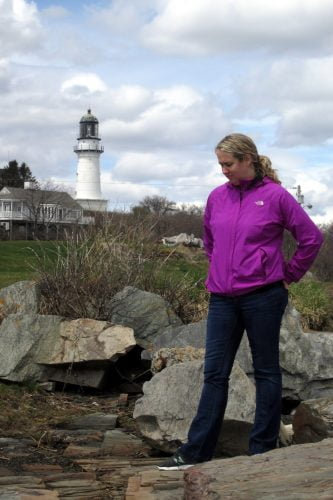
Even when I was on a vacation to the beauty of Maine's coast, the sadness still seemed to follow me (as seen in this picture a friend snapped when I wasn't looking).
I have to tell you that I woke up for many months aching physically because my heart was just that sad. And even though I sought treatment from my doctors for depression, it often felt like I was more depressed than the medication could help. I just couldn't get out of bed.
Making myself get dressed and do something every day just felt like too much to ask. My bed was my dear friend.
I share all of this today because I might be the least possible person you'd imagine thought this way.
I seem put together from the outside.
There are pretty pictures on my website. And lots of accomplishments next to my name. There are people who care about what I think on topics of importance.
And I am not alone.
Statistics tell us not only that suicide rates in the US are on the rise by 25% since 1999 and that in 2016 alone 45,000 lives were lost to suicide but that 10 million Americans think about killing themselves each year.
And though I am no longer in this place in my life (thanks be to God!), right now, our churches are full of these folks.
So do your neighborhood a favor this weekend if you attend worship, chat it up with whoever you're sitting beside.
Find out something new about them that you didn't know.
Invite someone over for dinner.
Talk with your faith leaders about not only what they're doing to support suicide prevention, but what their plans are for community building in the upcoming year.
This weekend, Mother's Day, while joy-filled for many is full of anxiety for others.
If you're in the anxiety producing camp, know I am with you.
It's so hard to have complicated feelings about the mothers in your life.
It's so hard to have longings for children (or relationships) unfulfilled. Or to be grieving when everyone else is so happy.
We don't know what to do with these sort of "uneasy" feelings in our "How are you?" "I am fine" culture.
And faith communities really are the worse. Mother's Day is also know as a the day that the grieving don't feel safe at church.
I need to tell you that even as a pastor, one year on Mother's Day, I took the day off. I turned off my phone. And I just couldn't wait till it was Monday already!
I couldn't handle someone else asking me "When I was going to have kids already?"
And even now, though I am a mother with little feet running around my house (after a long infertility journey), I still find Mother's Day so complicated.
As much as there is joy in my life, there is also loss, frustration and delayed expectations.
I don't believe I'm alone in these feelings, so as a pastor, I want to be sensitive to the complicated feelings so many of my beloveds will bring to worship on Sundays.
For it's my belief that we can help the grieving feel safer at church by the attention we give to our words and presence on Sunday (or any day really!)
Here's a prayer I wrote in the spirit of truth-telling, sensitivity and kindness. Adapt, use and share as it's helpful to you.
One: Mothers come in many different forms, and today we remember them all.
Many: Thank God for all mothers.
One: For those women who have left earth too soon and in whom we miss dearly.
Many: Thank God for these mothers!
One: For every woman who is raising children now making sacrifices for her children’s becoming.
Many: Thank God for these mothers.
One: For those women who have taken in others’ children through adoption and foster care, showing us that the love of God far extends beyond biological ties.
Many: Thank God for these mothers.
One: For those women with grieving hearts for children that could have been with futures so different from they planned.
Many: Thank God for these mothers.
One: For the special neighbors, teachers, and friends who’ve nurtured us, supported us and helped us to become the people we are today.
Many: Thank God for these mothers.
One: For mothers in which our relationships are complicated, difficult or strained, but who have forced us to choose healthier paths for our lives.
Many: Thank God for these mothers.
One: Mothering God, help us all to reflect more of your compassion, kindness and strength to those around us today. As Meister Eckhart has said, “We are all meant to be mothers of God. God is always needing to be born” let this be true of us! We need more of you, here, God!
Many: Thank God for mothers. AMEN
If I can be a resource to you, as a grieving mother, particularly, don't hesitate to contact me.
What are you afraid to say?
I've been thinking a lot about the silence spaces that fill so many of our day-to-day conversations and relationships.
We converse with a loved one about something overflowing with authenticity. But then for a multitude of reasons, we don't speak of it again for years. An in between space.
A friend's flippant comment offends us. But there never seems to be time to really talk about it again. An in between space.
A family member shames us with words. But we don't feel the relationship is safe enough to enter the waters of reconciliation. An in between space.

Bottom line: for right or wrong, in so much of our lives, I believe we're afraid to speak. Our relationships get stuck. We accept the in between space as all we can do.
But at what cost? Joy? Peace? The contentment of living well?
I just finished Kate Bowler's new book, Everything Happens for a Reason and Other Lies I've Loved-- a memoir about grief, cancer and dying that has recently hit the New York Times Best Seller list. It's full of beautiful prose. Prose I highly recommend to you.
One of the things that impressed me right away about Kate's experience of a terminal illness (a stage 4 cancer sentence nonetheless) was her crushing defiance of any space in between.
As soon as she heard that she had months to live (which has now turned into years thanks to a clinical trial), the bullshit games of her relationships ended.
Coming out of her first post-cancer diagnosis surgery, Kate describes sitting next to a beloved friend saying this:
"Oh my dear one, it's time. It's time to go. You can leave your career! . . If you stay a bitterness is going eat up everything I love about you."
I can imagine that Kate's directness would not have happened if it weren't for her reality. And, I can imagine sensitivity to her friend's feelings might have held her back. Fear would have gotten the last word.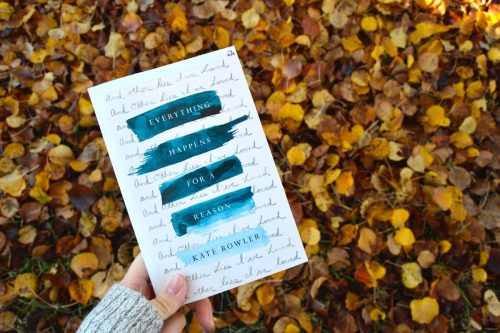
But it didn't. The space in between the two friends vanished.
So today, I'm wondering this: what does it take for us to live brave like this?
How can you and I shatter the space in between the keeps us from dear ones in our lives? How can we have more conversations that matter?
I'm writing today not because I have an answer to my question. Only this insight:
It takes two people to tango.
Reconciliation. New beginnings. Truth-telling. All of these beautiful acts do not happen if two people aren't open and willing people don't show up. AND
Push through the fear.
Bring up the hard stuff.
Listen.
Be willing to say: "I'm wrong."
Make amends if needed.
Lean into love, the kind of love that is patient and kind.
And most of all, value RELATIONSHIPS over being right or doing what we want all of the time.
It's a commitment do our part before we give up.
In the end, I believe this is gospel work. Showing up like this is good news. Telling the truth is the good news. Abiding with people is the good news.
And it's work I know I'm called to do in this world filled so much fear, so many relationships that need mending. What about you?
____________________
P.S. If you are in the Washington, DC area and would like to get together with a group to discuss Everything Happens for a Reason, join us at The Palisades Community Church on March 14th at 7pm. Let me know you are coming and I'll reserve you a spot.
P.S.S. Are you on Instagram? Let's connect over there. @Elizabethhagan I can't wait to see your pictures.
Someone around you is grieving right now. Even if you don't know his or her name. Even if you don't know why. Even if you'll never know why. So many people grieve on overdrive at this time of year.
Recently, I was teaching at "Attending to the Grief We Don't See" workshop at a congregation and I encouraged them to pay attention to certain times of the year trigger grief.
We all agreed that a season that tops that list are the calendar days from Thanksgiving to New Years. Such was my experience for years as my husband, Kevin and I waited with hope that we'd be parents one day. For a couple expecting but not yet expecting a baby or who have recently lost a baby, Advent can be a miserable time. (As everything in the culture screams children and babies!)
And for others of us, we're weighed down heavy by--
Hearing our cancer has returned.
A bout of depression which isn't getting better.
A child diagnosed with a learning disability.
An aging parent given months to live.
Enduring a job search with dead-end after dead-end.
Family dynamics that are just weird.
While songs of “peace on earth, goodwill to men” and “joy the world, the Lord has come!” are blasted on the radio, the grieving among us experience December more like Holy Week than Advent.
That first Christmas without mom here . . .
That second Christmas of being a divorced dad sharing custody of your kids . . .
That third Christmas that your son is in jail . . .
And on and on it goes.
Yet, because it is the holiday season many of us want to be happy, regardless. We want to be able to put whatever is bothering us aside and rejoice as the scripture exhorts us too. We want joy—even as much as our life circumstances aren’t naturally joyful.
So how can we be joyful? Is it even possible for the grieving?
I would love to offer that joy is a formula that can be followed (as many preachers offer: Jesus first, Others second, and Yourself last).
I would love to suggest that joy is an emotion of the will that we can just pray harder to make happen.
Or, I would love to tell you if you "Sing one more Christmas carol or bake one more sheet of cookies, then joy of the Christmas spirit will find you!"
But I can't.
Maybe you’re better at joy than I . . . but it has been my experience that seeking joy in the midst of waiting does not come through formulas and cookies.
Waiting on joy has looked more like:
Crying until I’ve run out of tears.
Sitting among the rocks and dirt in my backyard.
Drinking too much wine.
Pulling myself out of bed, brush my teeth and go to work without clean socks believing I'm doing the best I can.
And I've done these things on repeat. Then when I've been lucky, others have come to sit with me and done these things with me.
Here is what I most want to tell you: as I've allowed myself to feel what I feel and been honest with others about it, a miracle has happened.
My spirit has began to move just a little. It moved toward hope—that the next day would be brighter than the one before.
It moved toward love—that someone needed me to notice their pain so getting out of bed was, in fact, a really great idea.
And finally it moved toward joy—that though sorrow lasts for the night, in the morning joy comes.
Such is what I'm hoping for you this holiday season.
Your joy might not be bright and showy. You may not be the one in the choir singing the carols loudly.
But you'll be hanging on because of your quiet strength. And you will get through because you're braver than you know.
_____
Did you know I wrote a book for Advent? Check out Seeing a Different World here.
Want to hear more of my grief story? Check out my spiritual memoir about my long season of infertility. You can buy it here.
Would you like me to come speak with your congregation or community group about sitting with grief during tough times? Contact me.

Hey friends- thanks for hanging with me this week during National Infertility Week hearing these stories. I hope you've had your eyes opened to how common infertility is-- touching people in all walks of life. I'm so glad to meet Lauren, a friend of a friend and blog reader this week. I was so excited to learn of her willingness to share with us about her experience. Such bravery in these words below. Keep reading!
Fifty-four. That is the number of months we spent waiting to see a positive pregnancy test. For 1642 days, we carried the feelings of hopelessness, confusion, and sadness while dealing with unexplained infertility.
Our story isn’t unique. The details may be different, but our experience with infertility is a story that one in eight couples, unfortunately, can tell. To someone suffering from infertility or pregnancy loss, you feel less alone and find comfort in knowing that others can relate. But you also feel intense heartache for those who understand the feelings and fears that come with traveling this journey for any length of time.
I think all of us in this community can agree that infertility has taken away so much. But the experience of the past 4 ½ years has propelled my husband and I on a powerful learning journey.
Infertility taught me about marriage.
My husband and I learned to be vulnerable and communicate in ways we wouldn’t have been able to without going through infertility. I got to know him truly as my partner, see him exposed with emotions, and feel his pain in a way I didn’t know existed. He was suffering too and together we could share the grief and care for each other’s hearts better and more intentionally than before.
Infertility taught me about the importance of support systems.
When we decided to be open about our journey, we were overwhelmed by the response. I was amazed by those who hadn’t experienced infertility, but wanted to know how they could show support. Others who had walked this path or were still in the midst of it reached out to offer a shoulder to cry on. Without this critical network, we would have suffered in silence and lived in an even darker, more hopeless place.
Infertility taught me about selflessness.
When we were at our lowest and struggling to figure out how to pay for IVF, we each cried out to God, unbeknownst to the other, to acknowledge we couldn’t do this on our own. It was too much for us to bear and we needed Him. Literally hours later, our best friends stepped up to the call. Knowing we would never ask for help, they took our burden upon themselves. They secretly set up a fundraising account, made large donations, and then asked friends and family to contribute. The exact amount needed for our IVF fee was raised in just over 24 hours. Without this selfless act, we would never know what it was like to hear the heartbeat of our baby. How can you repay that? You can’t. You accept it with grace and use it to fuel compassion and kindness in your life moving forward.
Infertility taught me about God.
I felt betrayed. I was angry and bitter. Starting a family was a noble thing to do, so why were we being punished? Admittedly, my faith wavered. Then, my mother, an oh so wise woman, said something to me that I will never forget: “Lauren. It may be that this isn’t about you.” How dare she suggest that my pain was for someone else’s gain! It isn’t fair for me to hurt, both physically and emotionally, for this long only to have someone else benefit. But then I thought about it - What if my suffering was for the good of someone else? What if a friend was silently watching to how I was handling this trial and because of it moved closer to God? Once I started thinking about it that way, my relationship with Him changed. I started to meditate on the words “Thy will be done.” I understood this hurt may never go away, but I had to accept it and trust that no matter the reason for this painful season of my life, He would bring me through to the other side in some fashion and although I may never know or see it, someone’s life was changed for the better.
After countless tries with alternative medicines, three cycles with Clomid, three medicated IUIs, and one round of IVF, we are navigating a new journey – life after infertility. We are some of the lucky ones. For many, it takes multiple rounds of IVF to conceive. But we accept this blessing with tears and welcome arms.
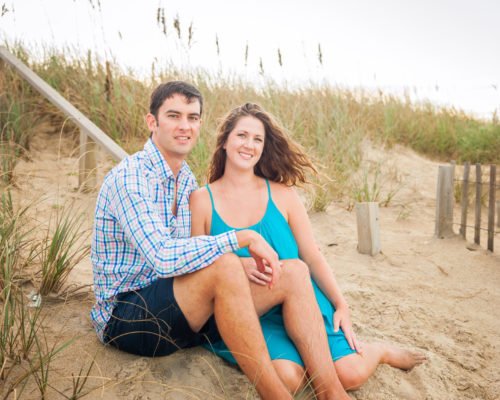 While I would never wish infertility on anyone, I am a better wife, friend, daughter, and soon-to-be-mother because of it.
I love being awarded the privilege of using #webeatinfertility on my Instagram posts, but I’m not sure claiming we beat infertility is the right choice of words. Infertility will always be part of us.
Even now at almost 15 weeks pregnant, I still feel the pain and heartache of the past 54 months.
I truly believe acknowledging that pain and constantly reminding myself of the honor bestowed on me that I so desperately prayed for will keep me grounded in motherhood and in my journey to live the best life He meant for me.
Lauren is a nonprofit communications professional, native Midwesterner, and a lover of donuts and coffee. She currently lives in the Outer Banks in North Carolina with her husband, Andy, where she spends as much time as she can soaking up the sun on the beach and staying true to her roots by keeping up with her favorite Chicago sports teams.

Friends, it's National Infertility Awareness week. Welcome to several new readers of Preacher on the Plaza! And I'm happy to use this blog over the next couple of days to give others a platform to share their stories of grief, loss and deferred longing. Even if "infertility" is not your thing and you read my blog for other reasons, I ask you stick with me for the next couple days. Hear these stories. Chances are you know someone going through infertility or who has infertility in their story just as I wrote about in Birthed: Finding Grace Through Infertility.
Today, I'm so glad to welcome the brave voice of Sarah, a fellow clergy to this blog to share her story. She offers some wise counsel for all of us as we move toward Mother's Day in a few short weeks.
It's no coincidence that National Infertility Awareness Week arrives just prior to Mother's Day, my new hardest holiday. And it's not because I don't love my mother. I love her, a lot (and she knows it). It's because of how we celebrate the day.
Here is what we do on Mother’s Day. We celebrate people who have entered into the Motherhood Club. This is a club that crosses many boundaries: race, religion, age (to an extent), geography, economics, etc. Mothers come from everywhere. And whether or not they planned to join the club, they are bound to all who have done the same. Mothers get respect. And they should.
Here is what else we do on Mother's Day. We sometimes take a moment to remember those who have lost their mothers. Whether in a congregation or at nice restaurant for brunch, we see women with white flowers pinned to their lapels, making tangible their losses. They are motherless children. Anna Jarvis, who founded Mother's Day in 1908, did so to memorialize her own mother, and the invaluable gifts she received from her.
So let's talk about what we don't do on Mother's Day. We don't talk about those of us who wish we were mothers. We don't talk about the trials and tribulations on the path to motherhood. We don't talk about those of us who have never seen two pink lines on a pregnancy test or those of us who have miscarried or had stillborn children. We fail to mention those of us who have injected our bodies, taken pills, and been poked and prodded reaching, with all the hope we can muster, toward the title of Mom.
We fail to name the childless mothers, those of us who have been denied entry to this club. Some us of believed that entry was so easy that we purposely delayed our membership, and considered ourselves wise for it. And there are some who did not delay and yet also remain outside the club. And many of us will pass this May 14th in grief. The newest stats say one in every eight couples, and my husband and I are one.
This Mother's Day I was hopeful that I would be sharing with my mother and mother-in-law (and other family) the news that I would be joining their club at long last. It would work this time. I was so hopeful. But another month of medications and tests and interventions has gone by and we have nothing to show for it. It has been nearly three years since my husband and I set out on this journey. And we remain painfully childless.
This is not an easy place to be on Mother's Day or any day. It's not an easy place to be when I have more than five friends joining the motherhood club in 2017. It's not an easy place to be when everyone I meet seems to ask me if I have children, or better yet, if I have started a family yet. Yes, I have started a family, in fact, six years ago this month. We said "I do" on a rainy April day with plenty of people telling us that rain on my wedding was a good fertility omen. That part wasn't true, but our love has been.
So during this week of infertility awareness, I do not want to complain about family language or rant about Mother's Day (okay, maybe a little). But what I desperately want is for infertility to be talked about, so that it gets out of the dark shame closet and into the bright daylight. That's why I am now writing about it out in the wide open interwebs.
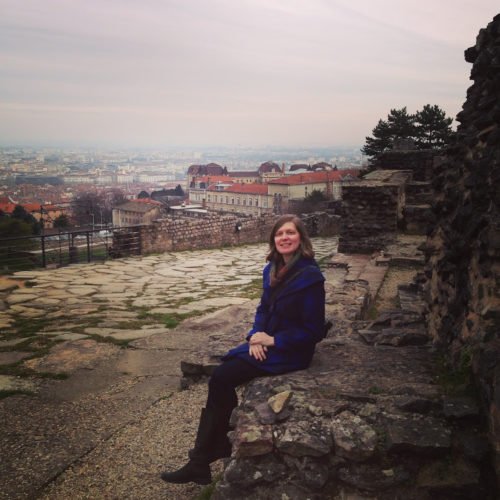 For my fellow fertility warriors, I am blessed to know you and could not walk this path without you. For my pregnant friends, thank you for acknowledging my pain and not talking about your bellies too much. I am honestly happy for you and wish we were doing this together. For those who have not had trouble getting pregnant, please see me and my pain without offering suggestions to fix it (yes, I know about adoption). Real listening is the best gift you can offer me.
We all carry hidden grief over losses that may never come to light. Right now, this is mine. And by reading, you are helping me carry it. Thank you.
Sarah is an ordained Unitarian Universalist minister and works as a healthcare chaplain. She lives in Maine with her husband, Adam. When she's not at work, Sarah enjoys singing (often with her ukulele), baking, and watching baseball. She graduated from Andover Newton Theological School and The George Washington University.
*SHARE this blog on Facebook or Twitter this week and be entered to win a free copy of Birthed! Tag me on Facebook or Twitter when you post.
Can anything good come from chronic pain?
Today, I'm glad to introduce to you my friend and fellow writer, Dena who shares her testimony about her years of chronic pain and how she met God in the midst of it all.
In 1992, I had a head-on collision with a car whose driver crossed a median.
Since then, I’ve dealt with chronic pain and fatigue. A few years ago, I had neck surgery to replace a degenerated disk and remove a bone spur, and currently, I’m undergoing testing for lower back pain which has been bothering me for over a year.
Some days, I want to stay in bed. (And on certain days, I do.) I cry and moan and wail, having honest conversations with God. I’m often frustrated by well-meaning people who continue to offer remedies—whether pharmaceutical or spiritual—when they know nothing of what I’m enduring. Believe me…I’ve tried it all.
Don’t get me wrong: I am grateful for a supportive spouse and kids, understanding friends, a job in which I can work from home, and the skillful physicians who have treated me over the years. I function pretty well most of the time. And of course, I am thankful God allowed me to live and not die in that wreck. However, for some reason, my prayers for complete and total healing have either been answered with silence or encouragement to endure.
Have I been tempted to despair? You bet.
Have I given up on God healing me? Not a chance. However, I have stopped trying to find answers about WHY God has chosen to deal me this particular card. I realize no one goes through life unscathed, and I recognize that I have been refined by this, my own personal fire.
I wouldn’t have chosen this kind of life, but I do see beauty in some of its twists and turns.
My two sons have learned to serve others in practical ways, because I’ve often needed their help. My union with my sweet husband, Carey, grows stronger every year. (There’s nothing like physical pain to strip off the masks we wear and force us to communicate honestly!) God has also used the empathy and vulnerability I’ve gained through suffering to allow me to minister to others more fully. And most of all, my relationship with God is deep and real.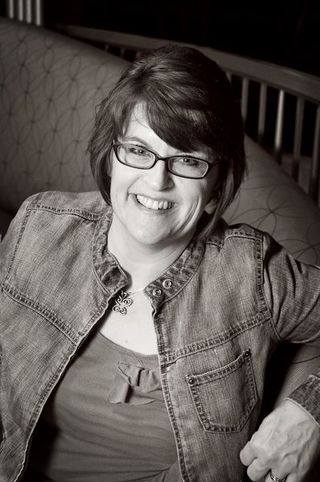
So, on some days, I find strength and peace in His arms. As I soak myself in the truth as 2 Corinthians 1:20 says: “no matter how many promises God has made, they are ‘Yes’ in Christ,” the Holy Spirit gives me abiding joy.
And then, on other days, I complain and rage, lamenting like the prophets of old. I know that He hears and holds my pain, because He created the language of lament. As Esther Fleece writes in No More Faking Fine: Ending the Pretending, “He doesn’t compare our pain to another’s; He doesn’t minimize it; He doesn’t spiritualize it away. We can wrestle deeply with the character and nature of God, because He is longing to give us a deeper revelation of Him all the time.”
I long for that deeper revelation, while I cling to the glorious promise that someday, I will see God, and my body will no longer hurt. As I live in the midst of chronic pain, that promise becomes more than a scripture in an ancient book.
It has become a lifeline.
Dena Dyer is a professional writer, speaker, and teacher, as well as the author of eight books and hundreds of articles. Her most recent book, written with her husband Carey, is Love at First Fight: 52 Story-Based Meditations for Married Couples. She and Carey have been married nineteen wonderful years, and a couple more they don’t talk about. They live in Texas with their two sons (Jordan and Jackson) and a spoiled dog, Princess. For more about Dena, visit denadyer.com.
Can anything good come from divorce?
Today my dear friend, Alice joins the Birthed conversation that I'm picking up again this Lent. (If you missed the Advent series you can start reading here). I'm so glad to share Alice's hard earned wisdom today. I know you'll find it as moving as I did, no matter if divorce is a part of your story or not.
“You never really expect bad things to happen you. Well, maybe some bad things . . . but not really bad things.” That’s how Elizabeth Hagan begins Birthed, her memoir about infertility and the blessings that eventually came into her life following so much heartache.
In my own life, the unexpected “really bad thing” was divorce. It shattered my life not once but twice.
First came my parents’ divorce, when I was sixteen years old. As if being a teenager wasn’t hard enough! I did not welcome this catastrophe into my life. I didn’t want to hear their arguments. I didn’t want them to hate each other. I didn’t want them to find other partners. I didn’t even want them to comfort me. I just wanted to escape the whole situation, including my own feelings of sadness and shame. How could they do this to me?
This unhappy experience did not stop me from getting married in my twenties and plunging immediately into parenthood. Even as I carried so much negative baggage from my childhood, I was convinced that I would never inflict this heartache on my children.
I was in for a humbling surprise.
Despite my determination to make the marriage work—and to spare my children of ever having to feel the pain that I had felt as a child—my marriage fell apart, and I was powerless to save it.
And so began a dark and stressful time in my adult life. I could write a long, long book about all that went wrong during that time. I could give you all the reasons why my marriage was unsalvageable. I could cast myself as the heroine of the story, the one who endured injustices and who fought to protect our two boys. But that’s not the story that really matters.
One afternoon, during the early days of our marriage meltdown, my ex-husband and I were sitting in the living room—a room that soon would no longer be ours to share—engaged in one of our many unpleasant disputes. As we sat on the couch, facing each other awkwardly, he said to me point blank, “You are a very unhappy person.”
Now, I could have taken that statement very badly. I suspect that in the moment I didn’t take it well, though I don’t remember for sure. But for whatever reason—I choose to think of it as the grace of God—the observation stuck with me. It was like a gnawing and persistent toothache. I couldn’t get rid of it. I couldn’t shrug it off because, deep down, I knew he was right. He might have been my worst enemy at the time (and I’m afraid I was his too), but he also knew me better than anybody else did.
Here’s the truth: I was unhappy.
Yes, I was good at putting on a cheerful front with my friends and coworkers. Sometimes I even managed to fool myself. If I acted like a happy person, didn’t that mean I was happy? But I wasn’t enjoying my life. And now that my ex was bowing out as my life partner, I couldn’t blame it on him.
In her book When Things Fall Apart, Buddhist nun Pema Chödrön writes about the end of her own marriage years ago. She recounts the moment when she learned of her husband’s infidelity, when “my whole reality gave out on me.” She writes about losing her sense of security and about how this opened her soul wide open. She couldn’t fool herself any longer: “instinctively I knew that annihilation of my old dependent, clinging self was the only way to go.” As human beings we tend to cling to the idea that if only the people closest to us—maybe a parent or spouse or boss—would change, our problems would end. It doesn’t work that way, though, and my own life had to fall apart for me to finally recognize this truth.
How had I let happiness slip from my grasp? How had parenthood, so eagerly longed for, become an anxiety-ridden burden instead of a joy? Why weren’t my boys and I having fun together? Why had I stopped listening to my favorite music? Or laughing?
As I began to seek answers to these questions, a season of recovery began for me.
It was time to accept responsibility for my own happiness. Step by step, I began to do just that, consciously letting go of bitterness and blame. “Let it begin with me” became my personal mantra, and it remains so to this day. I never w
anted divorce in my life. But I also never expected the joy that would burst forth—as soon as I was willing to claim it—after such sadness and pain.
 Alice Stanton is freelance book editor. For more than two decades she worked as a manuscript editor for the University of Oklahoma Press. A native of New York City, she currently resides in Weatherford, Oklahoma.
