Today I'm still thinking a lot about what it means to wait . . .
My friend Sarah and I were catching up the other day on the phone. We’d hadn’t talked to each other in months so we quickly got down to the essence of what is going on in the ups and downs of our lives (I love these kinds of chats). In catching up I realized that we’re both waiting in different seasons of life for what is not yet and what we don’t know. While it was nice to make this connection that we're in a similar place, it's really not a fun state to be in at all.
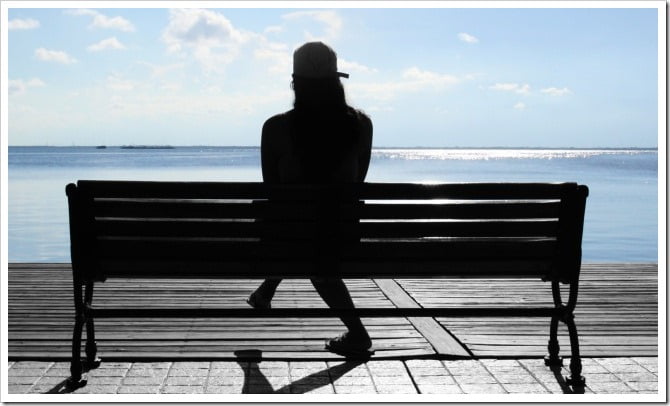 For all of us who are waiting for something, we know how this feels.
The frustration of waiting can easily turn to anger, despair and life crippling anxiety.
When we wait, we can feel stuck.
When we wait, we can easily feel forgotten.
When we wait, we can feel like God is not close, but very far away.
A long term season of waiting can often turn us inward to the point that we think we’re the only person on the planet that has every waited for x.
But, we aren’t. We know this of course, but accepting it in our hearts is altogether different matter.
Yet, ultimately, waiting and hoping and not knowing in our waiting is a part of what it means to be human.
Nothing ever happens instantaneously. Often nothing good in our life comes without pain. Suffering through waiting finds us all.
We are not ever as alone as we feel.
Waiting in fact, can be a spiritual discipline that has the power to re-focus us on life-giving practices that sustain.
Waiting can turn our spirits toward other wait-ers—those who we might not otherwise encounter so deeply.
Waiting can humble the hardest places in us, even the place we didn’t think were hard at all.
Of course, this doesn’t change the fact that waiting is hard, hard work. It takes faith—faith like none other to sustain your spirit in a time like this. It takes sticking with yourself, even on the days when you think you can’t make it one more day. It takes trust: that the bigger picture is indeed worth the ride.
To my fellow wait-ers out there—whatever it is you are waiting for—know that you have a friend in me. This is the best gift I can give today.
I’m waiting with you, as I know through your reading of this post, you are waiting with me.
I hear your pain. Your struggle. Your longings. Your cries.
I know that sometimes there’s no other way to put it than to say that waiting sucks.
But, in community may we keep the faith. May we not loose heart. May we hold each other accountable to keep on waiting as the Hebrews writer spoke of faith: “Now faith is confidence in what we hope for and assurance about what we do not see."
 I haven't posted in over a week for one reason: I haven't had anything to say. For the blogging queen (as some of my friends call me), it is quite a big deal to be silent.
I currently am living in this "in between" time-- between what was familiar and what was traditional and what is to come (that I know not of).
And when you are here, there's often not a lot to say.
My normal mode of operation in times like this in the past has been to find a plan. It has been to find some idea of what is up ahead even if it is subject to change and change again. It has been to believe even still that I have some control over my own life (It's my life after all, isn't it?)
But, what I am learning in this "in between" time is that having a plan is not necessary to functioning (being plan-less is not a reason to NOT get out of the bed in the morning).
Ultimately, we never know what is going to happen in our lives . . . even if we think we do.
And, for me, I know this: I have little to no control around the circumstances of my life . . . even if others around me claim they do or brag that they do-- they don't and I don't either.
Who are we to say that we will do ___ on such a day to come?
Life is life. Sometime it can be like living in one desert after another-- a desert without a lot of water. Sometimes what you thought was going to happen certainly does not happen at all.
And in place like this, you often have nothing to say.
Sometimes your prayers are those where you put one foot in front of the other.
It's a season of life where you get to learn the lesson that God is God and you are not.
This lesson about who's really in charge of this world is lesson enough.
It's all you've got. And, you survive. Somehow you survive.
Even when people you depended on at one time are no more.
Even when what you used to hold on to in the dark is no longer there.
Even when you no longer have the community that was once your bread.
You survive.
There's hope somehow in crumbs you find that help you leap from one hard place to another.
You keep going.
This is what being "in between" is all about.
I Don’t Want to Go!
Jonah 3:1-5, 10
Preached June 16, 2013
Watonga Baptist Indian Mission
 I don’t know if you’ve ever had the experience in your life when you felt like God really wanted you to do something and you absolutely did not want to do what you thought He’d asked you to do.
I know I have.
Over a year ago, Kevin got a call from a recruiter. They wanted to talk to him about a job. It was with a big organization called Feed The Children.
On the way home from work, the day that the recruiter called Kevin, he phoned me to ask me what I thought.
“Oh that’s really exciting, honey” is what I am sure first came out of my mouth. It sounded like an exciting opportunity to do good with his job that I knew Kevin couldn’t pass up. But then there was a catch—that would be his next sentence.
“You should know,” Kevin said, “Feed The Children’s headquarters is located in Oklahoma City, OK.”
“What??” was my first word in response to that. “Why would we want to move to Oklahoma?”
The thing was is that we had a nice life and jobs for ourselves in the Washington DC area. Kevin actually liked his current job. I was the pastor of an American Baptist church like this one that I adored. We liked where we lived. Why would we want to move? After all, most of our friends and family lived on the East Coast. We counted the hours—it would be a 22-hour drive from Washington DC to OKC: at least a two day trip to get back home if we wanted to.
Soon, I was not in favor. Not in favor at all. Kevin can tell you, that there were some less than appropriate preacher like words that came out of my mouth in response.
But the more Kevin talked to the recruiter and then the organization’s leaders, it became clear that it was God’s calling for us not to stay but to go.
We were to move at least part of our lives to Oklahoma for a season. We were to join in God’s mission to feed children in need around the world. Even if it means leaving the familiar for something unknown to both of us . . .
I still wasn’t happy about it. But, during the time when we were discerning what to do next, I heard a sermon preached on the scripture passage before us today. I knew that I did not want to be called Jonah.
While Jonah is often referred to as “Jonah and the whale” as a story meant for kids, I propose today that it is not a story for only for the kids, but an adult tale meant to grow our understanding of God and God’s plans for us in the salvation stories of our lives. It’s a story that invites each of us to take a second look at our feelings about the bounds of God’s love for all people and all parts of the world—even the parts that are unfamiliar to us.
And this is the summary of what God asked Jonah to do: go preach God’s word to the Nineveties.
It is good to first consider the who’s and what’s of Nineveh and why God’s message to go preach there was completely out of the question for Jonah.
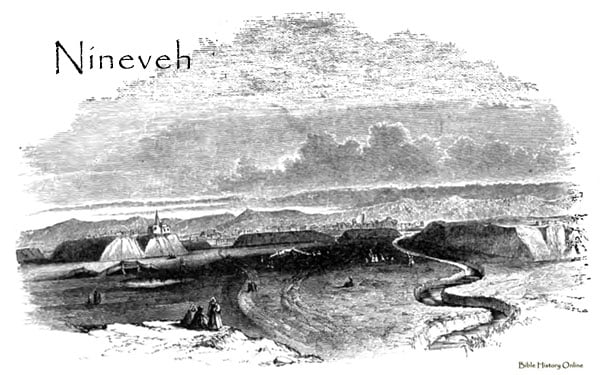 Nineveh was the capital of Assyria. It was a city with a strong military base, the seat of all things powerful in the ancient world. If you were a small nation, you feared any contact with Assyria.
Furthermore, Assyria was more than an enemy. This nation was THE enemy to end all enemies to the nation of Israel that destroyed the northern kingdom of Israel (10 of the 12 tribes) and held the two remaining tribes of Israel, Judah and Benjamin in fear for over 100 years!
Years and years of history included brutal treatment, occupation, and taking from Israel their human rights and their land.
But then, a new message came on the scene illuminating a compassionate God. A God who loved even the Assyrians—the bad guys in the story. God said, “Yes, there was a time for judgment but there was also a time for love of all the nations, included the much despised.”
We find very few details of Jonah’s life or his previous prophetic activity. He just appears out of nowhere.
In Jonah chapter 1, we get down to the main event quickly: the Lord saying to Jonah in verse two: “Get up and go to that great city of Nineveh! Announce my judgment against it because I have seen how wicked its people are!”
So not only is Jonah going to be asked to go to a faraway place, but to the dreaded enemy!
And, Jonah is told when he gets there to give a message of repentance. He doesn’t even get to say something tame. . .
It would be like a solider crossing enemy lines not with the white flag of surrender, but saying to those on the other side: “God wants you to repent for you’ve done really bad things.”
(Not exactly the words that would lead to kind hospitality from Assyria, wouldn’t you agree?)
So, of course with all of this true, Jonah was afraid.
Of course, Jonah doubted if this prophetic word was really the Lord who was speaking to him.
Of course, Jonah thought it was time to change careers, take a vacation and find his way to the other side of the known world.
Because if his previous vocation required speaking for God– a God who would now send him to Nineveh, then it was time to get a new religion or no religion at all for that matter.
We sympathize rightfully so with Jonah at this juncture, don’t we?
And so Jonah ran. We’d run away too, wouldn’t we if God sent us to a place in the world that we hated as much as Nineveh with news bad enough to get us killed?
Jonah ran away as far as he could, 750 miles away in fact. He jumped the first boat for the other side of the world. And this was until a huge storm descended upon the waters. His shipmates through lots to see who’s fault it was—a part of ancient custom. And the lots landed on Jonah. Soon Jonah was overboard and found himself swallowed up by a fish.
There was once a Sunday School teacher who taught a lesson about the story of Jonah. When she had finished, she asked her class, “Okay everybody, what did we learn today from the story of Jonah and the big fish?”
Some of the kids talked about Jonah having to preach to the bad people. Some of the kids talked about Jonah really, really not wanting to go.
And a bright little eight-year old girl thought for a moment and said, “Always travel by air.”
Smart girl, huh? Makes me want to fly next time too, right?
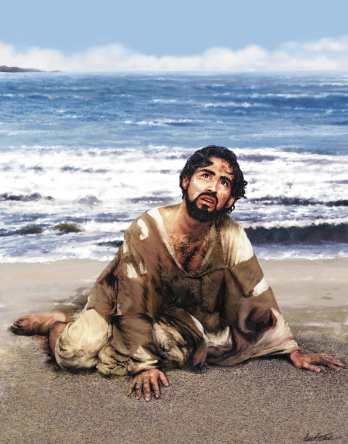 So what happens if a call of God emerges in our life that no matter what we do to try to run from it, avoid it or pretend we never heart it– what happens if it doesn’t go away?
What happens if we are called to be with “those” people and God just won’t let us forget?
What happens if we find ourselves in the shoes of Jonah?
Today is Father’s Day—the day that our country has set aside since the early 1900s to recognize the father’s in our midst just as we do with the mothers only a few weeks ago.
Though Hallmark and television commercials want to make this day into a sappy holiday with all sorts of grandeur expressions of love and appreciation—for many of us, some of the men in our lives aren’t all that. Sure, we respect them as elders, we respect them as those who gave us life or gave our children life, but they don’t seem to be the kind of people in whom we can overtly appreciate on a day like today.
But what if God calls us to those people?
Roberta Bondi, a Christian teacher at a university in Atlanta, Georgia, writes about one such experience in her life in her book, Memories of God.
Having grown up with a father she didn’t like very much, a father in whom she’d isolated herself from especially as her parents divorced and she lived in different states from her father in her high school years. She was always mad at her dad for leaving her mom, her and her sibling behind. Then she writes about a change that happened in her heart over time as she began to study the scriptures and consider what God most wanted from her:
Eleven years ago, my father’s sister, whom I had not seen since childhood, moved to my hometown and we began to spend wonderful time together. . . . . My aunt began suggesting that I go and visit my father, whom I had not seen for a number of years. I knew that he was remarried, that he was ill with emphysema, and that he was retired [He possibly could die soon]. I was terrified by the idea of a visit. I took a trip to Connecticut [where he father was living at the time]. It was not an easy trip, since I was still so afraid of him. . . . . And now, amazingly, being able to see him for the first time through adult eyes, I began to see not my childhood image of my powerful, mythical father, but rather my actual flesh and blood, real human father. In that trip, I began to learn that my father had changed over the years. He still had a good mind but from somewhere against all expectations he himself had learned a lot of gentleness. Just as surprising, considering his previous history, he had become a Christian man to the core.
Roberta goes on to write: “It still seems to me to be an astonishing gift of God’s grace that in the last years of his life I was able to stand with him as his friend who was his adult child.”
It was Roberta’s Jonah moment of decision come to live with wonderful effects.
Maybe for you in your life—your call of “go” is not to another job or city, like it was for Kevin and I. Maybe it is not to praying about and working toward a renewed relationship with an family member or friend, like Roberta Bondi.
But, I do know this: that the Jonah tale was not just a one-time deal. It’s not just a story or a metaphor as some would like to call it that doesn’t relate to us anymore.
Sure, we might not actually get swallowed up in the belly of a fish like Jonah did.
But, what I know of our God is that we are continually asked to do what is UNCOMFORTABLE to us. And, if we say no, there are consequences to our actions, we don’t get to have the fullness of blessings that can be ours in this life when we say no to God.
I believe God longs to show us—not punish us—the beauty of what can come from the most broken situations of our lives.
If we look back at our scripture passage—Jonah chapter 3, verse 5, we read that God used Jonah in the most amazing way. For, “the Ninevites believed God” as Jonah brought the message. Jonah was not harmed (as he thought he might) through being in this unfavorable situation and place. Rather, Jonah received the blessing of being God’s instrument of peace and love to an entirely new community of believers.
I am sure that you like me have your fill in the blank when it comes to who “those” people are in your life.
You have someone at work, someone in your neighborhood, or even someone in this community that really just pushes all of your buttons and you feel like if this person or persons simply opens their mouth, you’d explode.
Whoever is on your list of “those people” I invite you to reconsider the journey of Jonah. To come and get to know this God you have chosen to follow all over again and realize that yes, those people are included in God’s family too. And yes, you and I have a lot to learn from even them . . .
It’s a hard edge to sit with this morning. But, today God calls you. God calls you to all people. Let us get to loving in word and deed to those, especially those in whom we may not really want to move towards. And I know this, as we do, God will bless our steps.
Amen
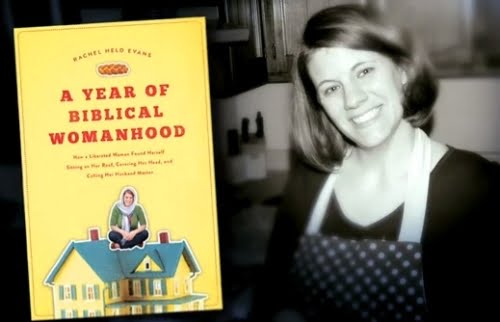 Recently, I finished reading Rachel Held Evans' second book, A Year of Biblical Womanhood: How a Liberated Woman Found Herself.
I did not read this book because I think there is any such ideal of Biblical Womanhood as these folks claim. What a crock!
I did not read this book (as others have done) seeking to criticize Rachel's theology. Leave her alone, mean ones.
I did not read this book to be enlightened that Proverbs 31 should be read differently than the Christian bookstore trinkets want to make it to be. I am a female pastor after all.
I read it because it seemed like an important cultural text within the religious circles in which I travel.
And then Rachel was on The View last November, so how I could I not read it?
As I quickly turned its pages, I was delightful surprised at the reasons why I enjoyed it so much.
The sub-story of this memoir is Rachel's willingness to get out of her comfort zone and try new things-- again and again and again.
She cooked Martha Stewart meals. She learned to sew (sort of). She visited an Amish community in Pennsylvania. She wore a different style of clothes. She celebrated Jewish holidays with her family. She studied passages of scripture she'd never thought much about before. She traveled to new countries.
I resonated with this aspect of the book because it has become so easy as I'm firmly grounded in my 30th decade of life to already be stuck in a life ruts as far as my daily habits are concerned.
We cook similar meals every night.
Kevin and I participate in the same weekend entertainment activities.
We clean (or lack thereof) our house in the same way each month.
But, in reading Year of Biblical Womanhood, I was challenged to start shaking things up a bit.
Cooking with a new recipe instead of making dinner from a box.
Going to see a play or visiting an art museum instead of just going to see a movie.
Cleaning the kitchen sink with vigor not dread.
Thanks Rachel, for the many gifts you gave the world in The Year of Biblical Womanhood.
For me, it's the gift of a gentle nudge to get off the couch and do something new!
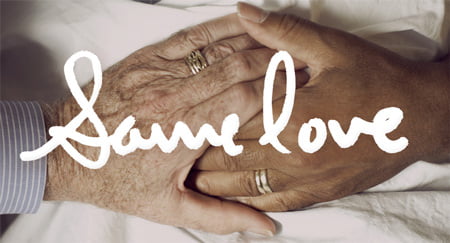 Macklemore has been one of the most played new voices on the hip hop scene this season, especially as millions have fallen in love with his hit, "Thrift Shop."
And can I say, I'm in love with the social advocacy flavor of his entire body of work, The Heist. Macklamore is not your average rapper putting out more of the same. He's redefining his industry. He's challenging the norm.
Consider these words of the song, "Same Love."
When I was in the 3rd grade
I thought that I was gay
Cause I could draw, my uncle was
And I kept my room straight
I told my mom, tears rushing down my face
She's like, "Ben you've loved girls since before pre-K"
Trippin', yeah, I guess she had a point, didn't she
A bunch of stereotypes all in my head
I remember doing the math like
"Yeah, I'm good in little league"A pre-conceived idea of what it all meant
For those who like the same sex had the characteristics
The right-wing conservatives think its a decision
And you can be cured with some treatment and religion
Man-made, rewiring of a pre-disposition
Playing God
Ahh nah, here we go
America the brave
Still fears what we don't know
And God loves all His children
And somehow forgotten
But we paraphrase a book written
3,500 hundred years ago
I don't knowAnd I can't change
Even if I tried
Even if I wanted to
And I can't change
Even if I tried
Even if I wanted to
My love, my love, my love
She keeps me warm [x4]If I was gay
I would think hip-hop hates me
Have you read the YouTube comments lately
"Man that's gay"
Gets dropped on the daily
We've become so numb to what we're sayin'
Our culture founded from oppression
Yeah, we don't have acceptance for 'em
Call each other faggots
Behind the keys of a message board
A word rooted in hate
Yet our genre still ignores it
Gay is synonymous with the lesser
It's the same hate that's caused wars from religion
Gender to skin color
Complexion of your pigment
The same fight that lead people to walk-outs and sit-insHuman rights for everybody
There is no difference
Live on! And be yourself!When I was in church
They taught me something else
If you preach hate at the service
Those words aren't anointed
And that Holy Water
That you soak in
Has been poisoned
When everyone else
Is more comfortable
Remaining voiceless
Rather than fighting for humans
That have had their rights stolen
I might not be the same
But that's not important
No freedom 'til we're equal
Damn right I support itWe press play
Don't press pause
Progress, march on!
With a veil over our eyes
We turn our back on the cause
'Till the day
That my uncles can be united by law
Kids are walkin' around the hallway
Plagued by pain in their heart
A world so hateful
Someone would rather die
Than be who they are
And a certificate on paper
Isn't gonna solve it all
But it's a damn good place to start
No law's gonna change us
We have to change us
Whatever god you believe in
We come from the same one
Strip away the fear
Underneath it's all the same love
About time that we raised upLove is patient, love is kind
Love is patient (not cryin' on Sundays)
Love is kind (not crying on Sundays) [x5]
Sure, some of you might not be in hip hop at all. Some of you might be offended by the confrontational tone in the lyrics (and I agree, some of the words are harsh). But regardless, the message is a powerful one.
Macklemore calls out people of hate (including those within his own community) for what how they are putting dogma over love when it comes to LGTBQ folk.
He speaks a message that resonates with the millions who purchase his music. He speaks a message that my high school and college aged friends are thankful to hear (finally someone speaking their language!)
He speaks a message I believe of "calling out" when it comes to the church in American today. He calls gay rights a civil rights issue. He says it is time to change.
And I agree with Macklemore.
It's an especially important message on weeks like this when large Baptist bodies like those Southern Baptists-- who are up to their same hateful tricks again condemn the Boy Scouts (of all people!) for their acceptance of men in their programs regardless of who they love.
"Wake up, church!" is the theme I believe Macklemore is giving us in these lyrics.
Wake up and love your neighbor-- all of them.
 Being the religious nerd that I am and one who likes to keep up with popular cultural expressions of faith, I've watched two documentaries of note. Namely, Christiane Amanpour's ABC news special Back to the Beginning and the History Channel's mini-series, The Bible.
After hearing several of my clergy colleagues talking about the grave inaccuracies of The Bible series, I had to see for myself. And, after sitting through hour after hour of these stories, I agreed.
Large and crucial chunks of the stories were ignored. I missed seeing interactions with characters such as Hannah and Samuel, Ruth and Naomi, Esther and Mordecai and Elizabeth and Mary.
I longed for the more fair portrayal of the birth narrative of Jesus in films such as The Nativity Story.
The whole drama seemed like one political driven made for tv movie (and of course this is what it was). The character who played Jesus was way to pretty (I mean no disrespect to my Lord, but still!) and Jesus' teaching opportunities seemed way too short.
But when it came to Amanpour's documentary which traces the historical roots of the earliest stories of the Christian, Jewish and Islamic scriptures, showing ultimately our common connections, I was pleasantly surprised. In typical Amanpour style, her commentary was balanced, fair can came from a place both of belief but skepticism (which I think is healthy). She acknowledged the spiritual importance of the stories as of ultimate importance way before she began to question the historical traces of the narrative of the Bible.
In fact, her reporting from a hot air balloon ride over Egypt gave me one of the best visuals of life in Egypt I'd ever gotten. As the cameras focused in on the Nile River valley, showing the fertile ground around the river in comparison to the surrounding desert areas, I understood for the first time why the tribes of Jacob got stuck there out of necessity and why it was so hard 400 years later for the children of Israel to leave. The security of the Nile kept Egyptian powerful and led Pharoah to always seek more. For Israel, slavery was tortuous and all but who really wants to leave the land of plenty for the desert?
If you have on demand service through your cable provider, you could probably find it for free there or find clips such as this one on youtube [youtube=http://www.youtube.com/watch?v=kR4DYkiQfRs].
But, what's the larger point? It is worth our time as people of faith to watch such films?
I have to think so.
Even if the visual portrayals are full of depictions that are "in the spirit of the book" (as The Bible disclaims at the beginning of every episode), we can thank Hollywood for them.
Why? Because sometimes-- especially for those of us who are visual learners-- we need pictures to get us stuck out of our heads.
We need representations of stories to send us back to the texts to remember correctly and read for ourselves.
We need opportunities to be reminded that what we read in scripture is meant to challenge us into more faithful patterns of living.
For example, it struck me again as I was watching the opening episode of The Bible how radical a message Abraham received when God told him to leave his homeland because God was going to lead him to the Promise Land as he made his descendants as great as the number of stars the sky.
I've preached on Genesis 12 on countless occasions in my life, but whoa! It's hard to truly put this kind of faith experience in a 20 minute homily.
What crazy decree of God Abram received! What faith it required on Abraham's part to follow through! What a laughing-stock of his neighbors Abram must have been!
Lest, we think our faith is not radical and doesn't ask us to do radical things, it is.
It's a faith that asks 90-year-old women to believe they are going to have a son.
It's a faith that tells young boys they will grow up to be God's spokespersons.
It's a faith that gives words to prophets about the rising and falling of kingdoms.
It's a radical faith.
I'm glad that Hollywood helps me remember-- even if this was not their intention. Maybe it can help you remember too.
When people say my name, the word "adventurous" is rarely the first association.
I'm the girl who doesn't like to ride roller coasters or bungee jump off of platforms or even play paintball. I'm a great purse holder and picture taker. We all have to know our strengths right?
For all of these reasons and more I was never going to be a long-term youth minister (but that's another story).
Yet I'm also the person who doesn't like to be left out-- as much as something makes fear rise up in my belly, I'll try it.
I've ridden some of the world's longest and fastest coasters (all the while my prayer life simultaneously grew).
I've stood on some of the world's tallest heights (ok, maybe one day I'll jump).
I've gone paint balling with merciless group of teens (coming home with the bruises to prove it).
And so, when Kevin and I spent a couple of days in Costa Rica for a mini-vacation/ attending a friend's wedding this weekend, I knew there was one thing I needed to do before I left the jungle: zip lining. Especially after a couple with us for the wedding went the day before. AND, they couldn't stop taking about how much fun they had.
I was sold. "Kevin," I said, "we must sign up for tomorrow!" Though I'm sure Kevin would have enjoyed one more morning sleeping in and didn't even have proper tennis shoes (luckily found a friend with the same shoe size to borrow from), we set out the next day for our 8:30 am tour. All was well and exciting as met our jungle guides and put our safety gear on. All was well and exciting as we made our trek up the mountain in a cart pulled by a tracker. But when I saw the first zip line with nothing but jungle and more jungle below my feet, all was no longer well or exciting.
Soon my speech became a smattering of words like, "I don't know what I thinking, Kevin. Oh my goodness. Can you believe this height? What was thinking? Why did I sign us up for this?? Why didn't you stop me? You should've stopped me!"
Kevin, with his white safety helmet sliding down his face began to reassure me with stories of the one time he zip lined before in West Virginia, "Oh it will be ok. You'll soon love this! I did."
But, I wasn't convinced. I knew there was a world of difference between West Virginia and the middle of the Costa Rica rainforest. I saw no safety nets. I saw no end to this course down the mountain.
Seeing the fear in my eyes the guide reminded us all: "There's no way getting down this mountain now than by going down on these lines." (The tracker was long gone, sigh!). And, I knew I was stuck, for better or for worse. I knew I had one thing and one thing only to do next: face my fear.
One of my favorite Eleanor Roosevelt quotes came to mind, "Do one thing every day that scares you." And simultaneously thought-- I hope this fulfills my quota for days!
 There would be no turning back. And with a push, down the line I went. And went. And though Kevin later summed up the activity by saying on twitter that "the monkeys in the rainforest might need therapy after all my yelling," I did it and even have this picture to prove it.
Fear is just like this-- in the end it is just fear. It's just an emotion that screams CAUTION so loudly in us that we never take the leaps in life that we're met to take. A good dose of fear is healthy, of course. There are leaps in this life reserved for the trained professionals. But, facing our fears can in turn be one of the most spiritual things we do in our days.
For when we face the things that scare us, we leap figuratively (and sometimes literally) into the hands of a God who says no matter what, I will never leave you alone. In fact, as we leap, we might just find ourselves soaring with joy we'd of never known-- just as I did by the 12th (and final) zip line on Saturday morning. Mission accomplished. I was thrilled.
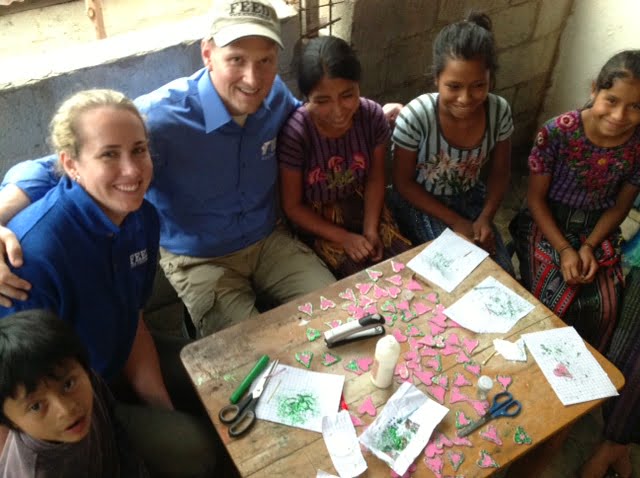 Today marks the one year anniversary of our family's involvement with the non-profit giant, Feed The Children. More than just a job for Kevin, it has been a calling to a way of life.
I've thought a lot about the fact that I would write this blog today. That today I would mark this passing of time as significant in our lives. That today I would say something nice about my husband. That today I would highlight some of the great work that this organization does on the ground to feed hungry children every day.
But, somehow none of these lead ins seems appropriate.
How to do you talk about the meteor hitting the foundation of everything we know kind of year?
How do you talk about being transported to a world you'd never thought you'd be in?
How do you talk about living a life suddenly that few of your friends understand?
How do you talk about the fact that faces of children from all over the world filled your Christmas Card photos?
Or the fact that when your mother calls her first question is, "What state (or country) are you in today?"
It has been a year!
It's been a year that has landed us with necessary dwellings two different cities.
It's been a year that has taken us to five different countries in the developing world for field visits.
It's been a year that led me to leave the traditional career I had for something on the edge of undefined.
It's been a year that has led us to some of the most exciting possibilities for our future than we could have ever imagined, truly.
It's been a year of much hurt, unsettling findings but then hope in the rubble too.
It's been a year that has re-made my husband's mission for his life with clearer vision than he's ever known.
It's been a year for me to seek out new mentors, as the role of being "Kevin's wife" in an organization like this has felt often times like entering a foreign land for my independent sentimentality self.
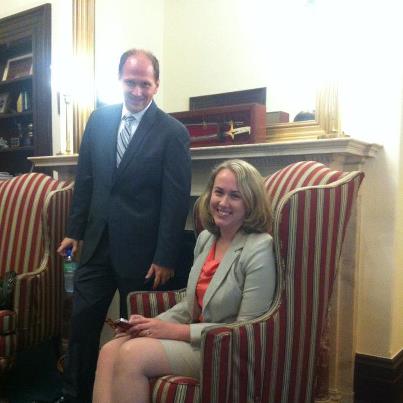 It's been a year that has called both of us to hold tight to the foundations of our own sense of vocational callings and marriage covenant-- "Yes, wherever you go, I will go."
It's been a year that has united our faces, cheek to cheek with some of the most precious children of this world-- who long most of all for someone just to see them. And we have.
It has been a year.
It's hard not to speak of how proud I am of my husband. Or of how proud I am of us-- Elizabeth and Kevin together-- two who keep fighting for the best for "us" in the midst of the best for "them." Or, how proud I am of myself for not taking cues from what certain folks want me to be, instead, listening to the voice I already have.
Oh, if the walls could talk you'd know that it has been quite a year, a really big year in the life of team Hagan on the Feed The Children train. But, it's a train we don't sit stopping in the direction of progress anytime soon. Together.
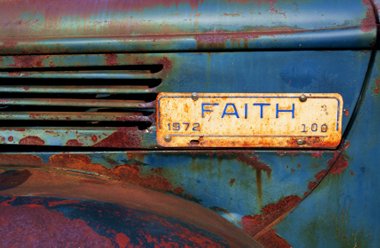 There seems to be nothing profound about this statement. If you know anything about my background, you know that I graduated from seminary and I served two particular churches as a full-time pastor for 6 years. I blog all the time about religious centric topics. Duh, of course, my faith is essential to who I am. Case closed.
But, something about stating this as fact at this juncture of my life feels different. Maybe even scares me a little.
I don't feel I'm not the kind of person who just comes out and says such so bluntly. And I really hate being lumped with these kinds of Christians who might come from these camps and start conversation with judgment before love . . .
I think actions speak for themselves. Do I love? Do I forgive? Do I consider someone's needs before my own? Words are not always necessary.
But then this weekend, as I worked on another draft of the book proposal for my upcoming memoir about grief, I realized something I'd never thought of in such a strong way. And that is: my faith is essential to who I am.
As I wrote the words on the page of this proposal, it felt like I had invited myself into my own coming out party.
For, there was no way I could describe the book I've written without talking about the interwoven themes of God's provisions, God's love and God's direction within my story.
I just couldn't.
And even though I so desperately don't want an expression of my faith to be lumped together with the kind of Christian paths that I've seen hurt people and that (in my humble opinion) don't seem to be grounded in the teachings of Jesus, I couldn't tell my story without it being a FAITH story.
As I wrote the marketing plan for the book that I hope one day soon with convince a publisher to want to print my narrative (hopefully a non-religious publisher!), I couldn't help but think that the reason why I believe my spiritual memoir will sell is because search of something, or someone greater than ourselves IS what deep down we're ALL looking for. Search for spiritual connection to the Divine and one another is essential to the human experience.
And with all of this true, we crave stories of faith in all shapes and sizes.
We crave stories that will tell us how others made movement in their lives when all seemed lost.
We craves stories that tell us how messy weaves of relationships can survive deep wounds.
We crave stories that tell us how hope born in our hearts rides the waves of the most turbulent storms.
And, though at first glance my book might seem off-putting to the very people I want to reach with my story--
those on the edge of a religious tradition
those who are in the throws of deep grief without a faith community
or those who have only experienced people of faith as obnoxious
I can't tell my story any other way than: faith is essential to who I am.
What about you? How do you talk about the spiritual part of you? Or do you talk about it at all?
