"But Jesus often withdrew to lonely places and prayed." Luke 5:16
What does this practice look like in our modern context?
 Last summer I spent a week of training for my spiritual director certificate at the Interfaith Institute in Berkeley, CA. Throughout the week, my cohort explored the practice of deeply listening to one another through a variety of different activities. We shared stories. We worked with images. And we even went on solitary walks. Now, eight months later, the memories of this experience are some I still treasure dearly.
And, there's one gem I gained from our Hindu instructor I've thought a lot about this Lent. She said, "If you want to listen to God, then you need to limit media you are taking in." Or in other words she offered: "If you want to be close to the Divine, ask yourself, why are you watching so much tv or listening to so much of the radio or watching movies on Netflix online?" Her words were practical and to the point.
I love media like most of you. Sometimes I think my computer is attached to my body. Sometimes I find myself sad when I don't have a day to catch up on the recorded shows on my DVR box and just veg out. Sometimes the silence of driving in the car with the radio is deafening. My generation loves noise.
But then there are moments when I truly turn it all off and I'm so glad I did.
On Sunday night, Kevin and I were cooking in our Oklahoma apartment's kitchen. The counter space is limited and we were side by side. He was chopping fruit. I was baking bread. We were preparing to host breakfast the next morning for the country directors from Feed The Children in town for the week.
We had both previously commented how excited we were about watching the Oscars. Being movie buffs, we couldn't wait to see who won what and how funny (or not) the jokes were. But then a strange thing happened. We came home from the grocery store and we didn't turn the tv on.
I don't know how, but we forgot about the Oscars.
We unloaded the car, cooked in silence for a while and then began to talk to each other-- sharing details about our weeks that we would have missed if we didn't take this time of pause. I learned more about some of Kevin's deep burdens and he learned more about mine.
I think that listening to God is like this. I think this is what Jesus was modeling for us when he went to the lonely places and prayed.
Sure, we all might have intentions about what we are "doing" this Lent to grow in our faith-- no sweets, no soda, exercising more or even drinking more water, but what good are these things if we don't allow the slower pace of life to help us listen?
Listening to what we are to do next in our daily rhythms . . .
Listening to what our primary relationships need most from us . . .
Listening to what we can only hear if we turn our tvs and computers off . . .
In reading through the gospels, it seems to me that as much as Jesus was "on" and busy, he was always looking for a retreat, quiet and silence. Thank goodness that it is this season, that reminds us every year that the most important thing we can all do is unplug and listen!
 Jesus says to his disciples: "I have come that they might have life and have it more abundantly" (John 10:10).
It's one of those scripture passages that I've had in my head for years thanks to all that time spent in church.
It's one of those scriptures that prosperity gospel types like to quote when they're seeking to prove that what God really wants to give us is abundant wealth. Joel Osteen anyone?
It's also one of those scripture passages that altar call preachers use to talk about "getting saved." Oh my.
It's a passage that conjures up visions of heaven and hell-- who is going where.
I dislike it all of these uses.
Yet, lately I find myself sitting with this word "abundant" with fresh eyes, thinking about the movements in my own life and those around me too.
And this is what I think: we are scared out of our pants of the word "abundance." We really like our poverty instead.
Of course this phrase sounds contradictory. Who doesn't want to have something? Who doesn't want to receive blessing? It's rare that you meet a person in poverty who says, "I'd like to live in the slums for the rest of my life."
But, honestly, I think so many of us do! It is often much easier being miserable than it is accepting the vulnerability of healing, especially when that healing asks our life movements to change. Because poverty is what we know. We feel comfortable with our pains, even if they are pains nonetheless. We like being left alone and no one bothering us with the challenge of asking for more.
Recently, I've found myself in several conversations with two camps of people. Those who have pushed through difficult times in their life toward abundance and those who are stuck in muck and just don't want to get out.
Just yesterday, I looked a friend in the eyes who I know has worked hard to fight for her own life (even when it meant facing difficult days of doubt, depression, and even wondering how in the world she'd make it to the other side) saying, "I'm so proud of you. . . . I"m so happy for the joy that I see in you. . . . Please don't ever stop fighting for abundance life and kick my ass if I ever stop either." It was a moment to look back on the past and with gratitude for all that God has done.
I was in a similar conversation with another friend a couple of weeks ago who said things to me like, "I'm just don't think my life is ever going to get better. . . . I guess I have to get used to this. . . . Nothing good in life happens to me. . . . I can't imagine trusting people again." And yet upon hearing these litany of words, my heart just sank. Because I knew abundant hope had been completely taken off the table for the person.
Sure, in life we are all on a journey. We go through seasons. Sometimes we must just hide in our caves for a while and be sad, angry or bitter. Sometimes these seasons of hopelessness last for a long time, even longer than we would like. And it just is what it is. And sometimes those dear ones in our life like pastors, friends, or family members hold up our hands (just as Joshua and others did for Moses in the wilderness) just have to be the ones who keep us going.
But then there comes a time when enough is a enough. A time comes when we need to look up to the hills from which comes our help. Our calling is to say yes to abundance. Our calling is to say yes to hope-- even if we can't see the way ahead clearly. Our calling is simply to receive. And in the process surround ourselves with others who can help us move in this way-- for abundance is so big that often we just can't take it in alone.
So, I ask you where are you today? And what is holding YOU back from God's best for your life?
And, for those of you who were wondering-- I had a lovely birthday yesterday. A perfect day of abundance to savor for a long time!
 I hear it from clergy all the time: it's hard to worship when you are leading others.
One of the joys of my Sabbatical time so far has been the opportunity to visit to other churches and consider again what church means to me as a participating worshipper.
But learning how to be a worshipper is harder than it might seem.
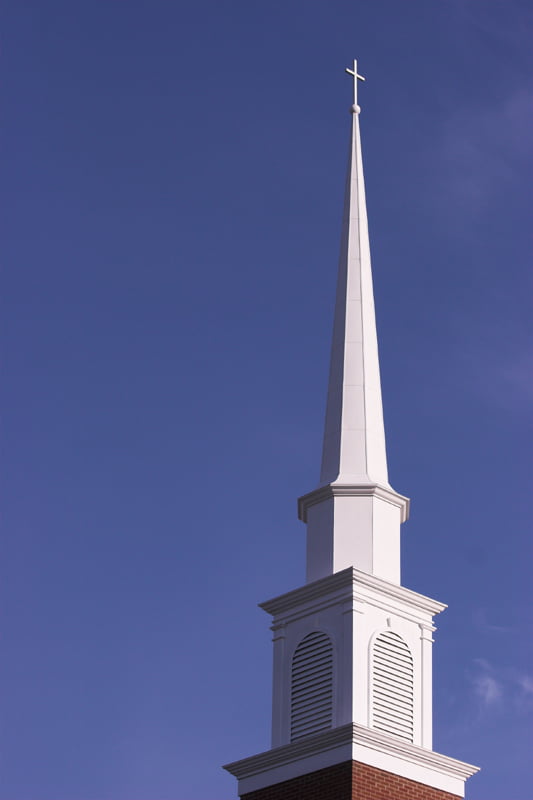
On this past Sunday morning I found myself at a big steeple church with a friend in my hometown in Tennessee. It was her home church and for this reason I was glad to go alongside.
But, when we pulled up to the congregation sometimes known in the community as "fortress," I was a little afraid.
And rightfully so. I was back in church compound land. Such a big model of doing ministry is not what I believe the church is nor is how I've I practiced it in years.
Was I going to have to make small church talk with strangers around the coffee pot before church? Was I going to have to sit in a classroom circle staring at other well-dressed folks who appeared to be more excited about study than they actually were? Was I going to want to pull my hair out at the fluffy theology coming forth from the lips of leaders? None of these are my favorite things, as you might imagine.
Furthermore, fear came up in me because I'm not a fan of churches without a lot of racial diversity. (We need our churches to LOOK like the Body of Christ.) I'm not a fan of churches that don't include voices of the poor (I mean, what is a good service without a distraction from a homeless person coming in?). And, I know a church is not for me if the American and Christian flag are proudly displayed in the sanctuary (Can I say idolatry of nationalism has no place in God's house?). Most of all, I want to know that when a church says, "We welcome all" they really mean it. I want to know that a church's doctrine doesn't hurt people.
But, then we arrived. Ready or not, I went.
Getting out of our car, I gazed up at a large dark stoned building that takes up several blocks in the neighborhood. It almost felt like something out of one of the Harry Potter movies as I walked through wood carved archways inside to get take a flight of stairs down to a well-kept Sunday School classroom. Asking questions on the way in, I learned that the membership is mostly made up of those who would be named as upper middle to upper class folks-- at least 2,000 in worship on Sunday. And most of it members are white-- even though some of the young families have adopted church from other countries. And there is one paid African-American soloist in the choir. Need I say more?
I could have easily spent the next two hours rolling my eyes and thinking "better than" thoughts in my head.
But, I have to confess-- I was wonderfully surprised.
Walking into Sunday School-- a room filled with well-dressed, well-to-do looking folks, about 20 of them in all, with a woman in a black sweater, red beaded necklace, pencil length grey skirt, and black boots standing behind a pulpit on a desk, I found an open mind. We sat in rows not a circle. And then, what came forth from this teacher's mouth was well-prepared, engaging truth from the Word.
I almost had tears well up in my eyes at several points as we discussed the passage from John 5 about the man whom Jesus asked, "Do you want to get well?" (Have there been spaces in my life the past six years when someone has taught me on a regular basis? No. Man, this has got to change, I thought. ) As I continued to listen, the teacher read commentaries from some of my favorite Biblical scholars, one in which I'd even known in seminary. The class members shared a richer theological discussed than I'd experienced in such a church in years. I found myself saying in the midst of the discussion, "I guess this is why people actually come to church-- they're hungry too to learn about their relationship with Christ." Because I did. I left refreshed.
Later in the service of worship, though the number of white faces were many and the flags hung beside the steps up to the altar, I tried again to not be so snobby. And, tears found me again. We sang robustly the great hymns of faith with the kind of full voices only a full sanctuary with pipe organ can. I found beauty in the liturgy of the prayers. The choir proclaimed a sacred piece that stilled any unsettling in me. The preacher, though an older white man, read and proclaimed the Word with jewels of encouragement. And, throughout the service, I felt the warmth of those around me-- many of whom I'd met before while visiting once before-- folks who remembered me, asked genuine questions, and talked to me about their prayer life.
I left with a conviction of my heart. One I'd been thinking about for a long while-- we've got to be less judgmental of each other in the Church. Pastors like me need to stop being church snobs. The Spirit of the Lord is not always in the places we expect. God's presence is in all black churches and all white churches and rich churches and poor churches. Church doesn't always have to be just the way we like it for worship to happen. Where the Spirit of the Lord is, there is freedom.
I know this again full well.
Does the church still need prophets? Does the church need voiced raised that say, "Stop building altars to yourself and start serving?" Does the church need radical changes in its institutional life so that it can look more like the radical message of Jesus? Does the church need more integration and more theologically sound teachers? Sure it does. It really, really really it does.
But, in the meantime, can the church be the place where God's presence dwells, where lives are transformed and where individual faith can be nourished? To all of this, I say yes.
I confess, I've been judgmental a long time. This Sabbatical time is asking this ugliness in me to change. And, most of all this Sabbath is asking me to worship from the pews. And most of all to listen.
 Back by popular demand is a blog post that I wrote in February of 2007- an experience that was my first year as a full-time pastor. Please laugh along with me (though it wasn’t funny at the time).
As a means of background, Ash Wednesday fell on my birthday this year: a day which should be a joyous celebration of life but instead I was in charge of the prayer meeting service about this occasion – a day to remember our mortality. This was troubling to begin with, but whatever. Secondly, the senior pastor of our congregation was in Hawaii celebrating his birthday (the same day as mine) during Ash Wednesday; thus, leaving me in charge of the service (totally not fair, right?).
It was 6:10 p.m. before prayer meeting/ the Ash Wednesday service began at 6:30. I was on the phone with Kevin on my way back to church. I knew I was running late and trying to get back to church as fast as I could. Yet, in the course of our conversation I remembered I had forgotten one important element for the service: the ashes!
Kevin offered a suggestion. He reminded me that it wouldn’t take very long to burn some more ashes. All I would need to do is go outside with a metal trash can and burn some paper in it for a few minutes. While I could see the logic in this activity, Kevin’s idea sounded a little risky to me. (My vision of what could happen is much like the picture to the left!) I thought I had a brilliant idea. Our fellowship hall has a fire place in it. I decided I’d just burn some paper in there. No big deal, right?
Wrong, because I forgot to open up the flue. Before I knew it, smoke began to fill the fellowship hall. It was just my luck that the smoke sensor was right beside the fireplace– so the church fire alarm began to immediately sound. That awful loud noise began to fill the walls of the church along with the smoke.
I quickly began to pour water on the paper burning I had begun (not thinking that I was in that moment totally defeating the point of exercises as I was soon to have soggy ashes). I thought if I could get the smoke to leave the fellowship hall, then all would be well and the fire alarm would go off.
In a few minutes, the fire alarm did indeed go off thanks to my fabulous pastoral colleague, Lonnie. He had just walked in the building when the alarm sounded and soon thereafter began calling the security company telling them that everything was ok as well as doing crowd control for me upstairs. But the first person I saw after the event was one of our most faithful deacons, Tom.
Tom, an older gentleman who came bursting down the stairs trying to see what was wrong. With panic in my voice, I admitted that I was the one who had started the fire. Yet, everything was ok; the fire was out. I felt bad for making Tom run through the church with such a sense of panic.
By the time that I cleaned everything up and make my way upstairs, I found that the fire department had already made its way to our church. Thank goodness Lonnie was there to deal with them– taking them to the fireplace downstairs, letting them know that all was well because by this time I had lost it. I was so embarrassed. I didn’t think I had it in me to go and lead the service. I wanted to go home and find some joy of this 27th birthday of mine.
But, I knew I was a professional and professionals must act as they must, not as they feel. By some grace, I wiped my tears and headed for the conference room to begin talking about the symbols of Lent, including the wet ashes. I told everyone the story of what had occurred earlier that evening and a roar of laughter came from those present (If you don’t cry, you laugh, right?).
Somehow the Joel 2 lectionary passage for the day had a whole new meeting for our group that evening: “Blow the trumpet in Zion; sound the alarm on my holy hill. Let all who live in the land tremble, for the day of the LORD is coming.” For our alarm really did sound! What a day!
Kevin did treat me to a nice dinner afterwards. It was the best part of this crazy birthday.
 Writing is a ministry. It's ministry as much as as preaching or pastoral care or any other of the serving tasks.
While in the parish I would often spend afternoons working on articles for publication or blogging. Sometimes I'd feel guilty as I typed away.
Maybe I should have been visiting one more person?
Maybe I should have been a better administrator by filing away paperwork sooner?
Maybe I should have started sermon research earlier in the week? Or maybe not. As my friend, Beth would say, I was "shoulding" all over myself.
Yet, there was always something in me that said writing was important.
So, now and in the immediate future I am claiming the time that I spend writing as my primary ministry. I'm done with the guilt. I'm just going to do it.
And, I'm falling in love as I learn things like:
1. You can't be afraid, as Anne Lamott would say to write a shitty first draft.
I would covet to be the kind of writer who can pour out her soul in perfectly constructed paragraphs and completely interested sentences the first time. But, I just can't. I can't tell you how many boring, throw away sentences I construct on any given day. Writing is always as much about a process than it is about the destination.
2. The more you write, the more it clicks and clicks faster.
It has been amazing to me to start reading like a writer. For example, now, if someone asks me to read a piece of theirs, I can more easily say things like, "You need to cut out the first two paragraphs. You don't make a point til 3/4 down on the first page." Why? Because when you spend your days editing your own work, you begin to see all collections of words of others in a more precise edge. You know a good piece of prose when you see it (and when you don't) and you're ok if others disagree with you.
3. The more you commit to learn the craft of writing, the more you begin to look at the world like a writer.
A big change in me has happened over the past couple of weeks. I walk into a room and think about how I would describe its smell, its texture, or its sounds. Why? Because as I'm trying to narrate a series of past events in book form right now, I realize that in real-time I never really noticed details of settings. I am a big picture girl who does not like to focus on the blades of grass. But, in the future, I want to know. I want to know what it felt like to walk through a crowded bus. Or what it smelled like stepping off an airplane. Or what the countertop of my best friend's mom's kitchen feels like. If I am going to keep writing, then I need to pay closer attention to the blades.
4. The delete button is your best friend.
I don't know about others of you, but I can so easily become attached to sentences. I love them like they are birthed children or the finnest meals ever cooked on silver platters. In love, ignore the run-ons, out-of-place fragments or passive tense verbs. And, because I love them, I never want them to go. But, this can't be! Though painful at first, the crispness of my narrative seems to thank me later (and so does my writing group when they read my drafts!).
5. You can love through words.
Words to me are tools of art. Just as a painter needs brushes or a sculptor needs clay to create what stirs the hearts of any who behold their creation, I need words. I need words to say thank you. I need words to show kindness. I need words to give hope. And in making art-- stories, essays or even sometimes poems, I love. I love myself by creating the space of a sentence to say what is most real. I love those whom I know by paying attention to details which can be later shared back with them. I love those I do not yet know by selecting universal words so my words can be an offering of our common experience.
Other writers what are you learning?
It has been over a month now since I preached my last sermon at Washington Plaza . It's very different life from how it was only a few months ago when I was asked to stand in pulpit every week and give an account of my faith while lovingly finding a way to be a presence of care for others. And although I jumped back into the pulpit last week as a guest preacher, my life in general has been lived out of the spotlight and I think will continue to be such for a bit longer. Sabbatical 2013 is on full-time.
Now, I go to church on Sunday and sit in the back pew and get up to walk out the door when the pastor says amen. I blog and write for online publications less, instead focusing on my goal of finishing my book manuscript by March 31. I spend more time than I have had at the gym. Maybe a 5K is in my future soon?
People who know me well ask one of two questions:
1. Are you bored?
2. What are you doing next?
These are normal questions to ask. But I'm not very good at answering them. Sometimes I miss the pace of what my life used to be, but most of the time I don't. As much as I am cheering on my favorite clergy pals and churches for whom I have rich histories, I have no envy of "I wish I were you." (Well, of course I could feel differently by Easter). And for the record, I no I have no 10 step plan for what is coming next.
I've had several pastor types say to me recently, "I could never do what you are doing. I could never leave what I know by choice." But, I made this big leap with Kevin's full support and I need to tell you that I'm still alive (imagine that?)! I'm also breathing, smiling, laughing and crying through the joys and sorrows of life just like everyone does, maybe though a richer level than before.
In taking this time to learn to exist and move in this world without a title or a traditional job to call my own, it has its scary moments of course. Sabbatical times are not for those who like hanging on to ego, public recognition, or even a "can-do" spirit.
I need to tell you that I worry if I stop blogging all the time many of you will stop reading altogether (and I like this conversation we're having). I worry no one will ask me to write for them again if I don't keep reminding them to ask me. I worry I might just have a completely new take on the church as an outsider that may never allow me to come back as the insider I once was. But in all of these things, Sabbath time is all about letting go and having faith that as you move through the rhythms of each day more will be revealed.
One of my favorite Sabbath authors, Wayne Muller writes:
“All life requires a rhythm of rest. . .
There is a rhythm in the way day dissolves into night, and night into morning. There is a rhythm as the active growth of spring and summer is quieted by the necessary dormancy of fall and winter. There is a tidal rhythm, a deep, eternal conversation between the land and the great sea. ”
Instead of moving slowly and listening to these rhythms, it would be much easier to start marketing myself for what is next (I know how to do that). Or, try to find some part-time job so that I could say I'm doing ___. (I know how to do that too). Or, even to be online every five minutes posting my accomplishments ("See, look at me, I'm as busy as you, just not getting paid for it right now") so others can validate my existence. But, such is not Sabbath's way.
Sabbath's way is about saying "no" so that we can say "yes" with greater confidence.
There are times of course when I feel guilty about my place of privilege-- I know countless others would love to have this kind of time a part from the norm and their financial, family or other life circumstances simply won't allow such. But, I have to keep reminding myself that Sabbath is a gift. God gave me this gift. It would just as wrong not to receive it.
And, as much as I would just like to crawl in a cave with my most favorite people in the world and call this Sabbath, life (or least how I experience it) can not be totally lived in a bubble. There are bills to pay, food to prepare, clothes to wash, events to go to that help support the work of my husband, and people who come out of nowhere and hit my car while I was minding your my business and as a result now require long and dramatic conversations with insurance companies to get it fixed. As we all experience, life happens. Even in Sabbath, we can't control.
Thanks for stopping by to sit in Sabbath with me for just for just a bit. Now, out of the spotlight I go again.
