In the spirit of this season of reflection, I wanted to share my top twelve posts of 2012. These posts may or may not have gotten a lot of interest at the time I wrote them, but for me each of these blogs represent a shift in some way in my life or ministry. Thanks for reading. . . . and the happiest of New Year to you all!
1. January 2012- "God Calls You to See What Others Don't." This was a sermon I preached during our "spiritual gifts" series at WPBC. My dear friend, Beth came up from Chattanooga to lead this retreat for the church. I saw so many lightbulb moments go on in the congregation as a result. In our household, too we had so many important discussions after this such as about Kevin's spiritual gift of leadership and my prophetic spiritual gifts. I will be forever grateful for this special time for us all.
2. February 2012- "From the Preacher's Chair." I was asked to preach the 30th anniversary of Martin Luther King, Jr. Christian Church. It was not only an honor to be asked to preach this service but to bring along WPBC congregation members with me too. It was diversity building at its best. And to be worshiping alongside my dear friends, the Rev. Caseys was a blessing.
3. March 2012- "I Know How You Feel." I went on a delegation to the White House with other Baptist leaders. Though it wasn't really at the White House itself, it was cool nonetheless especially to see all colleagues from around the country.
4. April 2012- "Letting Go." This was a post that really seemed to resonate with people for worry is something that we all seem to do, a lot. But what is God's other plan for our lives? Maybe it is surrender.
5. May 2012- "When We Met the Divide." This has been a year of boycotts over chicken sandwiches, votes that have divided our nation and shouting matches about everything under the sun as a Christian community. What is the solution? Some thoughts here.
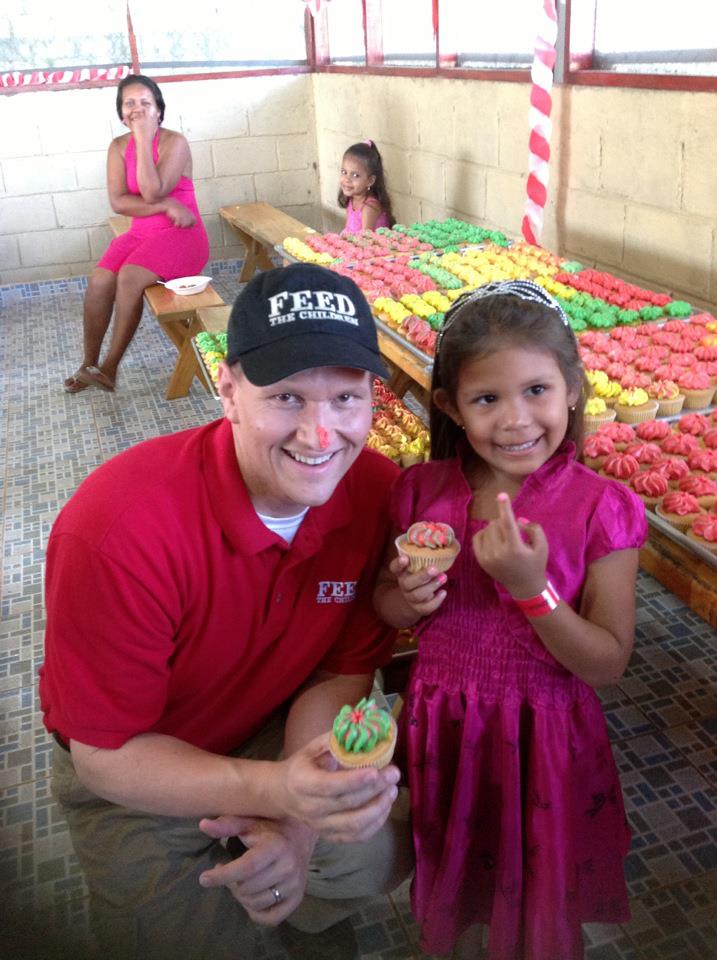
6. June 2012- "Let's Feed the Children." Kevin begins his work at Feed The Children as CEO and President. Our lives are forever changed.
7. July 2012- "Hagans on the Hill." I was the Senate Chaplain for the day. Wow!
8. August 2012- "Who is Really Poor?" I traveled with Kevin to Malawi and Kenya to see first hand the sites of the work of Feed The Children. I reflected on the spiritual poverty came to see in my own life as I returned. The Africans are truly the rich ones!
9. September 2012- "I'm a Defect." This was one of my favorite sermons in my "Excuses" series of sermons. We all thing in some way or another that we are made with imperfections. This was my way to seek to dispell this belief about ourselves that holds us back.
10. October 2012- "Why Do You Pray?" Some honest thoughts about my own prayer life that took some courage to admit.
11. November 2012- "A Life That Counts." My sermon reflection in response to our 10 days spent in the Philippines. I wrestled with poverty here at a level I'd never had before.
12. December 2012- "One Last Love Letter." My parting words to my beloved congregation of Washington Plaza. I will always love you.
At its core, I believe that Christianity is a communal faith.
It's a committment to a lifestyle that none of us can choose to live alone.
We need exhortation, correction and support from one another not only to know God more fully, but to stay on the often difficult path we call discipleship.
We gather together each week for worship because believe that somehow together we are much better off than alone.
We share meals together in social halls because we believe there is something about shared fellowship that makes us stronger.
We study scripture together because we trust that in reading holy texts with other ears around the table we see God more clearly.
But, I'm always interested in how faith communities are formed outside the walls of organized religion.
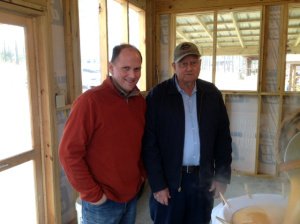 At Christmas time, Kevin and I have spent the past week with family in South Georgia-- in a small town of all things Hagan.
It's a locale where my husband's family have lived for generations and everyone in his immediate family lives except us.
When first introduced to my future father-in-law when Kevin and I were dating I asked: "What are your hobbies?" It was a causal question meant to make conversation but his answer told me so much about what I would later come to love about him. "Well," he said, "I don't really have any hobbies other than the fact that I build things."
Though I know my mother-in-law wonders when it will all stop...
In the past several years, he's helped his grandson build a house, added a dock and gazebos to the pond outside his home (where our wedding was held by the way), added an outdoor kitchen to the pool, built a cabin affectionately known as "the pond house" as gathering space for groups and his latest project a shed for syrup making (see pictures below).
He does so for one reason: to bring people together.
Though he'd never say it in that way. It is just what he does.
He wants to make his homeplace a place for others to find joy.
And not just for his immediate family (though these people are important to him) but anyone you needs a place to be.
Community building, for him is not a one time thing but a lifestyle I've observed over these 7 years I've been associated with this family.
For example, this week a group of men from town gathered in the syrup making shed for the 4 hour process of making gallons and gallons of syrup (to be distributed and given to others in the area).
As we all stood around the big pot, I couldn't help but take a step back and soak in the wisdom of my teacher of a father-in-law.
There is nothing that brings him more joy than building things and seeing people enjoying what he has created.
God calls us into community.
Some of us cook meals.
Others of us write blogs or author books.
Some of us coach sports teams.
And some of us even construct shelters.
And in all of these contributions, community is built.
And I have to think God looks on and says "it is very good." I am glad to have such good teachers as I keep learning.

 Luke 2:1-20
Christmas Eve 2012
Silent night, holy, night, all is come, all is bright. Round yon virgin Mother and Child . . .
I get chills every time I sing this song, especially on this night. I don’t know about you, but it seems to be the one carol of all Christmas carols that seems to pull at the strings of all of our hearts—a song that reminds us to slow down be still and consider what the birth of this child of a babe called Jesus is all about. It’s a song sung a few hours ago in the Holy City to commemorate what happened in this very special locale. Some say it wouldn’t be Christmas in Bethlehem without it.
In fact, I dare say, many of you would just not think it is really Christmas until you sing Silent Night by candlelight in community with others—just as we are going to do a in few moments. Maybe it is just tradition. Or maybe it is softness of this lullaby that evokes memories of when we were children. But, regardless as to why, Silent Night seems to be the carol for many of us that symbolizes the fact that on this night, it was not an ordinary night—it was eternally special.
It’s beautiful isn’t it the way we think of the Christmas story every year? Just like this song, we think of Christmas as peaceful, quiet, and so holy that we almost have to whisper so to honor the words . . . . Mary sleeping, all covered up in a long flowing robe with her hair perfectly combed to the side. The baby cooing, drifting off to sleep too while Joseph stands there, staff in hand, perched over the manger, with superhuman new dad strength to stay awake. The barn animals bowing at the newborn while the shepherds stand around in amazement of “the good news of great joy for all people . . . a Savior who is Christ the Lord.” It’s almost as if all the characters are glowing as we think of them, iconic in our minds just as we’ve seen them portrayed in stain glass windows cathedrals or in portraits.
We like Christmas this way. We like knowing that a hush fell over the crowd. We like proclaiming that “all is calm, all is bright.” We like pretty people doing beautiful things like giving birth. We like singing joyful songs about “good tidings to all people” believing we’re doing just as the angels did long ago.
It’s almost as if Christmas is the one time of year when we get to take a time out from all that is wrong in our world and believe again that peace on earth is actually real or at least has hope of coming to us at a time in the near future. Christmas provides so many of us the beauty that we crave in our oh, so messy world. Maybe that is why you came to church tonight—to find something anything that is better than what you were dealing with before you walked in these doors a few moments ago.
I hate to burst your bubble tonight and question some of this sentimentality of this moment. But, I think it would only be fair to the passage before us tonight we examined it more closely.
Though yes, Mary may or may not have been fully covered in long flowing robes, fit for the mother of the Son of God and her hair may or may not have been perfectly combed (probably not), remember this is a story about giving birth.
Giving birth, as many of you have experienced it is indeed labor. It’s full of sweat, tears, anguish, screams of “Get this baby out of me now!” It’s a messy enterprise, especially when you are going at it alone with no one to help you know what to do. (For Luke does not tell us that a midwife assisted with the birth). The main event of this night was about a long period of physical pain, agony, and maybe even some four letter words (or at least thought of them) coming to the forefront of Mary’s mind— what was God really thinking sending her far from home to have a baby in a stable? All was not silent, all was not bright.
And while yes, Joseph, may or may not have been staying awake, doing his good manly diligence of making sure his wife and newborn baby were indeed ok at all times, remember this is a story about an adoptive father.
Accepting a child as a man who you know is not your own can be more difficult than it might seem on paper. In this babe as Joseph stared into the manger, he did not see his eye color in the babe. He did not see his same thin lips or curly brown hair. Even more so, feelings of insecurity ran through Joseph’s bones as they would anyone forced from the resources of home now with a new baby in tow, a baby he was going to need to learn to love and care for as his own. I can imagine thousand thoughts of “what if?” ran through his head, even as relief settled into him that the baby was born and Mary seemed to be doing alright. What was God really thinking putting him up close and personal of this crazy plan? All was not silent, all was not bright.
And while yes, the barn animals and the shepherds may or may not have been looking lovingly into Jesus’ eyes well-mannered and glowing with excitement of finding the one “wrapped in bands of cloth and lying in a manger,” remember this is a story about characters who aren’t used to getting much attention.
They’re field animals and workers who aren’t known for their being in close quarters with others. They don’t know where to sit. They don’t know what to say. When Joseph’s nose starts leaning over toward them the begin to realize they smell and aren’t really fit to be good company. Soon their social anxiety seems to want to get the best of them. They wonder why they came in the first place. Sure, those angels sang and it was quite a sight, but after awhile they could easily begin to second guess all of this in the first place. What was God really thinking dragging them to out to see this? In their troubled minds, all was not silent, all was not bright.
I almost feel sacrilegious in saying anything against the beauty or the time-stopping wonder of that first Christmas Eve. But, I really think as wonderful and as life changing and as powerful that wondrous night of the birth of Christ was—or Emmanuel, God with us came to earth—all was not silent, all was night bright.
Remember this was a human story—filled with human things we know a lot about.
Changing patterns in the night sky
Tyrant governors who declare we must pay more taxes and cause even expectant mothers and fathers to make out of the way trips
Women who give birth without medical professionals to help
First time parents wondering what in the world they’ve gotten themselves into
The awkward dance of human relationships
Strangers showing up at our door who we don’t expect
And because this was a human story, as much as Christ came it didn’t make everything 100% right way. The shepherds didn’t suddenly get the respect they deserved and a fair labor. Mary didn’t suddenly have any more discomfort from birthing a baby. Joseph didn’t suddenly have all the courage he needed to keep doing the right thing as he’d done so far. No, all was not calm, all was not bright.
But, what did Jesus do—what was the point? What are we celebrating tonight then if all was not calm, all was not bright?
Well, despite the circumstances or the flavor added in by the human characters, this remains this same: on this night, we celebrate Jesus, the one who was called Savior, Christ the Lord. We are celebrating the coming of the one to earth who would give all of us an opportunity to know what God is like in the flesh. We are celebrating the One who would later show us on a cross and on an Easter morning what God ultimately wants to give us—new life. We are celebrating the coming of light—light that would begin to shine and ultimately as this Jesus grew up, show us more of God’s love. Over time, as the story unfolds, more and more of his hope would be given to all of us.
Jesus comes as the light, the light that shone in our dark, dark world. A world where all was not silent, all was not bright.
What good news this is to our weary worn eyes tonight! What good news this is for us faithful churchgoers who have heard the Christmas story over and over again and wish our lives would change and so many remains the same year after year! What good news this is for those of us who want to follow Jesus but find our own depression, anxiety, fear or hurting hearts holding us back! What good news this is for our conflict filled families who will bicker around the Christmas table tomorrow! What good news this is for a world where little girls and boys and devoted teachers get shot on Friday mornings the week before Christmas!
No matter what may be, Jesus is the light!
And, though it is true and the light has come, we, like the first participants in the Christmas story, are residents of this world. We also must face the doubts of “Why me, God?” We also must face the loneliness of being close to the light and sometimes finding few are with us there. We must also face the anger of why bad things happen to so many seemingly good people.
But this does not change the light! We, my friends cannot change the light. No matter how we whim, or moan or mess up or what folks with guns or bombs may do, we cannot change the light. The light has come!
Jesus, this babe would later grow up to say, “In this world you will have trouble. But take heart, for I have overcome the world!”
And to you this night I say, take heart. Even on Christmas, you still live in a world of trouble. But the light has come and the darkness, no matter what, could not overcome it.
AMEN
 Matthew 1:18-25
How many of you have been to a living nativity sometime this year? Or even ever? They’re one of my favorite things do visit this time of the year. For someone like me who has heard the Christmas story over and over again, it’s always a cool way to see the Christmas story with fresh eyes.
Recently, a dear friend of mine with a newborn was asked by a local congregation in her hometown to be a part of the drive-thru living nativity.
With her daughter less than 2 months old, and the church without enough newborns on its membership roles to cover the multi-evening event, the baby girl was desperately needed to staff an important role: Baby Jesus. Who cared that she was a girl . . . no one would know the difference anyway the production team said.
I asked my friend what would she be up to during the event. Would she watch nearby? Of course, she said, she would not leave her baby alone on the hay so the director made arrangement for her to be staffed as Mary. She would be on sight in case baby girl (aka Jesus) cried and needed to be nursed or needed a diaper changed. Mary and baby's relationship was crucial to the show going on. But what about her husband? "What was he going to be doing during the afternoon?" I asked. My friend's husband was told he could tag along in costume as well, playing Joseph, but only if he really wanted. If not, other fill-ins would be easy to find for the part.
I don't think dear ole Dad was feeling the love, being told he had a part that was so replaceable.
And it is true: of all characters to be left out if one had to go in our Christmas plays and pageants, Joseph, I guess is the one we could most easily do without.
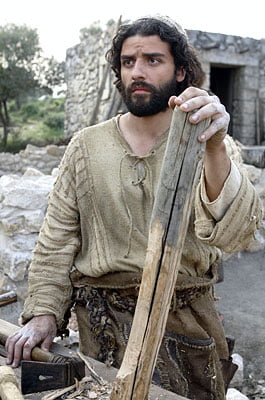
In Luke's account of the naivety that we all almost know by heart, Joseph doesn't have any lines. If Joseph was looking for a script from the Biblical text, he'd have trouble knowing what to say or do. For all we know is that he is called to census in his hometown of Bethlehem which is how Mary ended up giving birth to Jesus in this small town. Different from other characters, he's not wrapping the baby up in those nonexistent clothes. He's not coming to worship or bringing gifts. He's not treasuring all of these things in his heart. He makes no grand gestures or tries to upstage anyone. He's just simply there. This is all.
However, if we read the less popular, but still important version of the birth story from Matthew's gospel, we find just the opposite, Joseph playing a leading role: crucial to the operation Son of God comes to earth mission going on without a glitch. Though not given a huge speaking part, Joseph teaches us what it means to wait— even when the details are murky and the way ahead is unclear.
Can you imagine what the conversation between Mary and Joseph was like that day when she had to let him in on the secret that she had hidden away in her heart? Different from any first time fathers hearing the news that their wife is expecting a baby—this was full of so much greater emotion.
“Hey, Joseph.”
“What Mary?”
“Well, I’m going to have a baby.”
“What???”
“Yes, I’m going to have baby.”
“How can that be? We, we, haven’t been together?”
“Well, the angel of the Lord told me that the Holy Spirit came upon me. And I would have the baby that would save our people from their sins.”
“What???” (exit Joseph stage left)
For none of this really made a lick of sense . . . If Joseph was going to have his first born son then it needed to be his child, not someone elses.
Joseph knew this baby to be in Mary's womb was not his. He knew he hadn’t shared a bed with Mary quite yet. Of the Holy Spirit? That just sounded like a really good made up excuse for a one night stand.
So, Joseph needed to call things quits. And the law of the land was on his side.
Sure, he could have scoffed off the Jewish law if he wanted and pretended without cause, but the Matthew writer who is always concerned with the Jewish point of view, tells us that Joseph was not your high holidays kind of Jew, he was a righteous man. He wanted to do the RIGHT thing.
And being a righteous man, a man who didn't want to bring this young girl and her family any more hardship than she would already experience with a divorce to their name, he came up with the plan to divorce her without any bells and whistles. And to ensure that Mary and her unborn child were not killed out of it-- as the law says that stoning her was an option.
And in his "seeking to the right thing" ways of life this "quiet divorce" plan seemed like a good plan. It was his lovingly way of both following what he thought God wanted (the law) and what was in the best interest of Mary (the law). For at the time, God and the law were one in the same.
But, then everything changed one night when he went to sleep. As Joseph waited—as Joseph wasn’t sure what was next—you know two really not so good choices—the holy came.
I don't know how many of you have dreams on a regular basis that you remember. While this is something I personally struggle with (actually remembering), I know that for many of you it is a spiritual practice to remember, record and think about the meaning of your dreams. For often truths that are deeper than we are able to consciously understand in the daytime come out in our dreams—and such was true of Joseph.
And this was the word: Joseph was not to be concerned about Mary’s pregnancy, but to believe Mary-- to take to heart the message that had been told to her from the angel Gabriel.
Indeed the child that was growing within her, was not his, but was the Lord's doing. And, because this baby was of the Lord, Joseph needed to embrace the babe as such, welcoming him into his life, into his family, into his history, as Joseph would do with any other child of his that might come in the future.
While amazing, life-change and awe inspiring news this was in a dream, I can only imagine how hard it was for Joseph to accept it.
Most of all Joseph was being asked to wait with a plan that not even he understood much less anyone else. For it wasn't like he had anyone to talk to about such an experience among his hometown friends-- this God and this Emmanuel was too weird for any sort of reasonable explanation. No one had heard this before. .
But, in obedience to the word of the Lord that he knew in his gut that he had heard, he decides to keep Mary as his wife and "adopt" Jesus as his son.
He decides to stick around and see what the Lord had in store.
He stays to be the one Mary needed to lean on as she soon will undergo the pains of childbirth.
He stays to fulfill the prophecy that the Messiah would be coming from his family line.
He stays because he cares for Mary, even if they were having the craziest spiritual experience they'd ever heard of, and with both of them on the same page, the needed to find encouragement from one another to stick with it.
He stays because by his sheer presence-- even if he doesn't say a thing-- he provides the protection Jesus will need to grow up, mature and fulfill the reason his was born in the first place.
As Joseph waited around with active courage, he saw with his very own eyes the fullness of God coming forth.
Though not cast in a traditional role, though not cast in a role he had originally wanted or planned for, the story could not go on without Joseph's realization of God's love shinning upon all of them in the days leading up to the birth of Christ.
For if we are going to follow the example of Joseph this day and make room in this the 4th Sunday of Advent for more of Jesus in our lives, we've got to think more closely about waiting for God even when we don’t understand the details either. And this is what I mean:
Like Joseph, when times get tough, when life gets rocky, our first response needs to be of sharing, clinging, staying put instead of running away.
I’ve heard several of you say in the past couple of weeks as I shared my plans and the fact that my time with you as pastor would come to a close this year—that “I’m not sure I can come to church here anymore. I’m not sure our church has a future. How are we going to make it without you here?”
While I want to thank you for caring about me as you have and I want to acknowledge that it is true: transitions are filled with grief, I don’t think now is time to quit. This church or any church for that matter is not about who sits in their pastoral office. This church is not about its trustees. This church is not even about what affiliations you have with different church groups. It’s about Jesus—it is about waiting together in expectation of what only God can do for us.
I can’t tell you how disappointed I would be in you, beloved children of God after all the good we’ve done together, if you choose to give up now.
Jonathan Wilson-Hartgrove, a seminary classmate of mine from Duke, writes in his book the Wisdom of Stability, how easy it is in a culture such as our to be lured away by the promise of a better offer. We think things are always better somewhere else, with someones else. Yet, he talks about how what the gospel witness needs more of comes in packages of permanency, unconditional presence and not hitting the road, leaving a church or a community when people get on your nerves (for inevitability they will!).
Not only do we need to stay put no matter who the leader may be, but as we stay put, we need to ground ourselves in community life making giving and receiving here a priority.
I'd be remised if I didn't say to the Christmas only crowd this morning that Washington Plaza would love to receive you in January as much as they loved receiving you today.
I'd also be remised if I didn't say to the regulars around here that as you wait for God, you’ve got to spend more time together. Sure, life is busy. Sure, family and friends outside this place see to take up all your free time. Sure, this town where we live runs like nobody sleeps and thus we often we don't really either.
But if Washington Plaza is going to be a community that makes room for the Christ child, just as Joseph did, investing in one another outside of Sunday mornings is just as important.
For it is in being together, for it is in waiting with God together that the details of “what is next” make just a little more sense each step of the way.
So in the meantime as you wait for more of Christ to come in your midst, I leave you with love. Love is not short tempered. Love does not keep record of wrongs. Love does not leave when feelings are hurt. Love stays. Love protects. Love, God's love, is what is with us as we wait.
When I think about all that we've been preparing for this Advent season, it's love that I know our community need the most to have a bright future for the new year. Didn't the Apostle Paul once say about love, "Now these three remain: faith, hope and love. But the greatest of these is love."
Thank goodness then, as we prepare to welcome tomorrow night, Christmas Eve, the babe called Emmanuel, God with us, born for us, we welcome the one who taught what love truly meant for Jesus was love incarnate. And, by following him, we can learn to love one another, even when times are hard or the way is unclear. In following him, we can delight in knowing of our great future. There’s no question about that. Like Joseph waited with acts of obedience, we wait too.
AMEN
Dear Washington Plaza Church family-
I needed to write you one more letter. I love you. I don't just say that lightly. I really do love you.
It has become abundantly clear to me again this week that goodbyes are always hard. But they're especially hard when you're parting as we are, having loved each other well for several years now. I've believed in you (and still do) from the first moment I met your pastoral search committee in that office in Reston Interfaith. I knew that if the rest of the church was as awesome as the search comittee then we were going to have a lot of fun. And, fun we've had! Over these years, I have always wanted to brag about you to my friends-- telling them that in Washington Plaza I found the church I dreamed to be a part of as pastor in seminary.
I love how you blessed me over four years ago now when you saw a 28 year old female with no solo pastoring experience and called me with an unanimous vote to be your preacher on the plaza. I love that you saw in me what I most felt true about myself-- that I was a pastor and that God had made me for a time to be your pastor. I love how you've followed my lead, taken chances with me to try new things and asked really good questions when we've faced crucial decisions together. I love how you've never told me "no" to my growing passion for writing and ministering to folks outside the church. It is you, dear Washington Plaza, who has given me a chance to hear my own voice clearly-- the voice I believe will be what I need most in the chapter that lies ahead of me. I have you to thank for gracing me with this great gift!
I love how kindly you have welcomed me in your community, just as I was (church baggage and all) and most especially I love how you've welcomed Kevin. It's a hard road being married to a pastor, but just as you help me to grow up over the past several years, you've done the same for Kevin. You've given him opportunities to serve in the kitchen and cook for a crowd (his favorite!). You've ordained him as a deacon-- a milestone in his own journey. You've given him the spiritual community he needed to be at the point in his life to say "Yes!" to God's ministry for him at Feed The Children this year. You've loved him and cheered him on as much as you have me-- and I know you'll continue to do this in all that lies ahead for us.
I love how you welcome those in whom other churches simply would not. You welcome so lovingly folks who may not come to church dressed just so. You welcome folks who call themselves gay and Christian-- who just need to know that God loves them too. You welcome those who have been hurt by the church and just need to have a place to come and take deep breaths for awhile. You welcome those who have deep burdens on their hearts who just need a place in corporate worship to unload them in prayer. You welcome those who aren't sure they believe in Jesus-- but really want to-- and a safe place to ask their questions as they figure it all out. You welcome those who often take more than they give without grumbling or complaining about doing more of your share of the work.
I love how I've seen Jesus in you:
Times when you've showed up with hymnbooks at bedsides singing to those who are dying.
Times when you've gone with me to take communion to shut-ins who could no longer come to church.
Times when you've built community with each other outside of the confines of the building-- over glasses of wine, during breakfast meetings, at walks for the homeless in Reston, or in one another's homes.
Times when you've given your money or time to help the homeless or nearly homeless who show up at our doorsteps and are in need of a meal or a conversation.
Times when you've believed in second chances for those who have hurt you or those who have hurt our church.
Times when you've said to me, "My faith is growing to be more important to me all the time."
Times when you've shown up at a week night Bible study with eagerness to learn and listen to each other.
Times when you never said anything mean about my wet hair on Sunday mornings or continual search for my lost keys around the church or even why there were spelling errors in the bulletin.
I will forever cherish this time in my life as the time when I was YOUR pastor. Know that I'm cheering you on in all that lies ahead and will forever think of you with gratitude for how you've altered the direction of my life and Kevin's life too in so many lovely ways. I know you'll be just as good to the next person who leads you too. And, they'll be a lucky pastor just as I have been for these four years.
I love you!
Elizabeth
 Waiting with the Shepherds
Luke 2:8-12
Who is on your list of people that you don’t like?
Of course, talking about people who we don’t like isn’t really something we often do in public, especially in church. And, I know it is Christmas. Most of us are well on our way to be appearing to be nicer than we seem with the corporate theme of “Peace on earth and goodwill toward all men”
But, seriously, I’m asking. Who is on your list of people you don’t like?
We all have them.
From the mechanic who installed faulty brakes in our car just last week to the neighbor who wakes up at 6 am and starts the leaf blower or the chainsaw directly below our bedroom window.
To the family member who tells racist jokes about our dear friends, even when we ask them to stop.
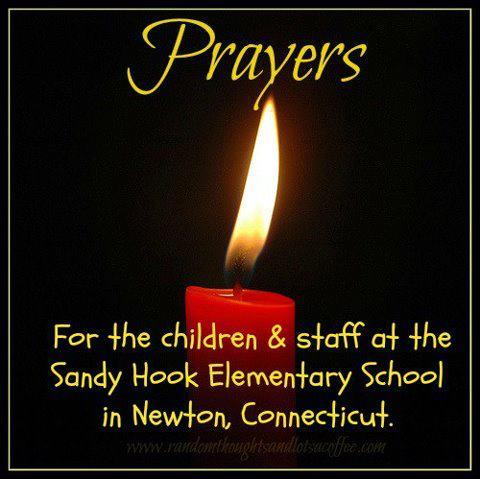
And horrifically, to the shooter who changed the world as we knew it on Friday morning—when 26 precious lives were taken from this world by gunfire at their elementary school.
(Such is of course an example of “people we don’t like” that I didn’t plan on including in my sermon for this morning. But nonetheless it happened. If you are like me, as the scenes of parents picking up their children from Sandy Hook Elementary rolled across the television screen on Friday and reports of how many parents would not —I couldn’t help but think oh so mean thoughts about the kind of person who would do such to innocent little children in school. Very mean thoughts in fact).
From the trivial to the tragic, there are plenty of really valid reasons to not like people—even as we know our calling as people of faith is to “love one another.” It is as my husband says to me after we’ve had a “friendly” marital dispute: “Honey, I love you but I just don’t like you right now.” (Anybody ever had been in this place too?). We all have people in our lives that we just don’t like, even if we love them or know that we should love them.
And along these lines, I suggest that the sermon title for this morning should be changed from: “Waiting with the Shepherds” to “Waiting with the Despised” or “Waiting with those whom we belittle” For the small chunk of our beloved Christmas story before us today features a group of folks who were very much disliked in their time. Though for many reasons that maybe weren’t fair—prejudge and classism— the shepherds were put down nonetheless.
When I say “shepherds” it’s hard to get your mind around the idea of the association of not liking them, isn’t it?
If you know anything about Biblical history, you know that scripture is full of stories about shepherds. If you are a child growing up in children’s Sunday School as some of us were—you learn how to get good at sheep crafts because there are lots of lessons by which they apply. I can’t tell you how many cotton ball sheep I made in all my years of church classes.
Pertaining to sheep, we tend to think favorably of them. Moses was a shepherd when God called him. So did David claim this profession and several of the prophets too. What more beloved passage of scripture do we have than Psalms 23: “The Lord is my shepherd; I shall not want?” Didn’t Jesus later say, “I am the good Shepherd?
And these days- when we think shepherds we often think of cute kids with bath towels wrapped around their heads in Nativity plays.
Or we think of burly but strong characters from our coffee table manger scenes.
Or at worst we think of smelly field workers who could really use a hot bath, but not the despised.
I mean, how could we dislike characters that were among the first to worship and greet our Lord?
But, in the time of Jesus’ birth, to be a shepherd was not a ticket to popularity. While sheep are cute and the Bible seems to speak of sheep and shepherds often—what we need to understand is that being a shepherd in this day and time was the modern equivalent of being a trash collector or a someone who empties the latrines of our airplanes or someone who is forced to pick up trash on the side of the road as part of the patrol from jail.
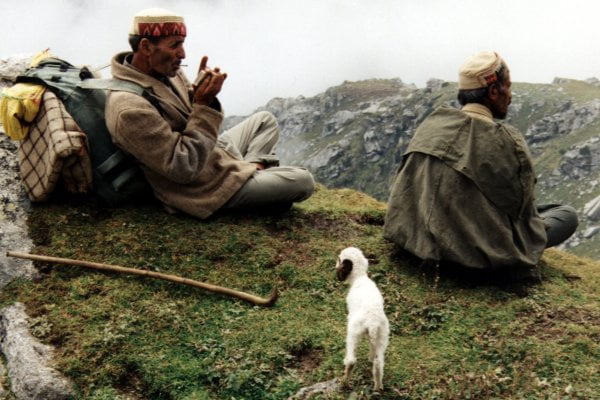
For what does a shepherd do? They raise sheep and goats—smells and all. They guide their sheep to graze in open land. They live a nomadic life without a permanent address or even a P.O. box. They put up with some of the most unpredictable creatures on earth—fuzzy, stubborn creatures who don’t always go where they were led or remember to stay in the bounds of their owner’s land.
It was a rough life. We don’t know if they had mental health issues that had forced them outside the bounds of “normal” society. We don’t know if they had addiction problems. We don’t know if they had mother or fathers or wives to welcome them home once the herding was over. We don’t know if they wished they had a better job—if they’d only be offered the opportunity to thrive somewhere else.
All we DO know is that to be a shepherd in Jesus’ time was to be unseen by those outside of the working class like them. It was to be overworked, without holidays or weekends off. It was to be paid less those with more important jobs in palaces, the city square or even at the temple. And most of all to be shepherd was to be a little less human.
And it is to this collection of guys the multitudes of the heavenly hosts appears at night saying, “Do not be afraid; for see—I am bringing you good news of great joy for all people: to you is born this day in the city of David a Savior which is Christ the Lord.”
The Presence of the Living God comes to this unlikely band of sheep herders and says, “The best thing that has ever happened to the world is in your hood. Your heavenly Father has picked you first to see it. Now, go!”
Wow—what a special invitation this all was!
But, remember our theme. Today we are talking about what it means to wait. In particular, what does it mean to learn from the waiting the shepherds did to get to this climatic moment in their lives?
Different from other sermons in this series, we’re not talking today about the process of actually waiting and what it was like for the shepherds to hear the good news. Because, hey! I don’t imagine that this group of fellas thought they were waiting for anything special at all. No wonder scripture tells us “they were afraid.”
So, today, rather, we’re taking this opportunity to wait with them, to consider that these were THE ones who were asked to attend to the birth of Christ first. What does it mean to wait for Jesus alongside the lowly among us? What does it mean to wait with those in our life this Advent season who are on our “I don’t really like them very much” list?
It’s one of those piercing questions because of who’s on that list. I don’t like to go there. I don’t like to be forced to consider the fact that I think I’m better than the men who pick up my trash every Friday morning.
I bet you don’t either. It’s easier to go about life as if we’re the most important character. It’s easier to go through life as if we are kings and queens of our own kingdom, inviting only those in our lives who are we like.
But, what if we began to wait with the shepherds among us? What if we saw the world from the perspective of those in whom our society doesn’t value? What might our waiting entail then?
In a mid-size US city much like ours, a man named William Well is homeless. He was interviewed recently by a television station about his story. This is what the reporter said about him:
William is a convicted felon and recovering addict who’s stayed sober four months and counting.
The reporter says about William, ”He’s ready for the cold shoulders and weary eyes likely to greet him from the family next door, should he land a spot in supportive housing for the chronically homeless. For now, though, he’ll bide his time on a waiting list.”
At 59 years old, the Chicago native insists that he’d be happy just to hold down a job and mind his own business.
William says: “At this stage of my life, I wanna be able to help myself … buy my food, buy my clothes, pay my own rent,”
“You’ve gotta give a person a chance,” he said. “It’d make me feel like a man.”
But men like William who walk the streets every day aren’t those who we often give a second chance too.
It’s annoying sometimes to be greeted by a homeless person at an intersection of a shopping center, isn’t? Or, to be greeted by someone going door to door in our neighborhood asking to do odd jobs around our yard? Or to be given a flyer by a person standing a street corner for a service or product we could care less about and becomes just one more piece of paper to have in our purse of pocket?
We look at people like this as beggars, wasting our time, or most of all suspiciously who are just going to take and take and never give back to society. We look at their criminal past and judge them without an eye for the possibilities for the future. We often don’t think God could appear to them, speak through them or be the central characters in a play school children would perform for centuries to come, as the shepherds became that night.
But, the God we know of our beloved Christmas story is the God who appears to those in our world we might dislike, despise or might otherwise overlook in our busyness.
The God we know of our beloved Christmas story is the one who goes where the hungry seekers of faith are found-- those who have been rejected by the world, who are working jobs at fast food restaurants, in cleaning companies, and as street cleaners.
The God we know our beloved Christmas story is the God who often goes outside of the bounds of the city to find those who are ready to worship the Christ child—those in the trailer parks, those in the shacks of country houses, and those who find themselves camped out in the woods of Reston in the tent cities because they have nowhere else to go.
If we truly want to be people who wait with the shepherds as the third candle of our Advent this year asks us to do, then we’ve got to first re-orientate ourselves to the types of people that our Lord and Savior, Jesus Christ asked to come and worship Him first.
One of Bill Watterson’s famous Calvin and Hobbes cartoons speaks of the type of mania we deal with this time of year: “Oh look, yet another Christmas TV special! How touching to have the meaning of Christmas brought to us by cola, fast food, and beer.... Who'd have ever guessed that product consumption, popular entertainment, and spirituality would mix so harmoniously? ”
There’s a popular phrase this time of year and I bet you know it. And it’s “Jesus is the reason for the Season.” It’s kind of the Christian catch phrase we use to talk about the rise of consumerism and emphasis on all things Santa that seem to take the thunder away from Jesus.
And of course, it’s true, Jesus’ birth is the reason for all our preparations and waiting this Advent season, and yes, it should be our main focus.
But, I’m here today to offer you something more. Who are we waiting beside? What kind of people are we waiting with? Are we waiting for the celebration of Christ’s birth this year alongside people just like us? Or are we waiting with the shepherds?
Who will be around your dinner table this Christmas? Who will you buy presents for? Who will you befriend in the New Year? If there's anything I've heard over and over about this school shooter in the past 24 hours it is that he was "a loner." Where were his friends? Where was the church?
I dare suggest that if we wait with the shepherds among us this Advent season, what we’ll really find this Christmas is Jesus.
. . . Jesus who humbled himself, coming from all the lights of heavenly glories to become a baby, a tiny, helpless baby so that we could all know how much God truly loves each and every one of us
. . . Jesus who came to help the broken, the tired, the lame not the well and happy
. . . Jesus who came to teach us God’s abundant grace lavished on all of us, not just the select few.
If we want to know Jesus, let us wait with the shepherds among us, let us learn of them, and most of all let’s invite them in to our lives.
AMEN
As you might imagine with my days in local church pastor land drawing to a close, I've had a lot of packing to do. I've been sorting through books, papers and sermon files over the past several days. And in doing so, I've discovered all sorts of treasures, as you usually do when you begin to pack. Books I forgot I had from seminary. Extra copies of book studies to send to friends who might enjoy them. A letter from my grandmother lodged in the jacket cover of a book (who has been deceased over 7 years!). And also several CD and DVDs of ministry related files and activities.
I've been tempted to stroll a bit down memory lane this afternoon as I've tried to figure out exactly what these DVDs, in particular are of. Who cared if I was behind schedule on the packing!
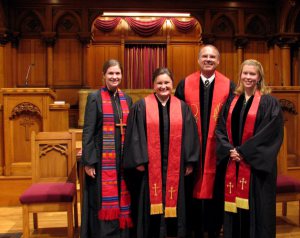
 And, I'm glad I did. For, what I jewel I found in re-discovering my ordination service on DVD from November 2006. A shout out to Michelle Mesen for recording it! It took place at Calvary Baptist Church in Washington DC with important contributions from Amy Butler, the pastor, several seminary friends including Anna Kate Ellerman Shirley, Abby Thornton and Sarah Jobe as well as head of the DC Baptist convention at the time, Jeffrey Haggray, my colleague from my first church, Charlie Updike and my parents too.
As I watched this service (which I hadn't viewed in many years), I couldn't help but notice the look of terror in my eyes as words poured over my life and call to ministry.
I was excited yes, about FINALLY being ordained. But, I wasn't quite sure what I was getting into. I came from a ministry family. I knew the toil would take on my life, my schedule and any future family members I added to my household. I knew I wasn't really as holy as everyone made me out to be that day. I wasn't sure how to keep pace with this emotionally draining vocation. Yet in spite of myself, I knew, though, I wanted to be in a church more than anything.
I remember the morning of my ordination I had a long talk with several seminary friends about my concerns: "I'm afraid my life is now over. I'm getting married to God today," I offered with tears in my eyes.
My friends were great, reminding me that indeed my life was not over. There's still be time for fun and holidays and new adventures even though they agreed, ordination is sort of like getting married to God (though not like our Catholic priest colleagues thank goodness!).
And so for the past six years, I've dutifully labored. I've supported two churches in associate and solo pastorate roles. I've preached a lot of services. I've planned a lot of funerals and wedddings. In doing so, I've learned much about myself, people and the role of the church in the world. People have loved me and I've loved them too. My theology has shifted and shifted some more. I've been brought back to center time and time again through the gift of colleagues.
In all of this, I wouldn't go back and change a thing. These first six years of ordination have been about serving the local church and the church has served me along the way too.
 But, in January things will be different.
I hear folks commenting around me (when they find out I'm leaving my church), "I can't believe YOU are giving up your church." Or, "What a waste that you aren't going to be in ministry."
Such sentiments sting a little because they aren't true-- though of course my landscape of ministry is changing.
Hear this: I still am a big fan of the church. I still believe in its purpose in the world. I still will call myself a Rev. and seek to use my life in gospel pursuits.
Of course it is all going to look different soon. My calling has changed. I won't wear a stole and rise to a pulpit every week now. I won't plan worship for Lent this year. I may not make as many hospital calls.
But, I am going to still be a minister. I don't know if I could ever stop.
Someone asked me the other day, "Are you afraid of the future?"
And the answer is no.
It took me a LONG time to get to this place. But with every book I pack today, I really feel ok. The details of the ins and outs of the future life I will be creating with Kevin are sparse (I can't even tell you where I'm going to live in six months), but I realized today that I'm not afraid. I feel the gift of calling.
And in calling, I know we'll figure it out (though of course I'll have those days like everyone else when I'll cry about it). In due time, I know the Spirit will make things plain. I know I'll keep studying, learning and preaching somehow. And, most of all I will live into writing as a vocation in the upcoming season. In fact, what I get into next might just be more fitting of the person I was created to be-- who knows?
Above all, I no longer have the fearful look in my eyes I projected at my ordination service six years ago-- even though several in my life think I should be MORE scared now. God's calling is messy. Yet, it is also one of peace. This I know.
I'm glad I stumbled upon the DVD of my ordination service today. What a gift to remember and gain perspective.
 We have a tree up in our house (see proof to the left!) but no Christmas presents underneath.
It's not that I haven't had time to go shopping . . . I guess I could have made some time if I really wanted to go to the mall (somehow going straight home after work has been more appealing). It's not that I don't like giving gifts or even shopping (when it is has a time limit).
In actuality love giving gifts. I enjoy coming up with creative gift ideas for people I love, and the time shopping to get them doesn't bug me at all. In my house growing up, I was always the designated Christimas wrapper. I'm pretty good at making bows for packages, in fact.
But, I can't seem to get my head into it all this year. Yet, no matter how I feel, Christmas is coming soon. I've got to get motivated!
I think my resistance stems from this: I don't need anything. The people I am going to give something to don't need anything either.
We live in a country of plenty. Over the travels of this year, I know this fully well.
In America, we "want" is usually incorrectly mixed up with the word "need." Most people I know usually are able to buy something for themself if they really need it or at least save up over a period of time for an item. Sadly, most of us use Christmas to further our dependency on consumerism, in an effort to say we've celebrated the holiday.
Katharine Whitehorn is attributed to saying about our world's obsession with Christmas by saying, " From a commercial point of view, if Christmas did not exist it would be necessary to invent it." I read this quote and immediately said, "Oh gee."
What's the larger point, when we know as Christians that we are celebrating a spiritual holiday? Is the act of gift-giving really that bad? Of course you sound super spiritual this time of year if you say, "I'm not buying my kids or spouse more than one present." Or, "I'm only giving gifts from alternative Christmas markets" But as we all know, I am not that spiritual and I bet you aren't either. Maybe there is a balance.
Those three kings did bring Jesus gifts in adoration of his Lordship after all. . . .
I believe what all of us need more of is not piles of presents under the tree with our names on them, but love expressed. Author Harlan Miller said: "Probably the reason we all go so haywire at Christmas time with the endless unrestrained and often silly buying of gifts is that we don't quite know how to put our love into words."
What we all really need is the gift of each other. People in our lives who risk the vulnerability of telling us what we mean to them. Our risking doing the same. Taking time to make those we love feel special and appreciated. Helping each other remember how much God loves us all.
A congregation member of mine once told me about a new tradition she created in her family. Instead of giving gifts to each other, when they gathered, they all wrote letters. Each member of the family took the time to write a reflective letter about something they'd given/ participated in that was an act of service. And then perched the letters physically on the tree at the family gathering. After dinner, when everyone sat down in the living room, the small children still got a few presents, but the adults then shared their letters with one another. This ritual became a way to teach the children (and remind each other as adult too) what giving is really all about. And remember that Christmas' emphasis on service is indeed for the entire year, not just December.
I know several churches and families like this one have or are thinking of creative ways to participate in Advent in non-traditional ways. I say bring it on! Share any good ideas you or your family have come up with for alternative giving here in the comment section. I want to learn from you.
In the meantime, I am going to keep staring at my Christmas tree, hoping to get inspired.
Advent 2
Luke 1:39-56
Around mid-December, it’s so easy to want to rush on through, say Christmas is here, and let’s pack up the decorations, open up the gifts, eat another turkey and move on. I know for several of you who attended and participated in the choir concert yesterday—feel as though the joy of that event has made it seem like Christmas has already come and passed. Wasn't it just a wonderful afternoon?
But thank goodness scripture, as we read it together every week in worship, wants to slow us down. Thank goodness scripture wants us to savor every moment of this season. Thank goodness scripture helps us see clearly that the journey of Christmas was not just about the destination birth, but about the journey to get there. And, we’ve got several more weeks left to wait and see what we uncover as we’re intentional about our waiting.
As we continue our Advent series this morning on waiting for Christmas—today, waiting with Jesus’ mother, Mary—it is important to remember what a radical perspective we have before us.
Luke’s gospel, where our lection for today comes from, is the only book of the Bible to narrate from the perspective of or to include women as main characters. For example, Mark’s gospel doesn’t mention Mary and skips the birth story of Jesus altogether. Matthew’s gospel assigns Mary the obvious role of birthing Jesus, but gives her no speaking parts. The apostle Paul speaks only of Jesus being “born of a woman,” never giving this woman a name. Yet, thank goodness for Luke or we’d never know much about this Mary, the beloved center of our Christmas readings.
But, what was going on?
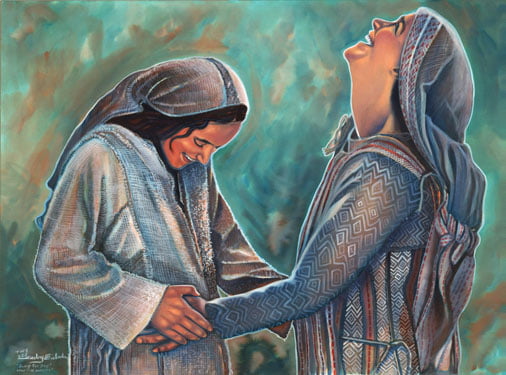 Previously, Mary had just gotten some life changing news. Not only was she pregnant, but she was pregnant with, wait for it, the son of God. No small news at all. Yet, even as the angel Gabriel has foretold the great news to Mary about the coming of Christ, she still had to wait. Pregnancy, as we know, is a nine month sentence to waiting.
And, from this narration, we get to ask the question: “What did Mary do as she waited?” Obviously, her body began to change, morning sickness found her, new aches and pains found their way to her back and ankles. Her belly grew. Beyond this, what did she do? How did she cope with the joy, the fear and the anticipation of this life altering news?
Well, verse 39 of Luke 1, takes us right in the middle of the action. Mary would not sit at home and be idle in her waiting. Nor would she move into her betrothed husband’s home, Joseph and cry about all the humiliation that might come to her as a new unmarried mother. She would not stay in the past trying to savor every last-minute of her childhood with her parents. Instead, scripture tells us that she “set out and went with hast to a Judean town in the hill country, where she entered the house of Zechariah and greeted Elizabeth.” Elizabeth was Mary’s cousin, though many years older.
If we study our Biblical geography, we know that from Mary’s home in Galilee to Judea, it was at least 70 miles of a trip—and most likely longer if she avoided the direct route through Samaria, as most Jews undoubtedly did due to political tensions. A long tedious, and potentially dangerous trip was this, taking several days. We are given no indication that Mary traveled with others (though the protective side of me as a reader really hoped that she did!).
Above all, Mary risked the familiar of home to wait in pursuit of the fulfillment of God’s plans for her. Her bravery and courage to go be with a family member she thought might be supportive shows us what it is like to actively wait. Sometimes we’ve got to simply move from point A to point B. And Mary’s long trip was worth it, Elizabeth and Zechariah proved to be perfect waiting partners.
How so? Because it had already happened to them! Zechariah and Elizabeth had also been told they’d have a son too, who would help prepare the way for the one who was now growing in Mary’s belly.
And like Mary, Zachariah and Elizabeth knew what it might be like to trust God with all their might. They knew what it was like to have their friends call them wacko. They knew what it felt to know the God of Israel personally as the word of the Lord had come to them too.
In the arms of her cousins, Mary found two dear ones who truly understood who she might be feeling.
In the same way, when we find ourselves in situations requiring our patience and most of all waiting—who we wait with is very important. The voices echoing our life has a lot to do with how we stick to the paths that God has laid out for us.
When we want to go to college again to study for a vocation that we think might serve others and our parents think that is stupid—we might find ourselves dropping out before we’re done.
When we hear about a well-paying job that seems like a great opportunity but our gut says, “That’s company is trouble” and all our close associates say, “Go for it” we might just find ourselves accepting trouble we could have avoided.
When faced with how to go about cancer treatment and we want to add in holistic practices of herbs and meditation, but our spouse things it’s a complete waste of time, we might find ourselves rushing through traditional treatment at a furious pace, not as we’d desired.
Human beings are swayed of course, oh so easily, aren’t we by who or what we are around? Just bake chocolate chip cookies or flash the “Hot Donuts Now” sign in front of someone who recently proclaimed they’re not eating sweets anymore, and see how long their will-power lasts.
So, this is what we need to know: Mary did her part to actively wait—to make sure she was around people who understood who could be mentors in the journey to motherhood.
But not only did Mary do her part, but she allowed grace to do its part as well--
And one of those gifts of grace was just the presence of Elizabeth herself. For not only did Elizabeth, now six month pregnant with the one who would be called John, accept Mary, just as she was, but she helped Mary speak truth rightly about her life.
Look with me at verse 44. Elizabeth speaks to Mary, “For as soon as I heard the sound of your greeting, the child in my womb leapt for joy. And blessed is she who believed that there would be a fulfillment of what was spoken to her by the Lord.”
Elizabeth is basically saying to Mary: “I know who you are. I know who your son is, my son in my womb knows too! This is something that needs to be celebrated. It just can’t wait! We’ve got to do it now”
Elizabeth helps Mary know what she knows, giving her courage to wait with confidence of all that was to come. Mary received grace through Elizabeth, I believe, enabling her to speak so confidently of what God had done for her and thus Israel too. Elizabeth’s truth telling, I believe propels Mary into speaking the beautiful Magnificat, one of the most beloved prayers of adoration in all of scripture as was just read a few moments ago.
But not only did grace come in the gift of Elizabeth, a friend for the journey, but it came simply as God worked things out, as God can only do.
You see, in the first place, there was no real reason for Mary to be waiting on God in such a special way at all.
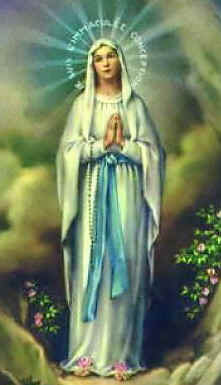 Maybe, when you think of Mary—the way our culture has exalted her, hallowed images of a beautiful skinned woman with long flowing brown hair adorned with a perfectly arranged blue headdress like in the picture come to mind. Or, maybe just the world “blessed?” For all you former Catholics in the room— “Blessed are thou among women and blessed is the fruit of your womb, Jesus. . . .”
But in these remembrances we forget the unusual aspects of Mary’s story.
Mary was the most unlikely of characters to be favored by God. History suggests to us that Mary was not a grown woman, but a young teenager. Mary was not from any special family. Mary was not someone in a position of power, prestige or even honor. She was a woman in a culture that said she had no voice and only mattered when she brought forth sons that brought the family money or power.
But, yet, God was doing a work in her life that was exalting her with this great role to play. She had quite a testimony!
Mary says, “My soul magnifies the Lord, and my spirit rejoices in God my Savior for he has looked with favor on the lowliness of his servant. . . . for the Mighty one has done great things for me.”
God blesses Mary. God calls her out. All I can call this is grace.
As Mary actively waited, received instruction from those sent to encourage her, God’s grace came in simply knowing that God was with her. God was working something out in her life that only God could do.
I had several conversations this week with folks wondering with me about how it is they move through difficult situations in their life. Many of these folks are waiting on life to get better. They’re waiting on life to make more sense. They’re waiting on the feeling that “this is the most wonderful time of the year” that seems to played every hour on those Christmas stations. Yet, in their waiting, they feel stuck. They feel like God has forgotten them. They’re angry with those who are happy, wishing that they could feel the same. They’re looking for the answer to make things finally alright again.
I feel their pain. I’ve been there too. There’re nothing more difficult to be waiting for what is or is not good news. In fact it doesn’t really matter. When we’re waiting on life situations that we think are not favorable, of course we’re upset. When we’re waiting on the good to come, we psyche ourselves out often, talking ourselves into believing that the good we’re preparing for will not come, or come as we hoped it would. Waiting is hard. Really hard. I’ll say it again. Waiting can really, really stink.
But, if we are going to take our cues from Mother Mary this morning about what how we position our lives to wait with God, we know there is work to do. There’s a part for us to play in the ongoing drama of God’s work in the world—there are journeys to make, phone calls to have, emails to send, friends to invite over for dinner. Knowing that as we do what we can do—grace will meet us to do the rest. People will show up to help, distant cousins, old pals, or faithful companions. And, God will open doors—doors that may have had a big fat “NO!” on them only minutes before. God will give us grace to take the next step—even if we have no idea where we are going as we take that step.
Author Anne Lamott, who you know as one of my favorites says this about this kind of life: "Hope begins in the dark, the stubborn hope that if you just show up and try to do the right thing, the dawn will come. You wait and watch and work: you don't give up."
We may be in the darkness now, but the light of gospel is coming. There’s a reason, you know that we light so many candles in worship this time of year. Hope is on its way. Wherever state you find your life in today, let us cling to hope of each other and God’s strange plans as we wait together.
AMEN
Advent 1: Jeremiah 33:14-16
 I’m proud of you for being in church today for the season of busyness is upon us. No longer in the causal days of fall activities, and not yet to the Sunday before Christmas (where everyone seems to feel the call stronger to go to church). Seemingly it feels like a not-so special day. But, it is in this post-Thanksgiving, early December date that the excitement of the Advent season begins, the four Sundays on the liturgical calendar of the church where we stop and prepare ourselves for the coming of Christ. This year, we are approaching Advent together as we “Wait With . . .”
Many of us have the “hurry up” part down. Maybe not the waiting . . .
We know how to get things done.
Many of us braved the crowds this weekend and headed to the malls to get the first or second round of our Christmas shopping completed like Kevin and I did. Oh, what insanity.
Many of us took that climb into the attic or on the top shelf in our garage to get our Christmas decorations down and have our house look like a disaster zone for many hours until it all started to come into order.
And, then some of us timed ourselves to see how many Christmas cards we could write before we knew the responsibilities of life and work got to us again this coming week filling our kitchen tables with stamps, address labels and cards galore. There always seems to be something to do this time of year.
But, wait? That’s what we are talking about today?
This is not just our forte. By nature we are an impatient people. We like to have things OUR way, when WE want it, don’t we?
When will the train come? How long will this grocery line take? How many more miles till we get there? When will my life get better? When will my husband or wife change? When will I get everything out of life that I wished for?
However, my desire for this Advent season both through the Sunday worship services and the Wednesday night worship services that you and I have the ability to redefine what it means for us to wait for Christmas. And this year instead of focusing on the typical Advent words like hope, joy, peace and love—we’re going to stick with what it means to wait with others.
We’ll wait together for Christmas to come as part of our spiritual discipline of worship. We’ll hope to see this waiting period not as wasted time or meaningless time. We’ll hope to see this Advent not as punishment . .. “Can’t it just be Christmas already?” We hope this waiting period becomes an opportunity to feel in our bones the urgency of the season, urgency to position our lives through a posture of waiting to receive the love that is ours to have in the kingdom of Christ.
Today, as we begin, the exhortation scripture leads us to begin with is to wait with the prophets, in particular the prophet, Jeremiah.
Who is Jeremiah?
Jeremiah is known in Biblical history as the weeping prophet, an emotionally charged, unlikely spokesman who was called to ministry about one year after King Josiah of Judah began making his reforms in the temple—a key moment in the history of the nation.
I say an unlikely spokesman because Jeremiah was the least likely kind of guy to expect himself called to God’s service.
If you think throughout scripture, all the great leaders or prophets made excuses to God when they were called, some were too young, some were too old, some said they simply didn’t know how to lead. And the same was true of Jeremiah.
He told the LORD that he did not know how to speak, for he was only a child. But, scripture tells us that all of this changed when the LORD reached out his hand and touched Jeremiah’s mouth reminding him that he put words in his month. There would be no excuses; Jeremiah was equipped for all that was to come.
And spoke Jeremiah did, calling the people of Israel to a life that pleased God.
For the next 40 years he served as God’s spokesman—though when he spoke, as it common with those with spiritual gifts of discernment and prophecy, few listened. But he kept on keeping on.
One chapter prior to our text’s opening for today; we hear the banner statement over and over again throughout the book, saying "the word of the Lord came to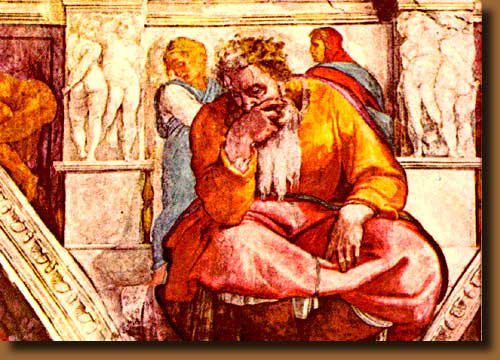 Jeremiah."
And this was the context: corruption of the kings of Judah went from ok to worse after its good king Josiah. God allowed invaders to come in the country. The fall was upon them.
So at this present time, already hundreds of Jerusalem’s residents had been forced by Babylon’s king, Nebuchadnezzar into exile. Soon others would be forced to go as well as Babylon was growing stronger by the day.
We know that it was the 10th year of Zedekiah’s reign, another one of Judah’s kings known for his corruption. Though King Zedekiah had struck a deal with Egypt to hold off Babylon a little bit longer in the previous chapters, thinking he’d provided for himself the security he craved, this too would soon fail.
Above all, it’s a storm of confusion all around as they refused to listen to God. However, the worst had not happened yet, but any person with common sense could see that hardships were even going increase.
But to everyone’s surprise: this is not the time when the weeping prophet wept. Oh, to the contrary, at this seemingly impossible juncture, Jeremiah gives a word of hope.
Look with me again at verse 14:
“The days are surely coming, says the LORD, when I will fulfill the promise I made to the house of Israel and the house of Judah. In those days and at that time I will cause a righteous Branch to spring up for David; and he shall execute justice and righteousness the land.”
It’s a promise. It’s a word of restoration. It’s word of the Lord that focuses their attention on their past and not just present that can have redemptive qualities, but on their future.
Seems strange, though, because the people were in mourning. Grief broke out across the land. They were grieving about what could have been. Grief about what will never be. In particular, this grief had everything to do with the loss of David’s dynasty, the history of this family generation after generations leading the people. They were sad to now be even smaller and less significant than they were before. But, to this grief, Jeremiah says, “Don’t call this a tragedy just quite yet.”
Why? Because a “righteous branch” is going to spring forth from David’s line.
If we read this as and Messiah prophetic text (i.e. pointing our attention to Jesus), we see that the one would later be born in David’s city, Bethlehem with Joseph as his father (from the house and lineage of David), then the prophecy came to be. Of course, it didn’t come as the people expected. It didn’t come in the lifetimes of the people who heard this word first. But it did speak for a God who would go with the people through the rocky places of their journey as individual and as a nation and never leave them without hope.
It is true that some prophetic words are harsh throughout scripture, or seem harsh to our ears, but ultimately HOPE is the real motive behind any true prophet’s message. Prophecy is a loving gift of the spirit enabling us who are walking in the darkness of life to see light at the end of the tunnel.
And our exhortation this morning is to wait with prophets like Jeremiah and all the other prophets of our day and time. To wait with expectant ears around those of us whose giftedness is to hear God’s call and then share it with us. To wait in the coming month in celebration of this righteous branch being born! The fulfillment of the great joy!
We don’t talk a lot about waiting with prophets or even the modern expression of prophecy very much in church because when we simply say the word, prophet, we’re afraid. We’re afraid because of all of the negative experiences we’ve had with folks in our world claiming to know God’s plans, only to have their predictions fall on their face. We’re afraid of the Kool-Aid, literally.
But what a shame this is. For I believe the false prophets among us have destroyed the good reputation of what is most needed in our time, those who are willing to tell us the truth. Those who are willing to look at what seems like a “bad situation” and give us hope, just as Jeremiah did with Israel.
Have you ever experienced a person with prophetic gifts? And by this I mean a person who told you the truth—not just in every day conversation, but truth-telling at a deeper level, truth-telling that cut to the heart of a situation you sought to hide or ignore?
We love to speak ill of prophetic types (as much as we like them) because it is true their role is to tell us what we don’t want to hear. Or simply stated, prophetic types can be annoying. They are really good at cramping our style.
In college I had a friend full of these kinds of gifts, prophetic ones. She was a dear to me, however, I didn’t have thick enough skin for her honesty quiet yet. But I would have much to learn.
One afternoon in the middle of my junior first semester, well into the bulk of my education certification coursework, I sat in our shared apartment with this friend. I was practicing my handwriting for my cursive writing class and next up was cutting out letters for my bulletin board making assignment. And this friend took one look at me and the pile of art supplies around me and said, “You’ve got to get out of that major. You’ve got bigger things to do in the world than displaying good handwriting or pretty bulletin boards.”
It was hard to hear of course—I’d planned my whole life around being a teacher and to drop the major mid-way seemed like career suicide. And not that there is anything wrong with being an elementary teacher, but it wasn’t me.
But, I knew she was right. I needed her to tell me the truth. I needed to get off the couch and think about going to seminary. And you need those people in your life too.
Where would I be today without that friend? I can imagine, you’ve had prophetic voices that have guided you, re-directed you and lovingly told you to listen to God afresh also. And without them, you wouldn’t be here today either.
What a great reminder, then this week of Advent is for us to wait with the prophets among us. To give thanks for Jeremiah, his voice, his passion, his word of hope that we get to see fulfilled on Christmas Eve. And for us, to know that God’s word is alive and well and there are spoke people, given as gifts of grace that help us find our way. Because ultimately what Advent is all about is making more room for God in our lives. And, without prophets we might not know where to start cleaning out the spiritual closets weighing us down.
And, an opportunity to know God is here today—here at this table—ready for us to receive what was broken for us, not just for the sake of being broken, but broken so that God’s light might shine in us and in our dark, dark world. Let us gather and shift our hearts to taste and see that God is good beginning. Let us wait for this prophetic word which is the living bread given for us. Let us eat together in expectation of a God who always gives us hope and never leaves us alone.
AMEN
