 Authority that Speaks for Itself
Matthew 21:23:32
Trust and politicians don't seem to go in the same sentence, do they? John Quiton once said, "Politicians are people who, when they see light at the end of the tunnel, go out and buy some more tunnel."
For even as we spent time this morning in our prayer, praying for peace and wisdom for our elected leaders, often it is our first reaction when we think of those in "authority" over us, is not to respect them. For as Doug Larson, once said, "Instead of giving politicians the keys to the city, it might be better to change the locks" we agree whole heartedly.
Just as one recent public survey poll reported, over 60% (and with the percentages on the rise all the time) don't trust governmental leaders to do what they say tey are going to do, we are a people (and for good reason of course) who have distasteful sentiments of those who claim "authority" in any area over us. And such is also true of those in positions of religious leadership too.
It's no conscience that when I say, preacher, many of you have images come to mind of sex scandals--Tim Haggard the evangelical pastor who could never admit he was gay-- money laundering scandals, Jimmy Swaggered and his trail of tears, or even of crazy cult scandals--images of Jim Jones and the deadly kool-aid which are all engrained in our memory. All this to say, we are a distrustful people, after all the evil that has been done in the name of "God told me to do this."
But, this is what I really want you to hear today: I think God wants us all of us to go home sell everything we have as quickly as possible and return to the church in 3 days and give all the money to me so that I can grow our church into a great empire . . .
(This is where you are supposed to say, "Yeah right. No way, Pastor and laugh me out of the sanctuary this morning)
But, even as what I just said was completely a joke, I think our issues with those claiming absolute authority over us, is as much about our shared experiences of watching the corruption of power manifest before our eyes as it is our own sense of feeling threatened by those who seem to suggest special knowledge over us. We are all Americans after all-- the land where everyone's voice and vote is supposed to be heard as much as anyone else. In this church, we are Baptists after all-- where we are firm believers in the priesthood of all-- that I have no more of a direct line to pray and hear from God as you do. Simply put, authority is not one of our favorite words.
When we begin to look at our Gospel reading for this morning, we encounter a group of the religious establishment who was both skeptical and threatened by the authority Jesus was seeming to stake his ministry on. For in this religiously saturated culture, much like ours, the chief priests and the elders had not seen anything like the clarity of thought and boldness of action in this man who called himself Jesus.
The story goes that Jesus has just made the religious leaders of the day really mad. On this third and final visit to Jerusalem, Jesus not only stirs up the crowd by his triumphant entry, as palm branches were waved over the shouts of "Hosanna, hosanna, blessed is he who comes in the name of the Lord" but Jesus did the unthinkable. He went into their more sacred of sacred places, the temple and placed judgment on a common practice-- the buying and selling of goods in the temple courts.
It wasn't just the act of turning over the tables in the temple courts that upset the religious leaders so much-- it was the fact that Jesus had the guts to do this with such unashamed authority. Jesus dared to touch ancient Judaism's sacred cow if you will, order of religious practice calling the temple, HIS Father's house.
And this is where the story before us in our text for today begins the narration. Look with me at verse 23: "When Jesus entered the temple, the chief priests and the elders of the people came to him as he was teaching, and said, 'By what authority are you doing these things, and who gave you this authority?"
I guess, in a roundabout way, this was a nicest question they could ask Jesus in public and keep up appearances. I bet they really wanted to say something to Jesus like, "Who in the hell do you think you are coming in here and trying to make us look bad?"
But, alas, they question Jesus' authority to speak and act as he does for the sheer reason that they want to get into a debate with him and make him look bad. They want to know the name of his teacher, basically because as one commentator writes, "If you can identify someone's teacher, then you can better grasp what they 're about. [Or,] more to the point, they are prepared to counter any and all claims to human authority
with their own authority."
But, Jesus, being the smart guy that he was does not find himself trapped in this series of questionings. No, Jesus directs the teachers of the law by asking his own counter question in verse 25: "Did the baptism of John come from heaven, or was it of human origin?"
We get to listen in on the internal monologue of the religious leaders and learn that they didn't want to pick sides.
As we hear the thoughts of these folks, we learn that they were the definition of what we like to speak of in modern times as political correctness.
They knew they couldn't say that John the Baptist, the precursor to Jesus, had authority from heaven-- because it would bring into question why John's ministry wasn't supported by them. And, they also knew they couldn't say that John the Baptist's authority came from himself--- because they knew that there were many John fans in the gathered audience.
So, Jesus gets them to vocalize what was the TRUTH in their hearts: they didn't want to stake a claim on Jesus.
While you and I might find the details of this passage confusing-- I have to admit that I really admire the gutsiness of Jesus to speak truth to those in power and to bring out the reality of what was really going on in the hearts and minds of those gathered around him. Jesus was forcing the religious leaders to say, "This I believe" (though we realize that this is something that they will not do).
We all understand how difficult this is, right?
To begin a conversation with "This I believe" is often a top our fear list-- because if we say we know something for sure, even if we say it in
passing, it's something that others can hold us accountable to.
In particular, more than saying we believe gravity holds us to the earth or the sun will rise and set each day, it's even more frightening for some of us to begin a conversation with "I believe in Jesus, as God's Son" because we know if we do, we could seriously offend others. We might make a fool of ourselves. We might even find ourselves with great disappointment in our hands after Jesus doesn't act in our lives as we hope
he might.
On Wednesday Night, those of us gathered at the Amazing Grace book study, we ventured into this conversation topic of what it means to say that we believe in Jesus.
It is an easy temptation, we noted to not want to fully commit our lives to Jesus with the excuse of "I'm not perfect enough yet" or "I don't know
enough yet." We think because we can't say with our mouths "I believe in Jesus" and talk intelligently about it, then we aren't worthy enough to
be a Christian.
With the class, I relayed the story of one of my first pastoral visits I made during my tenure as pastor at Washington Plaza. Grandison Jones made an appointment to meet with me, wanting to get to know me better and talk about one of my latest sermons.
When I asked him to tell me about his church and religious background, he said I needed to know about all of the years he spent in church choirs, especially in the Episcopal church in his early years.
As he described this experience of how much he enjoyed singing and how moving choir music was for his soul, he told me there was a turning point for him that changed the direction of his spiritual life. He was singing one day, he said with the choir, and after the sermon, there came a point, as it was done every Sunday when the congregation said together the Apostle's Creed.
Saying this creed or a statement of faith that generations of Christians had claimed as a summary statement of belief, was something that Grandison noted that he had recited every week previously, but this particular week he thought to himself, "Grandison Jones, you don't believe a word of that you are saying, so why don't you stop just going through the motions of repeating it."
I think this was one of the first stories that Grandison related to me-- may he rest in peace now-- because he wanted to shock me a little and see how I reacted to him, to see if he would still be welcome in the church even with all of his questions.
But if you had the privilege of knowing Grandison, you know that a man who was here with a smile on his face, beating even Ernie and Dave to church on many Sundays (which is hard to do, you know), was a person who wasn't far from faith. He built by hand the pulpit on which I preach
from this morning and lived out many acts of service that were rarely seen and not done for the purpose of showing off or somehow getting ahead in any way among the ranks of church leadership. But yet even up until the days of his death, it was hard for him to say with his words, "I believe in Jesus." In fact, I don't ever remembering hearing him saying this at all.
Yet, in this struggle to understand what it means to stake a claim of belief on Jesus-- asking ourselves do we have to make faith statements or do we have to show faith in our actions-- Jesus informs our thinking here with a parable.
"A man had two sons. He went to the first and said, 'Son go and work in the
vineyard today.' He answered, 'I will not'; but later he changed his mind and
went. The father went to the second [son] and the said the same; and he
answered, 'I go, sir.'; but he did not go. Which of the two did the will of his
father? They said, 'the first."
In this story, we find an appreciation by Jesus of the struggle of belief-- while the first son says in the beginning, "No I won't go" in the end this
is the son who changes his mind and does as his father asks while the second son speaks loudly at first-- sure I'll go but whose actions don't follow
through.
From this parable I gather that authority, according to Jesus rests in actions. Why did he want people to follow him? And for his future disciples, how would he want them to make known his authority?
This is not to say that Jesus didn't care about words and the confessions they can make, but words, he knew would never be the whole story. For Jesus, his a mission that was never about proving himself through particular words or wielding political power or even being able to pass a test which said he had the proper knowledge of the Torah. It was always about simply being who he was, for the authority on which his life's
work rested would simply speak for itself.
So, today, I ask you not what do you believe, but who are you? Whose are you? On what authority are you resting your life? What do our actions show about the fruits of the spirit-- love, joy, peace, patience, kindness, goodness and so on appearing the world ? What do our actions show about what we really believe in our hearts, even if can't yet say the words aloud? Didn't St. Francis of Assisi once say, "Preach the gospel at all times and if necessary use words?"
I am not saying that words of faith aren't important. I'm not saying that professing "Jesus as Lord" is not something that we should learn to
say together. I'm not saying that we should throw out altogether the historic words of the Creeds (as we said together earlier in the service), that our forefathers and mothers in the faith have shared together.
But, what I am saying today is let us shy away from Jesus because we can't say yet what we think are all the "right words." Let us affirm together the journey that each of us are now. Let us commit together anew to allow the life and work of Jesus to soak into your daily life with no checklist of what this journey looks through the ups and down and twists and turns. Knowing that as we stay on the journey, it becomes just a little easier
every step, every day, every week, every year to follow Jesus both in actions and words.
So, let us join our voices and sing, I have decided to follow Jesus-- such is something I could imagine that Grandison, even Grandison would cheer us on in singing this day-- as he's conversing with Jesus as we speak, asking him now all his questions.
Let us keep following this day.
AMEN
What does it look like to move toward hope?
I have to thank our music director, Ken for this quote that is now one of my favorites, "When they tell you that when God closes a door, he always opens a window, they don't tell you that it is hell in the hallway to get there."
In the same manner, the movie Shawshank Redeemption is one of my favorites. I tune in every time it is endless played on one of those cable networks even though I'm seen it 100+ times now. I watch it, again and again because as I do, new insights emerge.
Recently, while watching I was mesmerized by the scene shown for you below. It's near the end of the movie and contains one of the most hopeful scenes within this film. But I had never noticed before how long and how gross and horrifying really it was for Andy to get to the moment of freedom. I guess, previously, I'd just been so caught up in the emotions of his successful escape, that I forgot the journey it took him to get there (which is often what we do in real life isn't it?). But, wow, what determination, patience and courage Andy showed and freedom finally came. Finally.
[youtube=http://www.youtube.com/watch?v=SheaMMd8H5g]
Though we like to talk a lot in religious settings, about this word, hope with smiles on our faces, I have to think that it is messier than we think. Fear, doubt, abadonment are all words that are cousins of hope as much as faith and freedom are.
Sometimes living with hope means crawling through tunnels of uncertainty with the odor of the past making us want to throw up. Sometimes, we wonder where in the world hope lives, for it doesn't live at our address. Sometimes, we think our moment of freedom will never come for we've been chipping away at the same old same old for so long. Sometimes, as in the case with Andy, hope means literally making your way through 5 football fields worth of shit, the real stuff.
But, just as Andy modeled in this film, we have to keep crawling with hope that when we get to the other side, whenever and wherever this might be that something better will await us. Or, best stated by this film, "You better get busy living or get busy dying." This is the choice that moving in hope offers us.
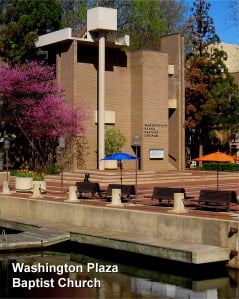 It has been a while since I've expressed my love in a space like this for the congregation where I serve-- something I know that few pastors can actually do honestly about their parishes. But, I can and I really want to do this today.
Why? Again, recently, I was attending (sigh) a denominational meeting (I know I tend to rant about these a lot) and when I do, I always walk away from such gatherings with a newly empowering awareness of how lucky I am to be pastoring my particular congregation. Who would want to pastor the same old, same old kind of church? Not me. Though the challenges can seem overwhelming at times as we draw a population of members who often are in transition in many aspects of our lives, I feel that together we are paving a new way doing church.
Washington Plaza is not perfect. And, of course, there is a long road of growth needed ahead of us, but there is a depth of character and authenticity here that naturally flows out of how cool these people are. And, I just get to come alongside them for the ride. . .
So, why do I love my church?
1. They love me. They are so kind to me. They treat me fairly. There isn't a week that goes by when I'm not hugged and loved on by a different person. I know they do thoughtful things for me not because I just got here and they are pretending still (because this would have long ago worn off), but because I believe this congregation and I understand each other and genuinely like each other. They treat me the way they would want to be treated. It is a good thing, a very good thing.
2. Some of the saints of God attend here. We have members who go out of their way on a weekly basis to serve in outreach ministries for the sheer sake of calling. They teach English as a second language classes. They give high school kids rides to work after morning worship, even when it means going out of their way. They collect can goods and take them to Reston Interfaith's emergency food pantry even when they are in their 80s and shouldn't be lifting things. They sit with our terminally ill members in the hospital. They give money to missions and bring food to share with our weekly community meals, even when they don't have it in their pockets to give.
3. There isn't a conversation, it seems, that they are scared of having. On this Sunday morning for example, we participated in a call to prayer for violence against transgendered persons in the DC metro area. Did anyone looked shocked? No, just nods on their faces of support saying back at me without these words, "Of course, we'll pray."
4. They are willing to try new things. Even when I have crazy idea like "let's have church in the Plaza room" as we did this past July, everyone said, "Ok, we'll try it." Not all new ideas stand the test of time, of course, but I think any reasonable idea is worth trying at least once. I see an attitude of flexibility embedded in the spirit of the people, and it makes my job so much easier.
5. They accept anybody. Really, they do, especially those who stick around and want to commit themselves to the life of the community. I never have to worry about bringing friends and folks not being nice to them. Sometimes I stand at the door on Sunday and stand alone for long periods of time because everyone is so busy talking to each other. It's so good to see that I don't mind being there alone.
I am proud to be the pastor of Washington Plaza Baptist Church for these reasons and many more-- such is my decree this Monday morning.
 When most preachers sit with Matthew 20:1-16, as was the gospel reading for this morning, or at least as I was taught this passage as a child, it all went back to getting into heaven on practical terms. All you had to do, I learned, was to pray a salvation prayer and you were in the "I'm Christian and going to heaven club." For, even if you prayed the sinners prayer on your death-bed on the last hour or if you prayed the prayer as young child, it was all the same to God. God was ready to receive you no matter when you came home.
And, while this is all well and good, I think such an interpretation can easily lead to shallow faith. I think the Christian life is more than a call to get saved, and so I was eager to find other gems in this text. And, the theme of "grace" kept coming back to me.
I had questions like: how might this passage want to teach us about something altogether different about life in God's kingdom? How might grace come in and in its unhurried way mess everything we've come to know about "The American Dream?" Might the idea of the "American Dream" have to die if we are to live in the kingdom of heaven?
What most caught my attention about this text is that at the end of the day, each worker is given the same wage, a denarius, which was known at the time as a fair wage for what each worker needed to live on. More than minimum wage, a denarius was a living wage. It's a passage that calls our attention to justice: in the household of God, we can't mistreat those who are "late to the game" so that we get ahead. And we can't take more than we need if we want others to simply live.
But whether you want to apply this passage to economics (which seems appropriate to do these days as our national leaders debate cutting spending to help the poor in an effort to give the rich more) or not the message of grace is all the same.
Grace in God's eyes is giving us exactly what we need, even when we didn't work hard to get it, earn it, or deserve it and especially when we didn't work hard to get it, earn it, or deserve it. For, the message of grace works both ways-- to those of us who began laboring in the fields in the morning and those who got to the vineyard late in the afternoon. In grace, God asks both of us to lift up our heads and receive our provisions
for each day, trusting that it will be enough.
The statements that you and I often make like: "Look at me, I'm so good: I did this today. I earned my promotion. I signed up on E-harmony and through my hard work of submitting to the process I found Mrs. Right. After studying for three years and sacrificing the needs of my family, I earned my master's degree" doesn't seem to line up at all with the gospel's idea of grace.
I don't know if you are like me, but when I think of grace, I often think of examples of the "big" stuff in life. Grace, as being in the right place at the right time to meet the right someone. Grace, as not getting hurt in a car accident when I could have been killed. Grace, as deserving to get a ticket for speeding down I-66 but the cop pulling over the guy behind me.
Grace exists then as the classic definition of unmerited favor, but often goes back to "all about me." What about those people who don't show up at the right place at the right time and meet that special someone? About those persons who have almost identical car accidents to us and are tragically killed instead of sparred? What about the unlucky guy who get the speeding ticket?
But there is something about this passage that helps us get away from grace as what we most like to view it as-- getting saved from unfavorable results that we would not want, to understanding grace as being given ENOUGH for what we need along with everyone else.
If you think about it, there is a lot of energy you and I spend hoping we've done just the right things, hoping to have enough money for retirement, hoping that our contributions to the world are enough to be agreeable with the man upstairs when we get upstairs, but what centered more of our energy in grace? What would our church look like if grace came first? How might we as long-term members of our faith communities respond differently to newcomers who make no promises of sticking around for a long time, giving a tithe or volunteering to teach something? How might we love differently?
But the thing is about grace is that it truly frees us. It frees us from rushing to and from what is next. It frees us from feeling guilty all the time because of our bad choices. It frees us from feeling anxious about our good choices hoping they got us enough heavenly brownie points. And, I think as a church, grace might free us to love more extravagantly just as God has loved us-- loving others expecting nothing in return other than the love to simply be received.
One pastor puts it like this, "When we are working for a reward (to get up the ladder), we are always wondering if we are good enough, looking for clues to see if God accepts us, looking for human approval and praise when we can't hear from God. We are perpetually trapped. . . . Why climb the stairway to heaven when God takes us right to the top floor in an elevator?"
As an aside, I know we, at Washington Plaza, don't have that actual elevator at the church that we are all dreaming about and might not for a while-- grace is in no hurry on this project it seems-- but I do know we serve a God who has promised and will in abundant grace give us as individuals and as a congregation ENOUGH of what we need for this day.
So, if we are willing to be on such a journey, there is one thing I know for sure, and that is, that the ladders we've constructed and seemingly need from God to feel secure are going to have to fall away. Instead, the invitation is to simply hold out our hands and receive while we stand shoulder to shoulder to those in whom we least expect are receiving just the same.
Now doesn't this sound different now: "Amazing grace, how sweet, the sound that saved a wretch like me . . .?"
 Back to the Basics Series: Beginning with Forgiveness
Matthew 18:21-35
Though we all seem to talk good talk these days about honesty, authenticity, and the
like, but I believe rarely any of us say what we actually think—at least aloud. This is particularly true when it comes to the practice of prayer. When we pray, we think we have to sound a certain way, using all of the right church approved words or we believe that God won’t like us very much. When I begin to think like this, often it is a good tool for me to pull out one of my favorite books—a collection of letters written by children to God. Here are some of my favorite ones:
Dear God,
Thank you for my baby brother, but what I prayed for was a puppy.
Joyce
Dear God,
If we come back as something in another life, please don't let me be Jennifer Horton, because I hate her.
Denise
Dear God,
Maybe Cain and Abel would not kill each other so much if they had their own rooms. It works with my brother.
Larry
Dear God,
I bet it is very hard for you to love all the people in the world. There are only four people in our family and I can never do it.
Nan
And in the sentiment of Nan’s letter to God, I can imagine, almost all of you feel similarly, whether these people who are hard to love are in your household, in your larger extended family, at your workplace or live on your street. Putting nice church talk aside, we ALL have someone in our lives who we wish was no there—those who have caused us unbearable pain, those who have taken from us what is not theirs, and those who we say un-choice words about behind their back. (This is where I need to see nodding heads so that I know you are with me).
And, though our gospel lesson for this morning opens up with a seemingly ridiculous
question from the disciple Peter: “Lord, if another member of the church sins against me, how often should I forgive? As many as seven times?” We have to admit that we are right there with him. For the most practical among us, it is not a crazy question after all. We would ask it too.
As much as many of us want to do the right thing and say we are a forgiving people, when it comes right down to the act of it, we all have our limits.
We have our limits with our child who asks us for money and then wastes it all forgetting to feed our grandchildren.
We have our limits with our sibling who promises to show up at important life events and simply forgets to even call to say that they aren’t coming.
We have our limits with our spouse who staggers home late after drinking too much,
promising that tomorrow they’ll give up the bottle, just as they did the night before.
We have our limits with our bosses who pile on us extra work, promising we’ll get a promotion if we finish it fast, only to give the promotion again to someone else. We have our limits. Forgiveness is more than just saying the words.
We too want to ask Jesus, how many times do we have to forgive? Give us a number of times, Jesus, because if you do, we can try with all of our might to do what pleases you IF we have that magic number in the back of our minds of when enough will be enough.
To such a question, Jesus answers with what appears at the surface to be an equally ridiculous reply. Look with me at verse 22. “Not seven times, but I tell you, seventy-seven times.”
What Jesus? You have to be kidding? I am going to die if I have to forgive, you know who, seventy-seven times. That is simply IMPOSSIBLE.
And to this impossible answer, Jesus tells a story, in teaching mode as always; he takes us to a scene called what the kingdom of heaven is like. There was a king who found he had a slave who owed him money. Lots of money that this slave did not have to pay back the king—the amount owed was 10,000 talents. If we translate this amount to modern terms, such an amount of talents would be 150,000 years worth of income. It would be as if a penniless recent immigrant was summed into Bill Gates’ office and
demanded to pay 5% of Mr. Gates’ net worth as punishment for sneaking into the country illegally. Impossible right? So the compassionate king in this case says to the slave who owes him money, “Your debts are forgiven.”
The twist of the story comes, because this slave who has been given hugest most amazing gift of his life, is not found out rejoicing in a spirit of thanksgiving for his good fortune, but instead, he uses the new-found “power” of freedom he has to terrorize his fellow slave. This fellow slave is said to have owed him money—a 100 denariis—which amounts to around 100 days of wages for the average worker. Sure, not a small debt, but like a grain of sand in comparison to the debt that was forgiven by the king of the first slave.
As the story concludes, the king finds out about the ungrateful slaves’ actions and lectures and punishes him for his lack of forgiveness. We reach the need of the parable and the lesson seems to be clearly stated with words that echo back to the words of the Lord’s Prayer that we all said together a few moments ago. Forgive us our trespasses as we forgive those who trespass against us. Or simply stated, forgive as the Lord forgave
you.
Such a teaching really itches at us doesn’t it because it simply destroys the notions that we usually cling too about personal relationship with God or the idea that if we are right with God, how we are with others simply doesn’t matter that much.
It also itches at us because it is one of the moments when Jesus seems to be as straightforward as he possibly can be. Now is not the time for complex thinking, digging in the text to find a loophole of interpretation or even finding some veiled meaning. No, simply forgiveness is essential to the life of faith. There is no ifs, and, or but to get around it. If we are going to follow Jesus, then we are all going to have to learn about forgiving those who disappoint us the most.
I think a lot of us are scared of forgiveness because of the lingering ill effects of the hurt that has been caused us by those who have hurt us. We hold on to pain of what has been done or not done because we somehow think that this gives us back the power that has been taken from us. We fear that if we forgive, it is our way of saying what was done to us was ok. We fear more being taken from us in the act of forgiveness than the damage that has already been done.
But, in thinking about it like this, I feel we have forgiveness all wrong. Forgiveness is not about saying what wrong has been done was not just that: wrong. It is not about ignoring the damage that has been done. Forgiveness is not about pretending nothing was broken as if we’ve all turned into Pollyannas magically. Forgiveness IS however, a call to ensure the future is not the past. Forgiveness is about the hope that the present can be different. Forgiveness is about the bondage of hate, evil and discord being broken that would seek to destroy us if we refuse the healing of this practice in our life.
One of my favorite forgiveness heroes of all times is Corrie Ten Boom. I grew up reading over and over again her story in her memoir, Hiding Place which recounted her Christian journey of hiding Jews in her home during World War II in Holland. Along with her sister Betsy and father, Corrie was sent to a concentration camp yet was the only one who survived.
After being released and trying to make sense of her life, she knew she would need to forgive those who beat, tortured and even killed the two people whom she loved in her life the most. Her message of hope and survival gave Corrie many opportunities to travel and tell her story. In an Guideposts article, she recounts the following experience while at one of these speaking engagements:
“It was in a church in Munich that I saw him—a balding, heavyset man in a gray overcoat, a brown felt hat clutched between his hands. People were filing out of the basement room where I had just spoken, moving along the rows of wooden chairs to the door at the rear. It was 1947 and I had come from Holland to defeated Germany with the message that God forgives.
“And that’s when I saw him, working his way forward against the others. One moment I saw the overcoat and the brown hat; the next, a blue uniform and a visored cap with its skull and crossbones. It came back with a rush: the huge room with its harsh overhead lights; the pathetic pile of dresses and shoes in the center of the floor; the shame of walking naked past this man. I could see my sister’s frail form ahead of me, ribs sharp beneath the parchment skin. Betsie, how thin you were!
[Betsie and I had been arrested for concealing Jews in our home during the Nazi occupation of Holland; this man had been a guard at Ravensbruck concentration camp where we were sent.]
“Now he was in front of me, hand thrust out: ‘A fine message, Fräulein! How good it is to know that, as you say, all our sins are at the bottom of the sea!’
“And I, who had spoken so glibly of forgiveness, fumbled in my pocketbook rather than take that hand. He would not remember me, of course—how could he remember one prisoner among those thousands of women?
“But I remembered him and the leather crop swinging from his belt. I was face-to-face with one of my captors and my blood seemed to freeze.
“‘You mentioned Ravensbruck in your talk,’ he was saying, ‘I was a guard there.’ No, he did not remember me.
“‘But since that time,’ he went on, ‘I have become a Christian. I know that God has forgiven me for the cruel things I did there, but I would like to hear it from your lips as well. Fräulein,’ again the hand came out—’will you forgive me?’
“And I stood there—I whose sins had again and again to be forgiven—and could not forgive. Betsie had died in that place—could he erase her slow terrible death simply for the asking?
“It could not have been many seconds that he stood there—hand held out—but to me it seemed hours as I wrestled with the most difficult thing I had ever had to do.
“For I had to do it—I knew that. The message that God forgives has a prior condition: that we forgive those who have injured us. ‘If you do not forgive men their trespasses,’ Jesus says, ‘neither will your Father in heaven forgive your trespasses.’
“I knew it not only as a commandment of God, but as a daily experience. Since the end of the war I had had a home in Holland for victims of Nazi brutality. Those who were able to forgive their former enemies were able also to return to the outside world and rebuild their lives, no matter what the physical scars. Those who nursed their bitterness remained invalids. It was as simple and as horrible as that.
“And still I stood there with the coldness clutching my heart. But forgiveness is not an emotion—I knew that too. Forgiveness is an act of the will, and the will can function regardless of the temperature of the heart. ‘… Help!’ I prayed silently. ‘I can lift my hand. I can do that much. You supply the feeling.’
“And so woodenly, mechanically, I thrust my hand into the one stretched out to me. And as I did, an incredible thing took place. The current started in my shoulder, raced down my arm, sprang into our joined hands. And then this healing warmth seemed to flood my whole being, bringing tears to my eyes.
“‘I forgive you, brother!’ I cried. ‘With all my heart!’
“For a long moment we grasped each other’s hands, the former guard and the former prisoner. I had never known God’s love so intensely, as I did then”[i]
On this day, this important day in our history as citizens of America, when all the news and secular events of this day, speak of wars that have been fought in the name of ills done, statements of solitary with those who are trying retributive justice, I have to cling to Jesus’ words of forgiveness—there can be no end to our paths of forgiveness no matter what act of terror is done to us a nation, no matter what act of evil is done to us personally, no matter what happens. No matter what.
For just as Corrie Ten Boom experienced—we’d all say she had every right not to forgive the solider who lorded over her in the concentration camp—but yet she knew that this was what she must do. Not to say that what was done to her was ok, but to forgive so to be a part of the new and hopeful future that God could build out of the broken pieces of her life and this guards life too.
Sure, it’s scary and vulnerable. Sure, it’s not normal and goes against every self-protecting fiber we have in our bodies not to have a forgiveness quota just as Peter asked for. Sure, even if we forgive we still can’t control things. For, we might not ever have a restorative relationship with the person who has wronged us the most as they continue to make poor choices for their lives.
But, in forgiveness, in the miracle of it all, we find God. We find God’s love for us as we are given a new place to stand on even as all has been lost around us. In forgiveness, we find peace for ourselves.
So, who do you need to forgive today? Let’s get to it.
AMEN
[i]
“I’m Still Learning to Forgive” Guideposts Magazine. Guideposts
Associates, Inc., Carmel, New York, 1972.
It seems right on the eve of 9/11 to begin doing some thinking about forgiveness. Where are we as a nation? Ten years later as a country, have we forgiven our enemies or are we still fixated on making wrongs right? Are we any more free than we were ten years ago? Or are we in bondage to fear, hate and terror?
Watch any 9/11 news program or look at our defense budget, and you will have your answer: there is much work of forgiveness yet to be done.
Tomorrow at Washington Plaza, we'll be doing some conversing with the gospel lectionary for the day taken from Matthew 18: 21-35. It's a passage that calls into question our normal human response to being wronged: retribution. Instead Jesus invites us into a way of life where we simply have no interest in keeping score.
One of my favorite teachers on the topic of forgiveness is Bishop Desmund Tutu. Coming from a scenario in his homeland of South Africa where he had every "right" to hate those who oppressed him and his fellow black citizens, Bishop Tutu choose a different way. He chose to forgive so that the pain of the past did not destroy what could be his future.
Watch this short clip and I look forward to seeing many of you tomorrow.
[youtube=http://www.youtube.com/watch?v=raG6eIL-LM0]
 When I've been around denominational meetings and big picture think-tank type settings lately, I've left such gatherings sad more than anything. Sad not because the food was bad or the company was boring or even because I'd rather be somewhere else, but because it seemed the church (universal) is more divided than ever, focused on things that don't seem to matter to anyone other than those who are on the inside, and focused more on saving traditions than fulfilling its mission.
It's painful to be a part of and observe and I'm usually not one to bring such a topic up because I like to focus on what is working not what is failing. Yet, the truth remains: there's no mistake that the mainline church is in transition, if you want to use positive language, and dying if you want to be negative.
In my tradition, the Baptist church, attention and participation in associational meetings is down, especially by anyone under 65. (It's hard enough to get people to come and participate in a local church activity much less an associational event). No one really cares, as much as they did back in 1950, and often those with the time to attend programing meetings reflect the perspective of a generation long past.
I know that such a statement is nothing revolutionary to those of us who have committed our lives to the church and care about it in vocational and personal ways: we experience this tension every Sunday. I know such a statement is what best-seller books in the world of Christian publishing are all about. Leaders who can articulate a clear vision of what the future might hold or how to spin the situation in hopeful ways are authors that we all know about: Brian McLaren, Diana Butler Bass, Adam Hamilton, to just name a few.
But, as a friend of mine who doesn't attend my church, but occasionally attends hers, sat in my living room today and said to me: "You know attending church is really old news. It's just not something people think of doing first on Sundays anymore" I actually agreed with her.
Because this is true, we, as church leaders need to pay attention. We need to stop spinning our wheels on denominational reports that just file data in some tall office building somewhere, Bible studies that don't speak to the questions where most are, and worship services that don't speak a fresh word of God every time they begin. (If we refuse to change, I really wonder why some of our churches wouldn't be better off closing their doors and giving the money they make from selling their property to a good cause rather than just doing business as usual).
To begin a discussion like this is also dangerous, I know, because it assumes I have answers as to what is next; while I'm the first to admit, I'm still trying to figure things out myself.
But, what I do know is that I simply am not interested in activities that take up my time anymore that are based on expectations of keeping the same old conversations going.
Conversations like supporting women in ministry-- we are here, we are as good at our jobs as our male colleagues, and it really shouldn't be an issue anymore.
Conversations like can gay and lesbian members be welcomed in the church-- yes, they can, churches like Washington Plaza say, come home and worship with us any Sunday at 11 am.
Conversations like why do young people not like to come to our church-- they'll come if you invite them regardless of their marital or the childbearing status and seek to meet their needs the same as you would a middle-aged parent with children or a shut-in.
Conversations like why are ministers leaving the church-- they are leaving the church, especially, the young ones, because they are frustrated with having to live out their spirituality in dead communities when they can find the non-stifling presence of the Spirit of God alive and well outside of the church's four walls.
I love to be a part of imaginative conversations with hard-working, passionate leaders who take their faith seriously and who are willing to see the church as a relevant place of community and service-- not just another institution to maintain. I love to try new ideas in my local ministry context, even if they aren't approved or supported by my denominational offices. I'm loving trying to figure out how to be a pastor in a unique community in Reston where there is absolutely NO WAY that the same old, same old would ever work.
Want to keep talking about these things? Know you have a conversation partner with this pastor. My hope for the next year is to continue to meet more of you out there who are thinking similar things with the hope that something new is coming soon and its an exciting time to be a part of ushering it in!
Sweet baby boy, I will think of you every Halloween when I pass out candy to the trick-or-treaters, wondering what kind of candy your favorite would be. I will think of you every Thanksgiving, setting out a place for you, wondering what type of food would have been your favorite. I will think of you every Christmas morning as your older brother comes bouncing down the stairs, with eager eyes to see what Santa brought him. I will wonder which gifts you would have gotten and what joy it would have brought to your face too . . .
Such were the words shared by a grief striken mother last night over the her deceased son who lived a grand total of 21 days. This child born normally at 38 weeks soon developed a serious heart condition in his second week of life which overtook the strong fighter in him, one week later. This mom who took her newborn to a well-baby check-up, believing all was well, witnessed her child never coming home after this. In the hospital, the doctors did the best he could, but nothing more could be done. And, in those moments of this child taking his last breath when he should have been at home, crying, eating and sleeping, a parents' worst nightmare came true.
 For the mourners who gathered at the funeral home, the sadness was so thick it seemed to suffocate ever attempt of breathe in the room. On the altar, in a "Moses basket" laid a little boy with his eyes shut, so sweet looking that you could have thought he was just napping. But this was an eternal kind of nap.
I served as the pastor at this event, even though I'd never met his parents and the three-year old brother until a couple of hours before the service began. I came into this situation as a volunteer pastor through a relationship I have with a local funeral home to provide spiritual care to those who do not have a formal church home, but want a religious service.
Countless pastors, I know, don't enjoy or offer to do services like this, but it was a choice I made when I first began full-time ministry to at least try it. It was a great way, at first, to gain experience in one of the most important rituals of pastoral life and to meet a community need. But, the more I've done these type of services, the more I've found doing such funerals as an essential part of my job. Unexpectant deaths are when pastors are needed the most, right? I am so glad that the church which employs me full-time makes allowances in my schedule to have this kind of ministry.
As I walked in the room, I thought I was strong enough to handle what I would find, especially with the natural distance already between us, but I was wrong. The baby on the altar wrapped in a brand new blue polka dot receiving blanket surrounded by baby-blue stuffed animals and teething rings, sought to do me in too.
Even before the mother and father gave their sorrow filled tribute to their son that they'd barely had the chance to get to know, I could only think of how devastating such a loss would be for weeks, months, and years to come. Everything this family had come to know and trust about birth, life and hope was shattered. Why would a loving God allow such a thing to happen? Why must this family suffer so?
As the representative of God in the room, I really didn't want to speak, for knew I was in the midst of so many skeptics. I was in the mist of so many (including myself for that matter) who wanted to shake a fist at God and say, "Why?" The more I thought of it, I'd almost rather pass out blankets and lead the gathered community of family and friends in a wailing session. Such only seemed appropriate.
But, in my professional calling, I found words to say, "Jesus says, 'I am the resurrection and the life. I am the Alpha and the Omega, the first and the life, the one who wipes every tear from every eye and makes all things new."
And in the hours since the service completed, I can't seem to get out of my mind the images of that sweet baby boy in that dream crushing basket, and his energetic toddler brother, running around the funeral home, unaware really that this story as a human being had been forever altered, and this tear-stained mother's dress that she never intended to wear on such a day that she would never want to wear again.
I have to pray for this family because only a prayer would seem to do. My prayer is for the survival of hope-- hope that can out weight the darkest of days, the loneliness of nights, and the most discouraging of afternoons when these two parents feel they have nothing more to life for. I pray for this older brother who will soon be asking questions as to where the baby is. I pray for this family's close family and friends who will play a significant role in their care in the months going forward. I would ask you to pray for them too as we all say together, "Lord, have mercy."
 Back to the Basics Series: The Community of Communion
Matthew 18:15-20
If there is anything that remains constant in the ever-changing world of publishing, it is that Americans will buy a book if they think it will help them be better at doing something. Though, maybe, you are like me and browse the “self-help” or “non-fiction” aisle at Barnes and Noble every now and then thinking to yourself now that’s not really rocket science, I could have written that! Men are from Mars and Women are from Venus seems to be a title any of us could have come up with! (Because we already knew this, right?)
Ultimately, we are a people who like finding a life script which tells us exactly what we are to do. Such is why books like The 17 Day Diet, The Wealth Cure, and The 4-Hour Body are currently on the New York Times Best Seller list. Achieving my financial goals, all while spending 17 days to achieve the body I want, spending only 4-hours a week doing it, sounds great to me, doesn’t it to you? Using one’s own brain and/or practical sense is highly over-rated, isn’t it? Just give me some answers in plain speech.
In the same way, when many faith seeking Christians read our text for this morning, which outlines a script, a plan if you will for how to deal with community relations when conflicts emerge, they jump up and down and say in delight, “Finally Jesus tells us exactly what to do! It’s the script we’ve been hoping for! So let's get to it!"
And the script goes something like this: when there’s a conflict between two members of a church—presumably because someone “sinned” or is at fault for making a mistake of judgment against another, it is the job of the person who has been “wronged” to go and point out the error of ways to the other.
First, this should be done privately. The hope is that the sinning person will listen to the person who is calling them out, and so all will be well.
But, second, if this doesn’t work out, then, the wronged person is to gather support with two or three other witnesses, so to go back and confront the sinner again. And, then if the person refuses to listen to this crowd, the entire church community should be notified of the wrong and if the offender refuses to confess their sin to even the church, it’s the ultimate insult.
Verse 17 writes, “Let such a one be to you as a Gentile and a tax collector.” I.e. you are simply screwed. As Jesus was speaking to an entirely Jewish audience, he compares the unrepentant sinner to the worst type of person that a member of the crowd could think of—thus saying to them, you don’t want to be that person, so make up quickly!
Seems simple enough, but what happens when this comes to play in actual practice?
Pastor Deanna Langle, a Lutheran clergy woman, tells the following story from her congregation of the staff and church leadership seeking to live out these verses of scripture:
One afternoon Rev. Langle, an associate pastor at a large multi-staff congregation, found herself with a crying administrative assistant in her office. She writes:
The woman in front of me was a woman of integrity, deep faith and sincere commitment to the church. She had been hired to be a pastoral assistant, and in that role she had contributed substantial time and amazing gifts to the congregation. She had asked for a meeting with me only after trying to speak with her supervisor, the administrative pastor.
So when she noticed a problem, in this case the pastor’s misuse of power, she confronted the situation and challenged him. The senior pastor tried to silence her and ignore her.
Reluctantly, she asked the executive council to hear her concern, but council members refused.
The pastor had told them that the discussion must remain between the two of them. He quoted Matthew 18 in support of this decision: "If another member of the church sins against you, go and point out the fault when the two of you are alone." By complying with the pastor and his use of a biblical directive, the council members allowed him to protect himself and them from the truth.”[i]
The pastor simply got a way with a huge error of judgment that would hurt the congregation in retrospect for generations—all because he used scripture to “justify” his actions.
Sounds twisted, but you and I know that stories like this are not isolated cases. I have experiences like this in earlier places of ministry, myself as well. For if there is anything that Matthew 18 has given the church a legacy of, it is not peace and reconciliation, but it is often one of abuse of power, domination of the strong over the weak, and Biblical literalism slammed in the faces of those who are seeking to do the right thing.
For if read literally, these verses seem to imply that if two or three people agree on anything, they have the right to be the bullies. But, if you’ve read any other stories of Jesus throughout the gospels, the concept of these verses seem to say the exact opposite of the message of Jesus we’ve all come to know. The message of “the last shall be first” “love your enemies and pray for those who persecute you” and all of the turning the world upside down questions that Jesus proposed. So where is Jesus in all of this?
If we turn back a few verses to the beginning of chapter 18, what we find that our lection for today actually comes in the context of Jesus having a few teaching moments with his disciples when they came to him and asked the question: “Who then, is the greatest in the kingdom of heaven?”
And, though I can imagine that Jesus wanted to knock the boys around a time or two saying to them, “Are you not listening? Have you not been listening this whole time? Why in the world would you ask a stupid question like that?”
Instead, of giving these fellas the quick snarky comment that they probably deserved, Jesus models the different approach to conflict that he was seeking to teach about. Throughout this chapter, Jesus opens up the conversation about how important it is to pay attention to those in whom we usually forget such as the children, those who are lost from home, those in whom we have conflict and those who drive us so crazy that we can’t imagine forgiving them yet one more time.
And, thus, without directly saying it, Jesus answered the “Who is the greatest the kingdom of God?” question by reminding them that there is another question altogether to be asking in the first place: “What is the kingdom of God?” Saying, life in the kingdom of God is all about an inclusive vision of the world where those who would seem to matter the least are not left out.
So, getting back to our particular lection for today, we discover that the over arching message Jesus is teaches goes back simply the COMMUNITY he hoped his disciples would create—a community that would be the foundation of their lives together as their faith was shared with the world. They would need to a pay attention to conflicts among them because it had EVERYTHING to do with how they lived out his mission on earth.
But, in our social networked everything world these days, community is a word that doesn’t strike our ears as that unusual. Dave Loose puts it like this, “Community, after all, is one of those feel good words that draw us into idealism—we imagine something out of Cheers, a place where everybody knows your name is glad you came. But the really difficult thing about community is that it is made up of people! And people—not you and me, of course, but most people—can be difficult, challenging, selfish, and unreliable. Which means that usually when we’re daydreaming about community we’re often prompted to do so because we don’t particularly like the people—i.e. the community!—we’re currently a part of.”
But, if we are going to take Jesus seriously here, and we know that how we treat one another when we don’t see things clearly really does matter, then you and I are going to have to think of community in more serious terms than the care free nature of the theme song from Cheers.
We’ve got to know that bitterness, unresolved pain, and gossip can kill any fellowship faster than the presence of a dead snuck can kill an outdoor party. And, protecting our fellowship, matters doesn’t it?
So, with this true, we have to pay attention to how we are getting along with one another in community realizing that as human beings a) no one is perfect (including your pastor)
b) communities are made up of these imperfect people
c) when problems arise and we’re involved, we are to do something about it, namely be a grown-up and go to the person with whom you have a conflict and work it out directly first, and
d) if that doesn’t work, seek wise counsel from within the community knowing that it is the community’s responsibility not to choose sides, appoint blame, but to care enough about all people to see the struggle through.
Because I’m sure I’m not telling you anything new when I say that as human beings, we will always face conflict because our nature is to act independently, write people off when they hurt our feelings, rather engage one another in the deep wells of community.
Yet, the question remains then, what will we do with the conflict when it comes? And, how will the church community be any different from the average mom’s club, running group, knitting circle, wine tasting gathering or investment circle—what makes a faith community so unique?
When I think about how a faith community, that Jesus was teaching about, distinguishes itself from all others, I believe a good way to understand it, all goes back to what it is we do here every month at this table. For it is in communion, you and I say something together about what type of community we are.
I want you to take out your bulletin this morning and look ahead in the service plan about what is upcoming in the service after the sermon. You’ll notice that the first thing we’ll do after being invited to the table is to pray a prayer of confession together. It’s an act we partake in as an expression of our faith in this being a meal that is not of us, but of God. And because it is of God, we must be mindful of God’s holiness—saying to the Lord that we have fallen short of all the good things prepared for us, and before we receive the bread and cup of Christ, we must consider our role in purifying our own minds, hearts and souls as individuals.
And, second, we will pass the peace of Christ to one another. While I know this is one of the most enjoyable parts of the service for many of you, like a good intermission break of musical chairs to greet your friends with hugs and handshakes of peace—its practice says so much more than meets the eye.
We greet one another in the peace of Christ as a remembrance that we are ALL a part of God’s body. We all matter to God and so we all are to matter to one another. And, so if we are out of fellowship with ANYONE that we worship alongside, we out of fellowship with God .
Coming to the table, you see is not an individual driven act, it’s not a place where we come to get blueprint of what to do next, or even a place where we can come thinking we are in this alone.
Rather, it’s a place where we define our community as one giant messy experience of faith in something larger than ourselves with our brothers and sisters in Christ as companions on the journey. So that we can’t ignore fussiness, gossip, bitterness or discord of any nature if we want to truly see God’s presence in our midst. We have to claim our work with one another in community building as a sacred, a very sacred act.
The type of community we are to create, according to Matthew’s gospel, you see, is not to be made up of some token inclusivity that means diversity guidelines, politeness, and political correctness—but rather a state of being where we take our cues from this supper: a supper of radical inclusivity. The supper where Jesus taught us who was the greatest, when he as the Son of God, sits among this followers and says, “This is my body broken for you.”
I know one of your favorite songs, like it is mine, is the one that exhorts us, “They’ll Know We Are Christians by our love.” Today, as we take this meal and live out the message of Jesus that all are welcome here and in this body, all people will know we are Christians by our love of how we treat one another. It’s as basic and complex as that!
Won’t you join me today at this meal of love and celebrate together in our worship the community of Christ from which our communion is shared?
AMEN
[i] Langle, Deanna. “A Careful Read (Matt. 18:15-20)” The Christian Century Online. http://www.religion-online.org/showarticle.asp?title=3263
