Continuing with the final post of my series "Not that kind of Christian." If you missed part 1 or part 2 start by reading them first. Today's focus is on scripture, so here goes:
I'm not that kind of Christian who believes the Bible is inerrant.
I am not that kind of Christian that has always loved the Bible in the same way.
I am not that kind of Christian who has always read the Bible devotionally. Sometimes in my faith journey I've not read the Bible regularly at all.
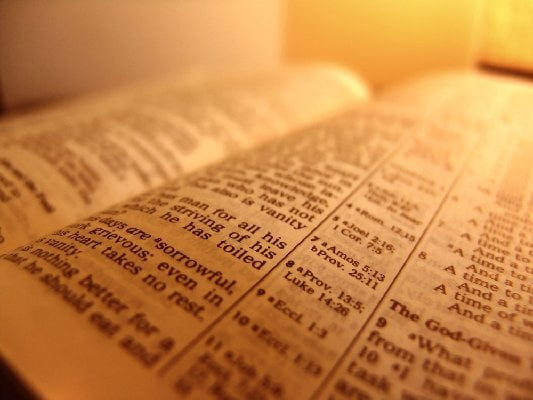 But this was not always the case. When I was a child, I was told that the Bible was God’s word, no errors. Moses, you know, wrote the first five books and Jesus said word for word everything we find in the red letters.I was taught to read scripture regularly because this helped me to live a life pleasing to God. In fact at my church, an extracurricular activity for us church kids in elementary school was Bible drill.
When you are taught the Bible this way and encouraged to think of the Bible this way– as something to be conquered as something to be read in chunks, you can easily begin to take scripture out of context.
For example, verses like I Timothy 4:11: “A woman should learn in quietness and full submission” can be used destructively, destroying the self-confidence of an entire gender of the human race. (But that is a whole other post!)
What happens when we teach our children the Bible like this is that “Scripture can easily become loaded time bombs ready to explode" as I once heard Pastor Brian McLaren say.
Or we grow up disillusioned.
This is what I need to tell you: there came a point in my life when I stopped reading the Bible for devotional reasons.
It was the second month after I was ordained as a pastor. What should have been the most joyous juncture of my life was one of the lowest. I wondered what in the world I’d gotten myself into, being a “professional Christian” who now was not allowed to question her faith?
It was just so hard for me to reconcile what I was taught in small chunks of Bible drill with the God I wanted to love, the God I thought I knew, and the faith that I knew had the power to do something for good in the world. I was upset that the church wanted to condemn all of my friends of other faiths without even the chance to know their hearts.
I could have very easily lost my faith in the years that followed. I could have easily lost my job if my supervisors knew what was going on in my heart. It ate me up inside not to be a space where I could be honest. But, I knew I needed rest and perspective. And, in time, I found myself into the loving arms of Washington Plaza Baptist Church where I was pastor for 4 years and preached every Sunday.
In preaching every week, I began to read scripture again, but never like I did in elementary school or even college when I used to spend hours doing Beth Moore expository studies on the back porch of my dorm room at Christian college.
In my new relationship with scripture I read to see God’s story– to see how God has faithfully guided humanity into relationship with the divine.
I read to know who God is– to gain a countercultural view of the world where the first shall be last and the last shall be first.
I read to be reminded of God’s inclusive love for all people– to see how even in the passages I want to throw out for their harshness of cruelty, there’s a message of hope, justice and concern for all.
I am the kind of Christian who believes in the ebbs and flows of our relationship with sacred texts.
I am the kind of Christian who won't make you feel bad for what you believe or if you've had your "quiet time" today.
I am the kind of Christian who is still seeking and reading the Bible just in different ways.
What about you?
 Jesus said, "I am the vine you are the branches if you remain in me and I in you, you will bear much fruit."
I'm sure I learned this verse from the gospel of John back in my Sunday School days as a child. It's a great verse to go along with plant crafts and potting soil. It looks good printed on a church magnet. After you've heard these words for a long time, it's easy to skim over and not see the depth.
So for years, I think had no idea what John 15 was all about. Maybe I still don't, but here are some of my latest hunches at least some to offer the blog today:
If I say I am a follower of Jesus, I am not in control of my life. I am simply connected to a larger story that I am graced to play a part in.
How many times in life-- daily if not weekly do you and I get ahead of ourselves with the planning of our futures? This is one of my favorite games I play in my head.
We think things like, "Well, if I applied and then got this new job, then I'll need to move to this community. And if I moved to this community, I'd need buy a more reliable car. And if I go shopping for a more reliable car then I might not be able to buy what I want because my credit score isn't high enough. Maybe I should pay down more of this credit card and . . . " It's an endless cycle of worry. And "what if" questions that have no concrete answers.
We plan and we plan and we plan some more-- as if we are the ones running the show. But the thing is-- we are not. Not at all.
If we say we are a follower of Jesus, then we are branches of the vine of Christ. We can only know our future as much as the vine directs us to grow. Nothing more.
Even if we pray everyday. Even if we pled Jesus for answers every day. Even if we went to seminary for goodness sake. We are the branches. Just the branches. A part from the vine we can do nothing. Such sounds harsh, doesn't it? Especially to overachiever types like me. "Really, nothing?" I want to fire back. But over the past couple of years, even with all of the degrees to my name, etc. I have come to believe that anything worth doing comes as I am connected to the Spirit.
Another hunch I've been thinking about is that remaining or abiding (as some translations put it) in Christ is crucial to my relationship with myself and my community.
If I want to have a life that moves in the direction of a future that is life-giving, joy-filled and gifted with hope in even during the darkest of seasons, then I must stay put until the Spirit moves. Not until then.
It means that I can't know what kind of plant I might be a week, a month or years from now.
It means that any efforts I make to get ahead of the other branches around me will simply do no good-- for to separate myself from others grafted to the same vine is to essentially leave the faith altogether. I am not a singular entity.
I recently heard an interview with Robin Roberts, the Good Morning America co-anchor. If you've followed her story at all, you know that she's been through a hell of journey concerning her health over the past couple of years. Just when she thought she was in remission from breast cancer, she was diagnosed with a blood disease requiring a blood transfusion. Reports are that her recovery is on an upward trend. So many people have been in awe of her perseverance. I was struck by her comments to a reporter when she said: "If you are depressed, you are living in the past. If you are anxious, you are living in the future. If you are at peace, you are living in the present.' At this moment I am at peace and filled with joy and gratitude. I am grateful to God, my doctors and nurses for my restored good health."
This is what I believe living on the vine is all about. Not in the past, not in the future but in the moment of here and now of who exactly is around us (not who we want to be around us).
I've had moments in the past couple of months when I've caught myself with a mind filled with a tornado of worry. I've been obsessed with either the past or the future. And neither of these trains of thought have done me any good. And it has been these words of Jesus have shuck me up and set my feet on more stable ground again.
Jesus is the vine. I am the branches. If I remain in Christ, I will bear much fruit.
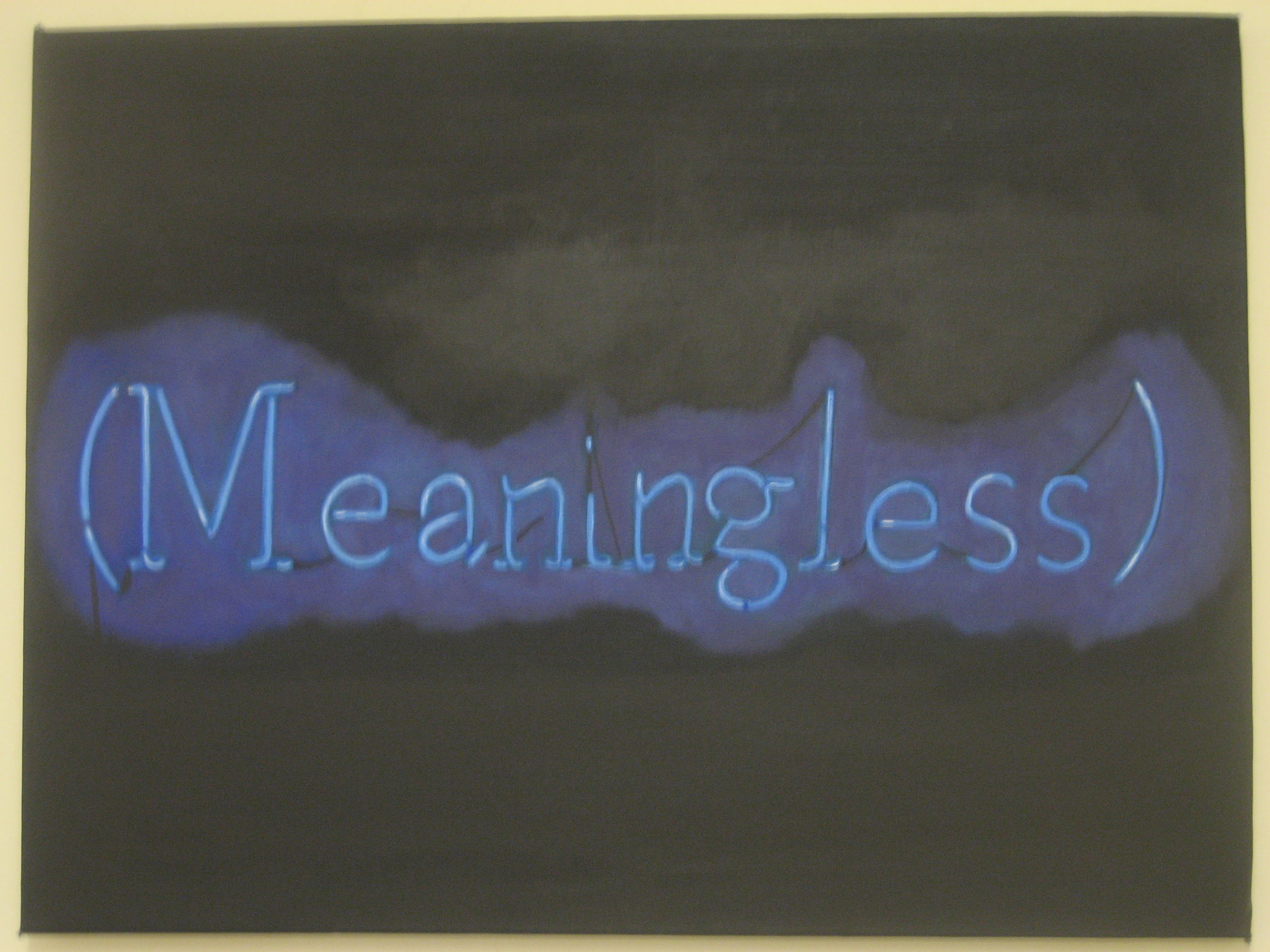 The book of Ecclesiastes opens in this way:
The words of the Teacher, son of David, king in Jerusalem:
“Meaningless! Meaningless!”
says the Teacher.
“Utterly meaningless!
Everything is meaningless.”
The word meaningless seems to go against everything we've heard about spiritual formation, doesn't it?
In classes, sermons and lectures, we read passages of sacred texts and we are asked to make meaning of them.
I can't remember a Sunday School class I've attended when there was not a "life application" section of the discussion.
I can't remember a workshop I've attended where I wasn't asked to report at the end "what I learned today."
I can't remember a time when I haven't been that person who doesn't try to make sense out of everything that happens to me.
Furthermore, how can everything be meaningless? Is this really in the Bible? We might wonder . . .
Well, the past several weeks I've stuck close to meaninglessness even though it seems to go against every meaning-making fiber in my teacher, preacher and writer self.
Because sometimes life just doesn't make sense. Sometimes our "everything happens for a reason" mantras lead us to a God that seems cruel and incompatible with everything else we know about the Divine. Sometimes meaning doesn't come. And we need to keep living life anyway.
When I was in the ER for the first time during my whole surgery ordeal, I started thinking that I should remember all the details of being wheeled down a long hallway for a CT scan.
I told myself I should notice what color the walls were, what the air smelled like, how the lighting fell on my bed and so on-- all the details that my writing brain could use to help make meaning of the situation later. Isn't this what my best writing teachers had prepared me to do in this very moment?
But then I stopped myself. I simply couldn't think like that. I couldn't make meaning.
Will there come a day when I want to make meaning of this situation and other puzzling situations in my life? Maybe.
But my point is that I've learned that we don't always have to.
Ecclesiastes is a wisdom book after all.
It's a book written by a person who I can imagine saw with his own eyes some of the worst of life's troubles. It's a book written by a person who I can imagine looked life's horrors in the face and desperately wanted to find purpose. And, as much as he wanted to throw a "everything happens for a reason" band-aid on life, he couldn't. He couldn't because he needed to tell the truth.
“Meaningless! Meaningless!”
says the Teacher.
“Utterly meaningless!
Everything is meaningless.”
It frustrates me that we in the church and the larger spiritual community cling to linear thinking to the decree that we're kept from the deeper waters of faith. The deeper waters called the unknown.
We say, "Oh it was so sad that X happened . . . but look what blessing came afterwards!" (As if to assign meaning to devastating and senseless tragedies)
Sure, life has its ebbs and flows. Most human lives have both good and bad on their plates at some point along in the journey. But who are we to say that we always know that X happened so that Y could occur?
Some situations of life can be meaningless.
Meaninglessness is not a reason to plunge into despair, however. Meaninglessness, I am learning is a gift for contentment.
When we come to realize that not every experience in life has to be seen as a puzzle piece that leads to enlightenment right away, then peace of what is can find us.
We call a spade a spade: meaningless. And, then we move on.
After all, didn't the Ecclesiastes writer go on to say this:
There is a time for everything,
and a season for every activity under the heavens
Meaninglessness is not the whole story.
 Being the religious nerd that I am and one who likes to keep up with popular cultural expressions of faith, I've watched two documentaries of note. Namely, Christiane Amanpour's ABC news special Back to the Beginning and the History Channel's mini-series, The Bible.
After hearing several of my clergy colleagues talking about the grave inaccuracies of The Bible series, I had to see for myself. And, after sitting through hour after hour of these stories, I agreed.
Large and crucial chunks of the stories were ignored. I missed seeing interactions with characters such as Hannah and Samuel, Ruth and Naomi, Esther and Mordecai and Elizabeth and Mary.
I longed for the more fair portrayal of the birth narrative of Jesus in films such as The Nativity Story.
The whole drama seemed like one political driven made for tv movie (and of course this is what it was). The character who played Jesus was way to pretty (I mean no disrespect to my Lord, but still!) and Jesus' teaching opportunities seemed way too short.
But when it came to Amanpour's documentary which traces the historical roots of the earliest stories of the Christian, Jewish and Islamic scriptures, showing ultimately our common connections, I was pleasantly surprised. In typical Amanpour style, her commentary was balanced, fair can came from a place both of belief but skepticism (which I think is healthy). She acknowledged the spiritual importance of the stories as of ultimate importance way before she began to question the historical traces of the narrative of the Bible.
In fact, her reporting from a hot air balloon ride over Egypt gave me one of the best visuals of life in Egypt I'd ever gotten. As the cameras focused in on the Nile River valley, showing the fertile ground around the river in comparison to the surrounding desert areas, I understood for the first time why the tribes of Jacob got stuck there out of necessity and why it was so hard 400 years later for the children of Israel to leave. The security of the Nile kept Egyptian powerful and led Pharoah to always seek more. For Israel, slavery was tortuous and all but who really wants to leave the land of plenty for the desert?
If you have on demand service through your cable provider, you could probably find it for free there or find clips such as this one on youtube [youtube=http://www.youtube.com/watch?v=kR4DYkiQfRs].
But, what's the larger point? It is worth our time as people of faith to watch such films?
I have to think so.
Even if the visual portrayals are full of depictions that are "in the spirit of the book" (as The Bible disclaims at the beginning of every episode), we can thank Hollywood for them.
Why? Because sometimes-- especially for those of us who are visual learners-- we need pictures to get us stuck out of our heads.
We need representations of stories to send us back to the texts to remember correctly and read for ourselves.
We need opportunities to be reminded that what we read in scripture is meant to challenge us into more faithful patterns of living.
For example, it struck me again as I was watching the opening episode of The Bible how radical a message Abraham received when God told him to leave his homeland because God was going to lead him to the Promise Land as he made his descendants as great as the number of stars the sky.
I've preached on Genesis 12 on countless occasions in my life, but whoa! It's hard to truly put this kind of faith experience in a 20 minute homily.
What crazy decree of God Abram received! What faith it required on Abraham's part to follow through! What a laughing-stock of his neighbors Abram must have been!
Lest, we think our faith is not radical and doesn't ask us to do radical things, it is.
It's a faith that asks 90-year-old women to believe they are going to have a son.
It's a faith that tells young boys they will grow up to be God's spokespersons.
It's a faith that gives words to prophets about the rising and falling of kingdoms.
It's a radical faith.
I'm glad that Hollywood helps me remember-- even if this was not their intention. Maybe it can help you remember too.
Continuing with my series of questions about the life of faith. Up today: why do you read the Bible?
When I was a child, I was told that the Bible was God's word, no errors in it at all. Moses, you know, wrote the first five books and Jesus said word for word everything we find in the red letters.
I was taught to read scripture regularly because this helped me to live a life pleasing to God. I was told to have a daily scripture readings in my routines, to memorize scripture, and to use scripture to help me figure out what it was that I was to do in my life, finding a life verse to guide all my days.
I was encouraged not to stray from the morals of the good book (no drinking, fornication, or wearing two piece bathing suits were among the favorites of my youth pastor)-- for if I did, then bad things might happen to me the pastors said. And who wants that, right? I needed to follow orders!
In fact at my church, an extracurricular activity for us church kids in elementary school was Bible drill. "Study to show thyself approved unto God" we were told over and over again. The implied message was God would like us more if we knew this Word.
On Sunday afternoons before choir practice, we'd memorize the books of the Bible-- learn to say the book before, the book after (for example, Genesis, Exodus, Leviticus). We'd memorize scripture passages-- 25 a year. And, after a school year of prep, we'd go to competitions-- local and statewide. In 3rd, 4th, 5th and 6th grade in fact, I was a state champ in Bible drill in the state of Tennessee. Bible drill seemed to take well to me and I to it. I knew scripture well, at least the lections I was taught, verse by verse at a time.
When you are taught the Bible this way and encouraged to think of the Bible this way-- as something to be conquered as something to be read in chunks, you can easily begin to take scripture out of context. For example, verses like I Timothy 4:11: "A woman should learn in quietness and full submission" can be used destructively, destroying the self-confidence of an entire gender of the human race. As as I heard Brian McLaren say at a conference this year on children, youth, and a new kind of christianity: "Scripture can easily become loaded time bombs ready to explode." Yet, when your faith begins to beckon you to ask the bigger picture questions where there are no easy answers, confusion, disillusionment, and apathy can easily set it.
I've been reading this week, Rachel Held Evans' book Evolving in Monkey Town and she speaks of her personal journey of just this. (A great read, I might say. Check it out). After growing up in a conservative home in the South, Evans finds herself as a young adult wanting to love scripture, knowing it well, but being repulsed by it and the community she reads it with for they have great distaste for her questions. My story is similar.
There came a point in my life when I stopped reading the Bible for devotional reasons. It was the second month after I was ordained as a pastor. What should have been the most joyous junture of my life was one of the lowest. I wondered what in the world I'd gotten myself into, being a "professional Christian" who now was not allowed to question her faith?
Regardless of any fears, cold turkey one morning I gave up devotions. My morning routine changed for years from what it had once been. Again, not something that you expect a preacher to admit but it's the truth. It was just so hard for me to reconcile the faith I was taught in small chunks of Bible drill with the God I wanted to love, the God I thought I knew, and the faith that I knew had the power to do something for good in the world. I was upset that the church wanted to condemn all of my friends of other faiths without even the chance to know their hearts.
I could have very easily lost my faith. I could have easily lost my job if my supervisors knew it. It ate me up inside not to be a space where I could be honest. But, I knew I needed rest. I needed to find another way. And, soon I found myself into the loving arms of Washington Plaza Baptist Church.
Preaching every week has saved me. By making it a point to preach in context with an eye for the "non-tradition" interpretation, with eyes open to apply to my own life-- step by step I've come back. For in having to wrestle with scripture every week no matter how I felt or didn't feel, God has spoken to me, guide me to center again. Preaching has helped me engage with texts that have just been what I needed to see God's presence in some difficult situations of my own life.
And though there are those colleagues of mine and naysayers who want to say, "Shame on you. How can you be a preacher if you only read your Bible in preparation for your sermon?"I say thank God I had at least sermons to preach regularly for the last several years! And, at least I'm being honest.
I'm now beginning to read scripture again, but never like I did in elementary school or even college when I used to spend hours doing Beth Moore expository studies on the back porch of my dorm room.
I read scripture to see God's story-- to see how God has faithfully guided humanity into relationship with the divine. I read scripture to know who God is-- to gain a countercultural view of the world where the first shall be last and the last shall be first. I read scripture to be reminded of God's inclusive love for all people-- to see how even in the passages I want to throw out for their harshness of cruelty, there's a message of hope, justice and concern for all. I read scripture to remember who I am and who I'm not-- I am a beloved child of the great mystery of the divine.
I'm glad for how the gift of weekly preaching has saved my faith over these past four years. I'm thankful for a congregation who has entrusted in me this privilege, having no idea what kind of gift they were giving me to grow alongside them. I'm glad that the memory verses I learned as a child were not wasted on state trophies long past, but have come to be a part of the larger picture of faith I keep finding a way to make my own.
For I believe, all of us are on a journey with scripture-- a journey that is unique as the fingerprints on our hands-- and who are we to judge the quality of one another's faith by the sheer number of times we pick up the book? Who are we to ever say 100% that we know what a passage means? Who are we to say that the revelation of God through scripture will not continue to find us, no matter what we do? Even preachers need to hear the good word too. Church everywhere: give us grace to grow-up too.
 The past couple weeks have been a great time of cultural conflict across our country, in particular in relation to the issue of homosexuality, the church, and marriage.
Friends in the United Methodist Church have struggled with this issues at General Conference with all kinds of scenes being created in session meetings. The state of North Carolina has wrestled with this over his vote about Amendment One. And, all of us in one way or another have responded to President Obama's declaration that the believes marriage should be between not just a man and a woman. Some have been happy with our President and others have not.
If your social media sites are anything like the ones that I am connected to, we've been bombarded with pro and con statements about these events. In response, hateful comments have been hurled. Madness. It has been madness!
Personally, when I expressed joy alongside my gay and lesbian friends about the President's endorsement of their marriages on my Facebook page this week, I even got a "I know you weren't raised like this" comment about my views by a family member. Not very nice.
I see so many of my pastoral colleagues being afraid to say anything at all out of fear of what their congregations might do to them. Jobs or appointments might be at sake depending on what you say.
In all of this, it is so easy for the debate to become personal real fast. Feelings can be hurt real quick. Most of us have strong opinions one way or another and it is hard to comprehend how someone on the other "side" could see things as they do.
Lord, have mercy on us all!
Is our church in all branches going to explode soon? Is this the state of cultural and religious affairs we've come to in this country? It seems so.
Doing some sermon prep this week, I found this commentary the John 15 lectionary reading for this Sunday by Dr. David Lose out of Luther Seminary. I couldn't help but think about all the debate this week as I read it. When we are faced with a theological divide on a topic like homosexuality, for example, what do with do? Lose has this to say:
So when faced with a challenge, dilemma, problem, or divisive moral issue, 1) search the Scriptures, looking not just for commandments but for how you honestly think Jesus would have responded, 2) trust your own experience and ask how you would want to be treated in similar circumstances, and 3) talk it over in your community, especially involving the folks the question-at-hand most directly affects.
I really appreciated this level-headed approach because I have to think so many of our strong opinions on those who are gay have more to do with tradition, culture from which we come than it does "what the Bible says." Yes, there are those passages of scriptures that say, homosexual relations are wrong, but then there are also lots of passages that say that women should cover their heads in church and not wear jewelry (and I don't know a lot of people who follow the Bible this literally). And, often we are quick to say, "Being gay is a sin" without actually knowing such a person and/or if we do, never asking a gay person how our interpretations of scripture make them feel, how they have been hurt by the church or by their families, etc. We are quick to elevate being gay (if we think being gay is a sin) to the level in which it is greater than ALL other sins. I just don't think such is really fair.
I know my heart breaks for my friends, colleagues and family members who are a part of the gay and lesbian community who love Jesus every bit as much as I do and are living in monogamous, committed relationships or are single and celibate and so many parts of our society continue to be so cruel to them.
I know my heart breaks for my friends and neighbors in other churches who have made Christianity into something that fits into a one-size fits all box and have no room in their souls for the Spirit to come and bring new understandings.
I know my heart breaks for our churches that are growing more divided by the day as more and more schisms keep occurring and occurring again. (How many times can the Christian church split? It seems we are on a course to find out!)
Because such conversation (as we've experienced its intensity this week) is not going away, what will we do when divide comes to us?
For me, I couldn't be silent. But, now that I have said my part, I must move on and keep finding ways to love. What about you?
Will you find a way to love the "other side?" Will you use words of hate? Will you defriend everyone you know on Facebook who doesn't believe as you do? How will you live in community?
We've got to figure out a better way to live together, all of us. This is what I know.
How many times has it be said about grief: "It's not a big deal. Why can't you just get over it?" Or, "Time heals all wounds."
It is easy for us to say or want to say these words because in doing so we separate the emotion from our participation in it. Grief, when let loose is confusing. It is consuming and can be all-consuming. Grief always has a life cycle of its own. To be a friend of grief, hard work is required. And, if we are honest, often we really don't want to work this hard, especially when we see others on what looks like much easier paths. It is a lot easier to throw up our hands and say, "Life is unfair" than to do the work grief lays out for us. Grief is a messy, very messy process, no matter how trained we are in its "stages."
 For the past two Wednesday nights, a group of us from Washington Plaza began a study called, "Sowing Tears, Reaping Joy: The Bible and Brahm's Requiem." This study involves the study of scripture texts that appear and inform the words of the requiem as well as listening to sections of the music in a reflective posture. We've also taken moments throughout the sessions to pause and share with one another our experiences of grief. Together, as a small group, we are wading in the waters of deep community. It's not easy to talk about grief, you know!
Besides observing how real and deep and experienced many in this small group are with the study of and process of grief, I've also noticed how eager each of us in the class are to sit with the depths of grief together in new ways. (What an unusual gift!)
Part of this re-examining process includes revisiting some of the great mourning texts of the scriptures. We started with some words of Jesus.
When Jesus says in his great Sermon on the Mount, "blessed are they that mourn; for they will be comforted" it seems like a completely wacky paradox, we observed. How could Jesus say such a thing? Especially to our natural human tendency to want to explain away grief with simple answers that seem to make it better as soon as possible . . . so how could we believe such? How could mourning be good for us?
While many psychological experts might jump in and answer our questions quickly, from a spiritual perspective, we've talked about grieving because we have to. In fact, our willingness to embrace grief has a lot to do with what we feel about God. Grief teaches us to sit long with such questions as: "What is God's plans for this world? How is it that we know God? Who can ultimately be trusted in the midst of our dark moments? Why do good things happen to such bad people?"
Such grief questions do not even have morsels to offer us if we don't wait. And, wait some more.
Ellen Davis, a professor of mine from seminary said this in a sermon given in 1993 at Berkeley Divinity School, about grief: "From a Biblical perspective, living well with sorrow means dwelling on it, lamenting it before God, allowing-no, committing yourself to search the sorrow, to explore every corner of it, to ransack the emptiness until it yields its treasure, the hidden blessing on those who mourn."
I can't think of a more beautiful way to describe the process of "blessed are they that mourn." For if we refuse to make a friend of grief, both within us and our immediate community, we are also going to also miss out on its great gifts. Again placing the word "grief" and "gifts" in the same sentence sounds wrong to me, doesn't it to you? But, more and more I am learning that the pain of grief is not diminished if we have open hands to what only grief can bring us: joy. Joy, yes, even in grief and all its pain, there might be joy a coming . . .
Joy in the companionship of friends who love us at our worst.
Joy in the ability to keep going when we have every reason to give up.
Joy in the knowledge that we are seen and known deeply by our Creator.
Blessed are they that mourn-- for those who cry, walling, lament, and angrily shout at God for as long as it takes to get it all out-- for in mourning space hope has a possiblity of breaking through.
Any are welcomed to join us on this grief journey for the next five Wednesday nights!
